Quick answer
Brett Adcock has founded five companies: Vettery (2012 — hiring marketplace, sold to Adecco for $110 million in 2018), Archer Aviation (2018 — electric air taxis, public via SPAC in 2021), Figure AI (2022 — humanoid robots, valued at $39 billion in 2025), Cover (2023 — school security, $30 million self-funded), and Hark (2025 — AI devices, valued above $6 billion in 2026). He is currently CEO of both Figure AI and Hark simultaneously — an almost unheard-of dual role at this scale.
Two of the five are multi-billion-dollar companies; one is public; one was sold; one is a mission-driven side project. Together they explain his $23.4 billion net worth — and a founder operating style unlike anyone else in tech.
1. Figure AI — the $39 billion crown jewel (2022)
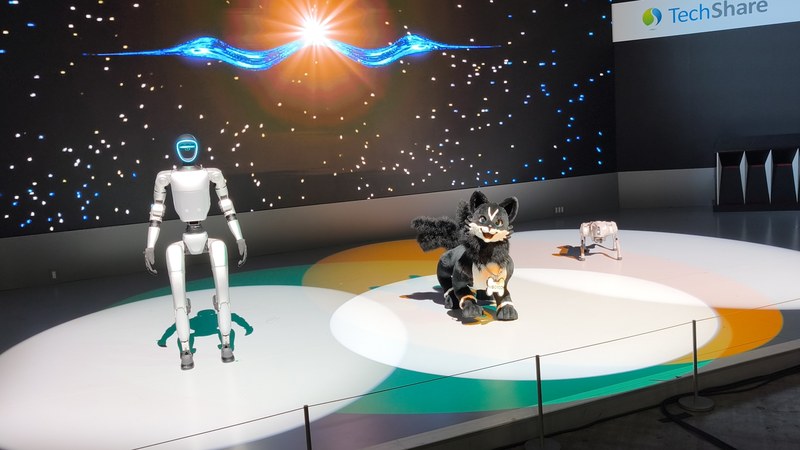
Figure AI is the company that made Adcock a centi-billionaire-in-waiting. Founded in 2022 in the San Jose area, it builds autonomous humanoid robots powered by its in-house Helix vision-language-action AI model. Adcock is founder and CEO, and Forbes estimates he owns roughly 50% — worth about $19.5 billion at the last valuation.
The funding arc is one of the steepest in venture history: $675 million at $2.6 billion in February 2024 (Series B, with OpenAI and Microsoft's Satya Nadella participating), then more than $1 billion at $39 billion in September 2025 (Series C, led by Parkway Venture Capital with Nvidia, Intel Capital, Qualcomm Ventures, Salesforce, LG Technology Ventures, and T-Mobile Ventures). Total raised: over $1.9 billion.
The commercial proof: Figure 02 robots worked at BMW's Spartanburg plant for roughly ten months — 1,250 operating hours, 90,000+ parts handled, 30,000+ BMW X3 vehicles assembled — and in July 2026 BMW began deploying the Figure 03 successor for logistics. Manufacturing happens at the BotQ factory, which hit one robot per hour by April 2026 and targets 12,000 units a year. The company is aiming for $9 billion in revenue by 2029.
2. Hark — the $6 billion second act (2025)
In 2025, while still running Figure, Adcock founded Hark, an AI lab building personalized AI devices: its own foundation models, software stack, and custom hardware, pitched as a universal interface that "actually knows you." He seeded it with $100 million of his own money and hired 45 engineers from Apple, Google, and Meta — reportedly including the lead designer behind the iPhone Air.
Then he raised over $700 million at a valuation above $6 billion in 2026, led by Parkway Venture Capital with Nvidia, AMD Ventures, Intel Capital, Qualcomm Ventures, Salesforce Ventures, and ARK Invest. Running Figure (AI bodies) and Hark (AI brains) at once, Adcock controls two of the most valuable private AI companies in the world. He has said Hark's models would ship within months of its 2026 unveiling, with hardware to follow.
3. Archer Aviation — the flying-taxi bet (2018)
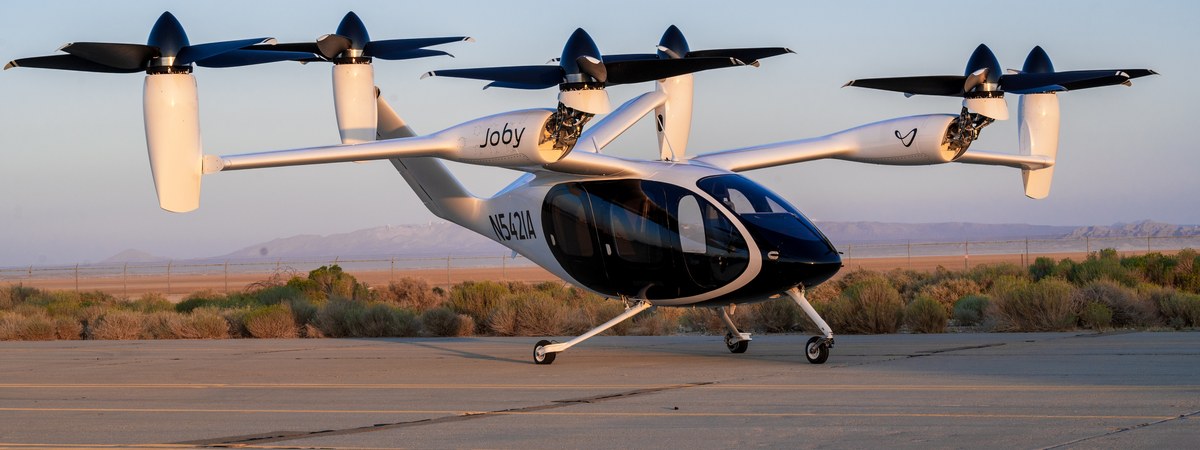
Adcock co-founded Archer Aviation in 2018 with Adam Goldstein to build battery-powered electric vertical take-off aircraft — air taxis targeting speeds up to 150 miles an hour. It was a far harder problem than his hiring marketplace: aviation means certification, regulation, and billions in capital. Adcock's answer was the 2021 SPAC boom: Archer went public via a SPAC merger in 2021, listing on the NYSE as ACHR.
He has since handed day-to-day leadership to others to focus on Figure, but Forbes still counts Archer shares among his assets. The Archer years were effectively his apprenticeship in raising and spending billions on hardware — the exact skill Figure AI now demands at 10x the scale. It was also his education in regulated, capital-intensive industries: lessons in certification timelines, manufacturing discipline, and investor patience that transfer directly to building humanoid robots at factory scale.
4. Vettery — the $110 million first exit (2012)
Every empire needs a first win. Vettery, the hiring marketplace Adcock co-founded in 2012, inverted recruiting: employers applied to candidates instead of the reverse. In 2018, Switzerland's Adecco Group acquired it for $110 million — Adcock's first nine-figure outcome and the seed capital, reputationally and financially, for everything after. Six years from founding to exit, in software, with a clean result: the track record that let him raise for airplanes and robots on reputation alone. The Vettery playbook — spot an inefficient market, build the marketplace, sell to the incumbent — would echo in every later venture, just with bigger machines and far bigger checks. Small software wins compound into hardware empires.
5. Cover — the quiet mission project (2023)
Cover, founded in 2023, is the outlier: a school-security company built on technology with NASA/JPL roots, which Adcock self-funded with $30 million of his own money. It generates no headlines and no billion-dollar valuation — it reads as a mission project from a founder who grew up in small-town Illinois and now deploys his wealth toward problems he cares about. Financially immaterial next to Figure and Hark; personally revealing. It also completes the picture of a founder who treats his own capital as the first investor in every idea: Vettery proved he could build, Archer proved he could raise billions for hardware, and Cover and Hark prove he still bets his own money before asking anyone else's.
The full portfolio at a glance
| Company | Founded | Adcock's role | Status / value |
|---|---|---|---|
| Figure AI | 2022 | Founder & CEO (~50% stake) | $39B valuation (Series C, Sep 2025) |
| Hark | 2025 | Founder & CEO | $6B+ valuation (2026 round) |
| Archer Aviation | 2018 | Co-founder (stepped back) | Public, NYSE: ACHR (SPAC 2021) |
| Vettery | 2012 | Co-founder | Sold to Adecco for $110M (2018) |
| Cover | 2023 | Founder ($30M self-funded) | Private, school security |
The pattern across all five: Adcock founds, holds enormous equity, self-funds the earliest stage, and scales ambition each time — from a $110 million software exit to a $39 billion robotics company. For how each company built his fortune step by step, and what he actually gets paid as a dual CEO, those stories run in parallel.
The dual-CEO experiment
Running two companies at once is usually a red flag in Silicon Valley — investors want monogamous founders. Adcock's answer is that Figure and Hark are two halves of one thesis: bodies and brains. Figure builds the humanoid hardware; Hark builds the personal AI that could one day animate it. Whether the dual-CEO model sustains at this scale is an open question, but with a combined private valuation above $45 billion across the two, the market is — for now — letting him try. And the portfolio keeps a clear hierarchy: Figure is the fortune, Hark is the second act, Archer is the apprenticeship, Vettery was the grubstake, and Cover is the conscience.
Frequently asked questions
What companies does Brett Adcock own?
Brett Adcock has founded five companies: Vettery (2012, hiring marketplace — sold to Adecco for $110 million in 2018), Archer Aviation (2018, electric aircraft — public via SPAC in 2021, NYSE: ACHR), Figure AI (2022, humanoid robotics — valued at $39 billion in 2025, where he is founder and CEO), Cover (2023, school security), and Hark (2025, AI devices — valued above $6 billion in 2026, where he is founder and CEO). He is currently CEO of both Figure AI and Hark.
What is Brett Adcock's main company?
Figure AI is Brett Adcock's main company and the source of most of his $23.4 billion fortune — Forbes estimates he owns about 50% of it, worth roughly $19.5 billion at the $39 billion Series C valuation. He is founder and CEO. His second active company is Hark, the AI-device lab he founded in 2025, where he is also founder and CEO.
Is Brett Adcock still involved with Archer Aviation?
Brett Adcock co-founded Archer Aviation in 2018 with Adam Goldstein and led it through its 2021 SPAC public listing, but he has since stepped back from day-to-day operations to run Figure AI. Forbes still lists Archer Aviation shares (NYSE: ACHR) among his financial assets, so he retains a financial interest.
What is Hark, Brett Adcock's AI company?
Hark is an AI lab Adcock founded in 2025 to build personalized AI devices — its own foundation models, software stack, and custom hardware designed as a universal human-machine interface. He seeded it with $100 million of his own money, then raised over $700 million at a valuation above $6 billion in 2026, led by Parkway Venture Capital with Nvidia, AMD Ventures, Intel Capital, Qualcomm Ventures, Salesforce Ventures, and ARK Invest participating.
What is Cover, Brett Adcock's security company?
Cover is a school-security company Adcock founded in 2023, built on technology with NASA/JPL roots. He self-funded it with $30 million of his own money. It is his smallest and quietest venture — a mission-driven side project alongside the multi-billion-dollar Figure AI and Hark.
Is Brett Adcock married?
Yes. Forbes lists Brett Adcock as married with three children. He keeps his family life entirely private — his wife's name has not been publicly disclosed.
How old is Brett Adcock in 2026?
Brett Adcock is 40 years old in 2026. He was born on April 6, 1986, in Moweaqua, Illinois, grew up on his family's third-generation corn and soybean farm, graduated valedictorian of Central A&M High School, and earned a business administration degree from the University of Florida in 2008.
Where does Brett Adcock live?
Forbes lists Brett Adcock's residence as Palo Alto, California, in Silicon Valley — near Figure AI's San Jose-area headquarters. He grew up in rural Moweaqua, Illinois.
Sources
- Figure AI — Official SiteFigure AI
- Archer AviationArcher
- Forbes — Brett Adcock ProfileForbes