
Quick answer: how big is the gap?
Elon Musk is richer by over $530 billion. Forbes 400 (September 2026): Musk ~$908B vs. Bezos ~$378B; real-time trackers put Musk at ~$942–955B in late September. The gap exploded in June 2026 when SpaceX's IPO made Musk the first trillionaire.
The $564B gap, piece by piece
Musk (~$942B): two hyper-growth bets
- SpaceX ~$644–900B — ~42–48% stake, IPO at $1.77T valuation.
- Tesla ~$165B+ — ~12–20% plus option packages
- xAI / X / Neuralink / Boring Co. — ~$30–60B combined.

Bezos (~$378B): one mature compounder
- Amazon ~$212–235B — ~881M shares, ~8.2% stake; ~90% of his fortune. Every $10 AMZN move shifts his wealth ~$8.8B.
- Blue Origin ~$50–100B — near-wholly owned; first outside investment considered May 2026.
- $49B+ liquidated — Amazon sales via 10b5-1 plans since the 1997 IPO.
- Washington Post, real estate (~$700M), yacht Koru (~$500M) — rounding errors at his scale.
Full details: Musk's $942B breakdown.
Why the gap is structural, not cyclical
Bezos's wealth is tied to one mature ~$2.4T company growing steadily — it cannot re-rate 5x the way a newly-public SpaceX did. His divorce (2019) transferred ~25% of his Amazon stake to MacKenzie Scott, permanently lowering his ceiling. Musk's fortune, by contrast, is leveraged to two hyper-growth assets — higher upside, violent downside (he lost $750B in weeks in July 2026).
| Period | Leader | What happened |
|---|---|---|
| 2017–2020 | Bezos | Amazon's rise; first $100B+ man |
| 2021–2024 | Traded lead | Tesla volatility vs Amazon stability |
| Jun 2026 | Musk by $1T+ | SpaceX IPO — first trillionaire |
| Sep 2026 | Musk by ~$530B+ | $908B vs $378B (Forbes 400) |
The math: what it would take to close the gap
Three scenarios: (1) Amazon triples while SpaceX/Tesla collapse — requires simultaneous opposite extremes; (2) a Blue Origin IPO adds $50–100B — meaningful, not gap-closing; (3) Musk's volatility does the work — the realistic one, given $750B vanished in weeks in July 2026. Structurally, Bezos is the tortoise: steadier, cash-rich, unlikely to halve — or double — in a quarter.
Head-to-head: where each dollar sits
Musk's fortune is a barbell of two moonshots; Bezos's is a single fortress. Side by side, the concentration risk looks very different:
| Asset | Musk | Bezos |
|---|---|---|
| Core public holding | Tesla ~12–20%, ~$165B+ | Amazon ~8.2% (881M shares), ~$212–235B |
| Space company | SpaceX ~42–48%, ~$644–900B | Blue Origin ~$50–100B |
| Other ventures | xAI, X, Neuralink, Boring Co. ~$30–60B | Washington Post, real estate ~$1–2B |
| Cash realized | ~$20–40B from Tesla sales | $49B+ in Amazon sales since 1997 |
| Total (trackers) | ~$942B | ~$378B |
Two things stand out. First, Musk's SpaceX stake alone (~$644–900B) is worth more than Bezos's entire fortune — twice over at the high end. Second, Bezos is far more diversified into realized cash: $49B+ in historical Amazon sales gives him genuine liquidity, while Musk's wealth remains ~95% paper, forcing him to borrow against shares when he needs cash.
2026 scoreboard: who's ahead and why
Musk, and it isn't close: the gap widened from roughly $200B in early 2025 to over $530B by September 2026. Three drivers explain it.
1. The SpaceX IPO. The June 2026 listing at a $1.77T valuation was the largest IPO in history and instantly converted Musk's ~45% private stake into the most valuable single holding any individual has ever owned. No wealth event in Bezos's history compares — Amazon's 1997 IPO raised a modest $54M.
2. Tesla's AI re-rating. Tesla shares rallied through 2026 on robotaxi and Optimus milestones, lifting the value of Musk's ~12–20% stake plus his performance-based option tranches. Amazon, a ~$2.4T mature business, simply cannot double the way a narrative-driven growth stock can.
3. Bezos keeps selling. Bezos has methodically liquidated Amazon stock for decades — $49B+ via 10b5-1 plans since the IPO — funding Blue Origin (~$1B/year) and philanthropy. Every sale locks in wealth but caps upside; Musk, who rarely sells, rides the full volatility in both directions.
The scoreboard: Musk peaked at ~$1.45T intraday in June 2026; Bezos's all-time high remains ~$210B (2021).
SpaceX vs Blue Origin: the valuation wedge
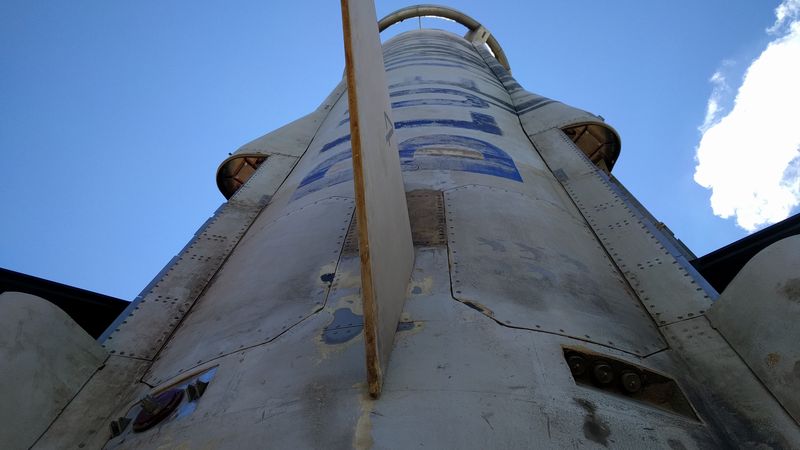
The irony of this rivalry: Bezos founded Blue Origin in 2000 — two years before Musk started SpaceX — yet SpaceX is now worth roughly 20–40x more. SpaceX's $1.77T IPO valuation dwarfs analyst estimates for Blue Origin of ~$30–100B.
The operational gap explains the valuation gap. SpaceX's Falcon 9 flies weekly, Starlink operates thousands of satellites generating an estimated $13B/year in AI and connectivity deals, and Starship is flying test missions. Blue Origin's New Shepard has completed suborbital tourist flights, but its orbital New Glenn rocket is years behind schedule — and NASA's flagship Artemis lunar lander contract went to SpaceX's Starship, not Blue Origin.
For the net-worth math, this matters enormously. Musk's SpaceX stake is his fortune's engine; Bezos's Blue Origin, despite ~$1B/year of his personal funding, contributes perhaps 10–25% of his total wealth. A Blue Origin IPO could add $50–100B to Bezos's column — real money, but barely a dent in a $530B gap.
Two wealth machines, two philosophies
Nowhere is the difference between the two men clearer than in how they spend. Bezos lives like the world's most successful consumer: his $500M sailing yacht Koru — among the largest in the world — plus a support vessel, a ~$165M Beverly Hills estate, Maui and Miami properties, and a private jet fleet. His $10B Earth Fund commitment (2020) is among the largest climate pledges ever made.
Musk famously went the other direction. Between 2020 and 2021 he sold nearly his entire real-estate portfolio — six California homes — declaring he would "own no house," and moved into a ~$50,000 prefabricated unit near SpaceX's Boca Chica site. He still flies private and works brutal hours, but the public posture is monk-like frugality: wealth as scoreboard, not lifestyle.
The philanthropy gap is real too. Bezos's giving is structured and large-scale; Musk's foundation giving has been criticized as sporadic, though his 2021–2022 donations of Tesla stock (~$5.7B) rank among the biggest single gifts on record. In short: Bezos spends like a billionaire and gives like one; Musk hoards equity like a founder and lives like an engineer.
Frequently asked questions
Who is richer, Elon Musk or Jeff Bezos in 2026?
Elon Musk, by over $530 billion — ~$908B vs ~$378B on the Forbes 400 (September 2026); real-time trackers put Musk near $942–955B.
Was Jeff Bezos ever richer than Elon Musk?
Yes — Bezos held the world's-richest title for most of 2017–2020 and retook it multiple times through 2024, before Musk pulled away decisively after SpaceX's IPO.
What is Jeff Bezos's main source of wealth?
Amazon stock (~8.2%, ~881M shares, worth $212–235B) — roughly 90% of his fortune — plus Blue Origin, $49B+ in historical share sales, real estate, and The Washington Post.
Why is the wealth gap so large now?
SpaceX's June 2026 IPO at a $1.77T valuation instantly made Musk's ~45% stake worth more than Bezos's entire fortune twice over. Bezos has no equivalent re-rating catalyst.
Sources
- Forbes Real-Time BillionairesForbes
- Bloomberg Billionaires IndexBloomberg