Quick answer
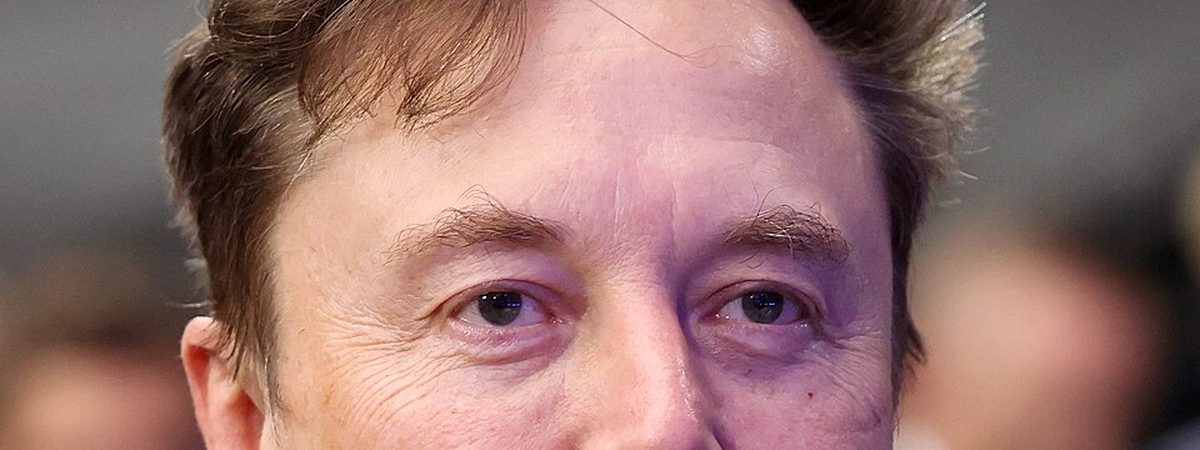
Elon Musk is worth roughly $942 billion — or about $955 billion — making him the richest person in history by a wide margin. His fortune comes almost entirely from two equity stakes: ~42–48% of SpaceX and ~12–20% of Tesla, plus smaller holdings in xAI, X, Neuralink, and The Boring Company. He takes no salary; nearly all of it is stock, not cash.
Breakdown: where the $942 billion comes from
SpaceX — the core (~$644–900 billion)
SpaceX is Musk's crown jewel. He owns ~42–48% of the company with 80%+ voting control. The June 2026 IPO priced SpaceX at ~$1.77 trillion — the largest IPO in history, raising ~$85.7 billion. At listing, his stake was worth roughly $866 billion on paper.
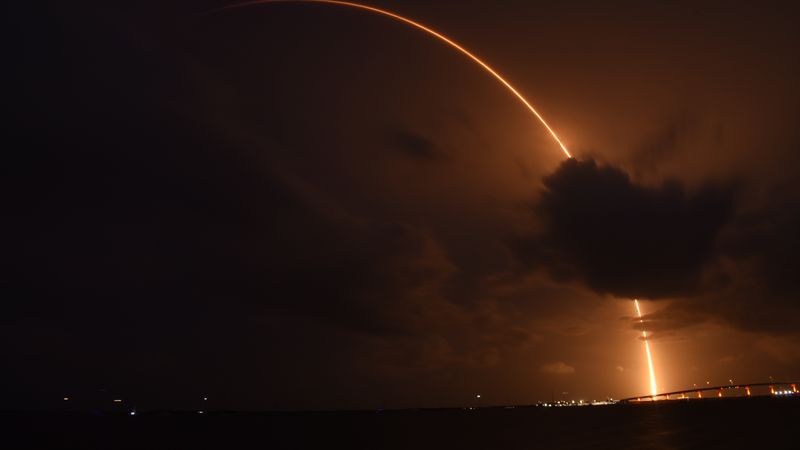
SpaceX's value rests on four engines: reusable Falcon rockets, the Starship program, Starlink satellite internet (the steady cash cow), NASA contracts — and, since acquiring xAI in February 2026, a fast-growing AI compute business that generated ~$2.56 billion in Q2 2026 revenue alone.

Tesla — the second pillar (~$165 billion+)
Musk holds ~12–20% of Tesla plus two historic option packages: the 2018 award (304 million options, ~$116 billion exercised) and the 2025 award of up to $1 trillion (423.7 million shares, vesting only on an $8.5 trillion market cap by 2035). Tesla pays him $0 salary. Read the full Musk salary breakdown.

Everything else (~$30–60 billion)
- xAI — folded into SpaceX via the February 2026 acquisition; value now captured in SpaceX's price.
- X Corp — ~100% owned, bought for $44 billion in 2022; carried below cost on paper.
- Neuralink — ~51% majority stake at a ~$9 billion valuation → ~$4.5B to Musk.
- The Boring Company — ~60% stake at a $23 billion valuation → ~$14B to Musk.
See the full list of Elon Musk's companies and how he built this fortune from a $180M PayPal exit.
Why trackers disagree by $50–100 billion
Three trackers, three numbers for September 2026 — and all are defensible:
| Tracker | Figure | As of | Key method choice |
|---|---|---|---|
| Bloomberg Billionaires Index | ~$942B | 21 Sep 2026 | Conservative private-company discounts |
| Forbes Real-Time | ~$955B | 21 Sep 2026 | Slightly higher SpaceX multiple |
| Forbes 400 | $908B | 4 Sep 2026 | Earlier snapshot date, before the September rally |
The gaps come from: (1) how to value private stakes — SpaceX is public now, but Neuralink and Boring Co. are not; (2) whether to count unearned awards (the $1T Tesla package and SpaceX milestone shares are granted, not vested — most trackers exclude them); (3) the snapshot date — Musk's wealth can swing $50B+ in a single week on SpaceX/Tesla moves.
Wealth history: $2B to $1T
| Year | Milestone | Driver |
|---|---|---|
| 2012 | ~$2B | First Forbes billionaires list (Tesla + SpaceX early value) |
| 2021 | $300B | Tesla rally — first person to $300B |
| Dec 2024 | $400B | Valuation gains |
| Oct 2025 | $500B | Rising private valuations |
| Feb 2026 | $800B+ | SpaceX–xAI transaction |
| Jun 2026 | $1T+ (first ever) | SpaceX IPO at $1.77T valuation; peak ~$1.45T intraday |
| Jul 2026 | ~$700B | SpaceX collapse (−$750B, record loss) |
| Sep 2026 | ~$942B | Recovery on $13B/yr AI deal news |
Is Musk's $942B actually cash?
No — and this is the single most misunderstood thing about his fortune. The overwhelming majority of Musk's wealth is stock, not cash. He cannot simply withdraw $942 billion; selling even a fraction of his SpaceX or Tesla holdings quickly would crash the share price and destroy the very value being measured.
When Musk does need real money, he historically prefers borrowing against his shares over selling them — the classic "buy, borrow, die" billionaire playbook that avoids triggering capital-gains taxes. Tesla's own proxy statement caps what its CEO can borrow against pledged stock at the lesser of $3.5 billion or 25% of the pledged shares' value, and much of his Tesla holding is already pledged as collateral for personal loans.
The rare times he has sold were enormous: between November 2021 and December 2022 he offloaded nearly $40 billion of Tesla stock — roughly $16 billion in late 2021 to cover taxes on exercised options, then $8.5 billion (April 2022) and $6.9 billion (August 2022) to help fund the $44 billion Twitter takeover, plus another ~$7.5 billion in late 2022. Those sales helped drive Tesla to two-year lows at the time. The lesson: Musk's wealth is real, but it is paper wealth — spendable only in carefully measured doses.
What does Elon Musk spend his money on?
For the richest person in history, Musk's personal spending is famously restrained — at least by billionaire standards. In 2020 he vowed to "own no house" and proceeded to sell his portfolio of California mansions — seven properties collectively worth over $100 million.
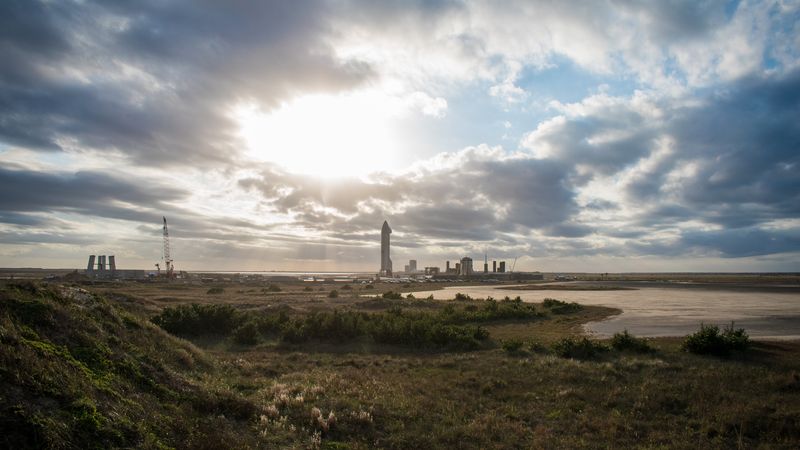
His declared primary residence became a ~$50,000 prefabricated house in Boca Chica, Texas, rented from SpaceX near the Starbase launch site — a spartan two-bedroom unit his biographer Walter Isaacson photographed and described as strikingly modest. In September 2026, reports even had him living in an Airstream trailer near xAI's Memphis expansion to stay close to the work. He has a history of sleeping at the office during crunch periods: the Tesla factory floor in 2018, Twitter's San Francisco HQ on a library couch in 2022.
Where the money does go: private aviation — a fleet including a Gulfstream G650ER, a G700, a G550, and a Dassault Falcon 900B — and cars, notably a McLaren F1 and the Lotus Esprit submarine car. He owns no yacht and no private island. The pattern is consistent: Musk spends on mobility and machines, not on palaces.
Musk Foundation & philanthropy
Musk's charitable giving is among the most criticized of any living billionaire. His Musk Foundation held roughly $14 billion in assets in its 2024 tax filing — yet it has failed to meet the IRS 5% minimum annual payout for four consecutive years (2021-2024), falling nearly $400 million short in 2024 alone.
Where the money goes raises further questions. Of the $474 million the foundation disbursed in 2024, $370 million went to "The Foundation," a separate nonprofit Musk controls that runs an elementary school near his companies in Bastrop, Texas, plus $35 million to a Fidelity donor-advised fund he effectively controls. The New York Times found that through 2022, about half of all Musk Foundation grants went to entities tied to Musk, his employees, or his companies — "largely self-serving" in the paper's words. Forbes calculated that only about $500 million — 0.06% of his fortune — has actually reached outside causes, ranking him among the planet's least charitable billionaires.
Musk's defense: his companies are his philanthropy — Tesla's sustainable energy, SpaceX's multiplanetary mission, and a $100 million XPRIZE for carbon removal. Whether that counts as charity is the debate that follows him everywhere.
Biggest risks to the fortune
Musk's wealth is extraordinary — and extraordinarily concentrated. Forbes' holdings data attributes roughly 83% of his net worth to SpaceX: every $1 move in SpaceX shares shifts his fortune by about $5.1 billion, versus $0.4 billion per $1 move in Tesla. Two stocks decide nearly everything.
That concentration cuts both ways, as July 2026 proved: a SpaceX selloff erased roughly $750 billion — the largest personal wealth destruction in history — with SpaceX falling from ~$225 to ~$110 per share in the rout.
Then there is debt. The $13 billion in loans banks provided for the 2022 Twitter takeover never went away — it traveled with the asset through X, then xAI, and finally into SpaceX, where the June 2026 IPO proceeds repaid $18.9 billion plus a $1.16 billion prepayment penalty, leaving roughly $11.4 billion outstanding with a major bridge maturity in 2027. Add Tesla's $3.5 billion cap on Musk's share-pledged borrowing, ongoing regulatory scrutiny of his companies, and the political exposure that comes with his public role — and the $942 billion rests on more moving parts than the headline suggests.
Frequently asked questions
What is Elon Musk's net worth in 2026?
Around $942 billion per the Bloomberg Billionaires Index and $955 billion per Forbes, as of September 21, 2026. The Forbes 400 list (September 4, 2026) put him at $908 billion. He briefly became the first trillionaire in June 2026 after SpaceX's IPO.
How much of SpaceX does Elon Musk own?
Roughly 42–48% of the equity, with over 80% of the voting control. Regulatory filings disclosed a 48.4% stake as of June 30, 2026, making it his most valuable asset by far.
Is Elon Musk a trillionaire?
He was — briefly. His net worth peaked around $1.45 trillion intraday in June 2026 right after SpaceX's IPO, then fell back below $1 trillion during a July 2026 selloff that erased about $750 billion, the largest wealth loss in history.
Does Elon Musk take a salary?
No. His Tesla salary is $0 with no cash bonus. His compensation is entirely performance-based stock, including a potential $1 trillion package approved in November 2025 that vests only if Tesla hits extreme milestones by 2035.
Why do net worth estimates for Musk differ so much?
Trackers disagree on how to value his private stakes (especially SpaceX), whether to count unearned stock awards, and which date's prices to use. Bloomberg and Forbes can differ by $50–100 billion on the same week.
Is Elon Musk married?
No. Musk has been divorced three times — twice to actress Talulah Riley and once to author Justine Wilson. He has 14 known children with four different women, including musician Grimes and Neuralink executive Shivon Zilis, but is not currently married.
How old is Elon Musk in 2026?
Elon Musk is 55 years old in 2026. He was born on June 28, 1971, in Pretoria, South Africa, and became a U.S. citizen in 2002.
Where does Elon Musk live?
Musk primarily lives in Texas, near SpaceX's Starbase facility in Boca Chica. He moved from California to Texas in 2020, famously selling most of his houses and living in a modest prefab unit near the launch site.
Sources
- Forbes — Elon Musk ProfileForbes
- Bloomberg Billionaires IndexBloomberg
- Forbes Real-Time BillionairesForbes