Quick answer
Adam Foroughi made his money the hard way: he built an advertising technology company from nothing and refused to give most of it away. As co-founder and CEO of AppLovin, founded in 2012, he owns around 11% of the company — a stake that represents roughly 99% of his $11.6 billion net worth. Unlike most startup founders, he bootstrapped through years of rejection from venture capitalists, borrowed instead of diluting, and rode the AI advertising boom from under $1 billion in 2023 to $27.3 billion in December 2025.
His fortune is essentially a 14-year story of compounding ownership — and of one spectacularly timed technology bet, the AXON 2.0 AI engine, that turned a mobile ad company into an AI stock.
Tehran to Berkeley: the trader years
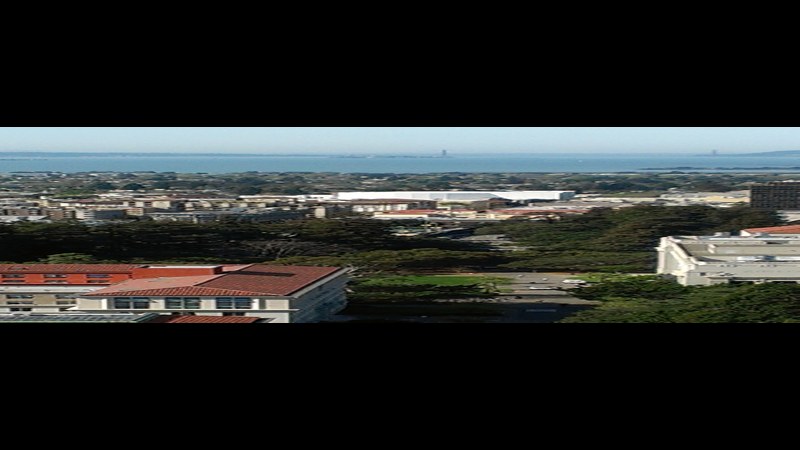
Foroughi was born in 1980 in Tehran, Iran, a year after the 1979 revolution, and his family fled to the United States as the Iran-Iraq War tore the country apart. He grew up in Laguna Niguel in Southern California, where his father Marty ran a construction business. In 2001 he graduated from the University of California, Berkeley, with a bachelor's degree in economics — and on May 20, 2026, he returned to deliver the undergraduate commencement address at Berkeley's Haas School of Business.
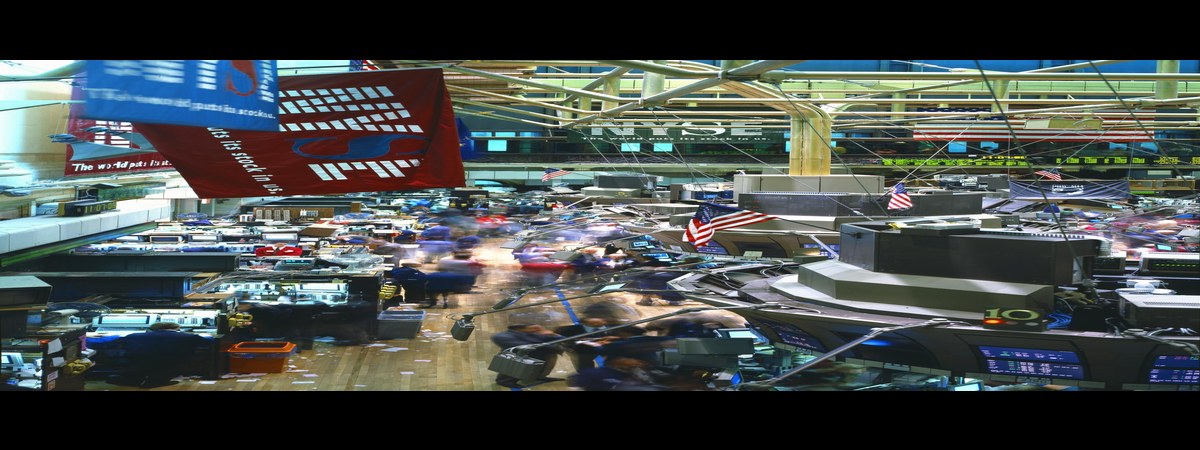
His first job was as a derivatives trader, and the experience left a permanent mark on how he runs companies. Trading taught him scalable, data-driven models — automated systems that make thousands of small decisions and compound tiny edges. That instinct would become the DNA of AppLovin: an advertising platform that is, at heart, a trading desk for mobile ad inventory. If you want the headline number behind all of this, see the full breakdown of his $11.6B fortune.
Two startups before the big one
Before AppLovin, Foroughi founded two marketing companies: Lifestreet Media and Social Hour. Neither made him rich, but both taught him the mobile advertising business from the inside — how advertisers buy users, how publishers monetize attention, and how much money leaks out of the middlemen in between. Social Hour, in particular, was the direct rehearsal for AppLovin.
This is a pattern worth noting: Foroughi's money story is not a lottery ticket. It is a founder who spent a decade learning one industry — derivatives, then digital marketing, then mobile ads — before placing his real bet. When he started AppLovin in 2012 with friends John Krystynak and Andrew Karam, he already knew the business better than the venture capitalists he was about to pitch.
2012–2018: rejected by VCs, funded by debt
The venture capital industry said no. When Foroughi pitched AppLovin, established VC firms turned him down — the company was named, in part, for the character McLovin in the 2007 film Superbad, which did not help its credibility in Sand Hill Road boardrooms. So he bootstrapped: self-funding plus angel investments, grinding for years in the unglamorous business of mobile ad mediation.
The masterstroke came in 2018. Instead of selling equity to grow, Foroughi tapped the leveraged loan market for $280 million, telling the press at the time: "It just made sense for us to raise capital in this manner versus sell off shares and dilute." The same year, KKR invested $400 million as AppLovin's biggest backer. He grew the company with other people's money while keeping his own slice — the single decision that made a billionaire out of him instead of a wealthy ex-founder.
There was also a near-death experience for his ownership: in 2016 AppLovin announced a $1.4 billion sale to China's Orient Hontai Capital, which was restructured into a minority debt investment after U.S. officials raised national security concerns. He kept control. A pattern was forming: Foroughi would rather borrow, restructure, or wait than dilute.
The 2021 IPO: $70 a share, $24B valuation
On April 15, 2021, AppLovin went public on the Nasdaq at $70 a share, valuing the company at about $24 billion. Foroughi's ~11% stake was suddenly worth roughly $2 billion on paper — his first billionaire moment. It was a respectable fortune, but nothing like what followed.
| Milestone | Year | Foroughi's stake worth (approx) |
|---|---|---|
| Co-founds AppLovin | 2012 | Near $0 (bootstrapped) |
| KKR invests $400M | 2018 | Hundreds of millions (private valuation) |
| IPO at $70/share | 2021 | ~$2B |
| Stock trough | 2023 | Under $1B |
| AXON 2.0 boom | 2024–2025 | Climbing toward $25B |
| Peak wealth | Dec 2025 | $27.3B |
| 2026 crash | Sep 2026 | $11.6B |
The 2021–2023 period was actually humbling. The stock sagged, the multiple compressed, and in parts of 2023 Foroughi's fortune dipped below $1 billion. The IPO had made him rich; it had not made him a legend. That required the AI turn.
AXON 2.0: the AI bet that made $25 billion
In 2023, AppLovin launched AXON 2.0, an AI-powered advertising engine that used machine learning to match ads to users with uncanny efficiency. The market response was volcanic: AppLovin shares gained roughly 519% in 2024, outpacing even Nvidia and Palantir, as analysts realized the company had built one of the most effective recommendation engines outside the walled gardens of Meta and Google.
The business numbers were genuinely extraordinary. AppLovin said it reached 1.4 billion daily active users; 2024 revenue exceeded $4.7 billion with a net margin above 45%; and by his April 2026 20VC interview, the company was doing $5.48 billion in revenue with over 80% margins and an almost unbelievable $10 million of EBITDA per employee. Foroughi's stake rode the multiple expansion straight to $27.3 billion in December 2025 — a 13x increase from the IPO in four years.

Selling the games: the $400M Tripledot deal
A crucial, underappreciated chapter of the money story: AppLovin used to own a huge mobile-games portfolio — ten studios including Machine Zone (which AppLovin acquired in 2020), Lion Studios, Belka Games, PeopleFun, and Magic Tavern, behind hits like Wordscapes, Clockmaker, and Project Makeover. In May 2025, Foroughi sold the entire games business to the UK's Tripledot Studios for $400 million in cash plus roughly 20% of Tripledot's equity, closing June 30, 2025.
The sale was a strategic purification: AppLovin went from a hybrid games-plus-ads company to a pure-play advertising technology platform — exactly the story AI-focused investors wanted to buy. It also freed the company to push AXON into e-commerce advertising, a market far larger than mobile gaming. Whether that pivot justifies the old valuation is the question the 2026 crash is asking.
The 2026 crash: what took $15.7 billion back
Short-seller reports in 2025 first cracked the narrative, and through 2026 the stock gave up 53.8% year-to-date, becoming the third-worst performer in the S&P 500. From the December 2025 peak, Foroughi has lost roughly $15.7 billion on paper — $13.5 billion of it in 2026 alone, the sixth-largest dollar loss of any billionaire this year.
Here is the thing about how he made his money: he never really cashed it. His insider sales are minuscule — about $1.9 million on March 12, 2026 — and his CEO compensation is small next to the stake. The $27.3 billion was never in a bank account; it was a stock quote. The money story of Adam Foroughi is, in the end, a story about refusing to sell — first refusing to sell equity to VCs, and later refusing to sell shares to the market. The first refusal made him; the second is testing him.
Frequently asked questions
How did Adam Foroughi make his money?
Foroughi made his fortune as the co-founder and CEO of AppLovin, the AI-powered advertising technology company he started in 2012. He owns around 11% of AppLovin — including high-voting shares — and roughly 99% of his $11.6 billion net worth is tied to that single stake.
Was Adam Foroughi rich before AppLovin?
No — he built his wealth from scratch. After graduating from UC Berkeley in 2001, he worked as a derivatives trader, then founded two modestly successful marketing companies, Lifestreet Media and Social Hour. AppLovin, his third venture, was the one that made him a billionaire: his stake was worth only about $2 billion at the 2021 IPO.
Why didn't Adam Foroughi take venture capital?
Venture capitalists turned him down when he pitched AppLovin, so he bootstrapped with angel investments instead. Rather than dilute his ownership, he raised a $280 million leveraged loan in 2018 and took a $400 million investment from KKR the same year — a strategy that let him keep his ~11% stake intact through the IPO.
How much did AppLovin's IPO make Foroughi?
AppLovin went public on the Nasdaq on April 15, 2021, at $70 a share with a valuation of about $24 billion, which put Foroughi's ~11% stake at roughly $2 billion. The real money came later: the AXON 2.0 AI engine sent the stock up ~519% in 2024, carrying his fortune to a $27.3 billion peak in December 2025.
How much money has Adam Foroughi lost since the peak?
From the December 2025 peak of $27.3 billion to the $11.6 billion Bloomberg estimated in late September 2026, Foroughi lost about $15.7 billion on paper. Most of it came in 2026 alone: AppLovin's 53.8% year-to-date stock decline wiped $13.5 billion off his fortune.
Is Adam Foroughi married?
Yes. Forbes lists his marital status as married, and he has children — family trusts are referenced in AppLovin's ownership disclosures. He is known as one of tech's most private billionaires and rarely appears in the media.
How old is Adam Foroughi in 2026?
Adam Foroughi was born in 1980 in Tehran, Iran, and is 46 years old in 2026. His family fled to the United States during the Iran-Iraq War, he grew up in Southern California, and he graduated from UC Berkeley with an economics degree in 2001.
Where does Adam Foroughi live?
Forbes lists his residence as Truckee, California, near Lake Tahoe. He keeps a deliberately low profile and lives far from the usual Silicon Valley spotlight, despite AppLovin being headquartered in Palo Alto.
Sources
- Wikipedia — Adam ForoughiWikipedia
- Bloomberg Billionaires IndexBloomberg
- AppLovin — Investor RelationsAppLovin