
Quick answer
Charlie Mills made his money the old-fashioned way: he owned a piece of a great business and helped make it enormous. His father, Jim Mills, co-founded Medline Industries in 1966. Charlie became CEO in 1997, when the company did about $600 million in annual sales. Over the next 26 years, he grew it into a $25.5 billion medical-supply giant — then took it public in December 2025 in a $6.26 billion IPO, the largest in the world that year. Forbes values his stake at $11 billion in 2026.
There was no startup lottery ticket here, no viral product, no overnight flip. It was four decades of compounding — sales growth, reinvestment, and one perfectly timed public listing. For the full fortune breakdown, see Charlie Mills' net worth.
An inheritance that came with homework
Charlie Mills was born Charles N. Mills in 1961 in Chicago, Illinois, the son of James Stephen "Jim" Mills — who, with his brother Jon, founded Medline in 1966 after their father sold the family's earlier company, Mills Hospital Supply. Charlie grew up inside the business the way other kids grow up inside a family restaurant: it was simply there, and it was expected to matter.
But the handoff was not a coronation. In 1997, Jim and Jon Mills handed the reins to three men in their 30s: Jim's son Charlie as CEO, Jon's son Andy as president, and Jon's son-in-law Jim Abrams as COO. The company they inherited did a little over $600 million in annual sales — respectable, but not the stuff of billionaires. The fortune would have to be earned from there.
Mills arrived prepared: a bachelor's degree and an MBA, both from Cornell University. He was 36 years old, running a company his father had built from scratch — with the kind of pressure that only a family business can apply.
Scaling the machine: $600 million to $25.5 billion
The numbers of the 1997–2023 run are the whole story. Under Charlie Mills' tenure as CEO, Medline:
| Metric | 1997 (took over) | 2024/2025 |
|---|---|---|
| Annual sales | ~$600M | $25.5B (2024) |
| Employees | Not disclosed | 43,000 |
| Products | Not disclosed | 300,000+ |
| Countries served | Mostly U.S. | 100+ |
| Consecutive years of sales growth | — | 50+ |
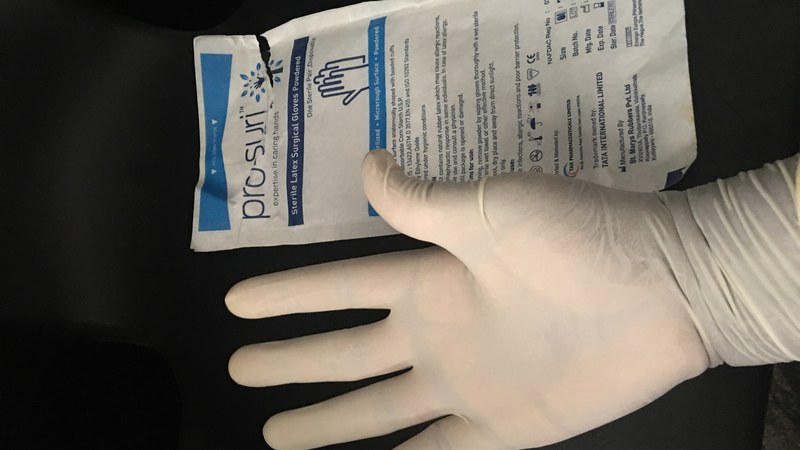
That is roughly a 40-fold increase in revenue — and, crucially, it was profitable, cash-generating growth in a business with enormous barriers to entry. Medline is both a manufacturer (more than 20 manufacturing sites in North America) and a distributor, running the supply chain that keeps hospitals stocked with everything from surgical trays to newborn blankets. The dual model — make it and deliver it — gave Medline pricing power that pure distributors lack. For the full corporate picture, see the companies Charlie Mills owns.
The prospectus bragged, with justification, of more than 50 consecutive years of annual sales growth — a streak that survived recessions, a pandemic, and a leveraged buyout.
The COVID tailwind
The pandemic was Medline's stress test and its showcase. When COVID-19 hit, Medline ramped up production of bleach products, face masks, surgical gowns, disinfecting wipes, and toilet paper — the exact goods the world was desperate for. Revenue was $17.5 billion in 2020 and kept climbing through the crisis years.
Mills' low profile held even then. While other CEOs became cable-news fixtures, the Medline chief stayed in the background — though the company's role earned it recognition including the American Red Cross award for its disaster-response supply work during Hurricane Katrina and later emergencies. The pandemic years cemented Medline's reputation as critical infrastructure, which is exactly how investors came to see it by 2025.

The $34 billion buyout: selling control, keeping the upside
In June 2021, Blackstone, Carlyle Group, and Hellman & Friedman bought a majority stake in Medline in a leveraged buyout valued at about $34 billion — one of the biggest healthcare LBOs in history. For the Mills family, it was a masterstroke of timing.
The family rolled its equity into the deal instead of cashing out, remaining Medline's largest single shareholder with the entire senior management team staying in place. The $34 billion price tag established a hard valuation benchmark for the business — and when Medline went public four years later at an even richer valuation, it was the family's retained stake, not the private-equity firms' majority, that captured the headline upside.
At the time of the deal, Forbes noted that 20 to 30 family members stood to benefit from the family's equity — a reminder that this was never one man's company, even if Charlie held the biggest piece.
The IPO payday: December 2025
The final wealth event was the public listing. On December 16, 2025, Medline sold 216 million shares at $29 each, raising $6.26 billion — the largest IPO of 2025 anywhere in the world, and the biggest U.S. listing since Rivian in 2021. Shares debuted on the Nasdaq as MDLN and closed day one at $41, up about 41%.
At the IPO, Mills' net worth was estimated at $10.9 billion. Nine months later, the 2026 Forbes 400 pegged it at $11 billion — the stake now marked to market every trading day. The IPO proceeds went largely to debt repayment and equity redemptions, cleaning up the leveraged balance sheet from the 2021 buyout and leaving the public company — and its chairman's fortune — on firmer footing.
The disaster-response dividend
There is a lesser-known thread in the Medline growth story: disasters. The company supplied medical goods during Hurricane Katrina — work for which it received an American Red Cross award — and again during Hurricane Harvey and the coronavirus pandemic. Each crisis did two things at once: it stress-tested Medline's logistics at national scale, and it demonstrated to hospital systems that the company could deliver when supply chains everywhere else were breaking.
That reputation became a commercial asset. Hospitals choosing a prime vendor — the single distributor that manages most of a facility's supplies — prize reliability over price, because a stockout in an operating room is not a rounding error. Medline's disaster record, built over decades, helped lock in the long-term contracts that underpin the 50-year sales-growth streak. Competence in a crisis compounds just like revenue does.
Why the stake kept compounding
Strip away the deal headlines and the wealth engine was boring by design. Medline sells consumables — gloves, masks, gowns, trays — that hospitals reorder constantly, in a market where switching suppliers is disruptive and risky. That produces the predictable cash flows investors paid up for in the IPO: PitchBook analysts cited "operational maturity and margin visibility" as the reason the market rewarded a medical-supply company like a tech stock.
Mills' contribution was stewardship across 26 years: expanding manufacturing, building the distribution network across 100+ countries, and never breaking the 50-year sales-growth streak. He stepped up to chairman in 2023, handing day-to-day operations to CEO Jim Boyle, with the machine running at $25.5 billion in annual sales.
It is the classic family-business compounding story — except the compounding ran for six decades and the final number has eleven digits. As for what he actually takes home as a paycheck, that's a different story: see Charlie Mills' salary.
Frequently asked questions
How did Charlie Mills get rich?
Charlie Mills got rich through his ownership stake in Medline Industries, the medical-supply company his father Jim Mills and uncle Jon Mills founded in 1966. As CEO from 1997 to 2023, he grew Medline's annual sales from roughly $600 million to more than $25 billion. The December 2025 IPO — the largest in the world that year at $6.26 billion — gave his stake a public valuation, and Forbes estimated his net worth at $11 billion in 2026.
Did Charlie Mills inherit his fortune?
Partly. Mills inherited his position in a family business — his father co-founded Medline in 1966 — but the fortune itself was built, not handed over. When he became CEO in 1997, Medline did about $600 million in annual sales; by 2024 it did $25.5 billion. The roughly 40-fold growth under his 26-year tenure is what turned a comfortable family stake into an $11 billion fortune.
What did Charlie Mills do before becoming Medline CEO?
Mills earned a bachelor's degree and an MBA from Cornell University before rising through Medline and taking over as CEO in 1997 at around age 36, alongside his cousin Andy Mills (president) and brother-in-law Jim Abrams (COO). Details of his earliest roles at the company have never been widely publicized — he has always been a low-profile executive.
How much did Medline sell for in 2021?
Medline did not sell outright in 2021. Blackstone, Carlyle Group, and Hellman & Friedman acquired a majority stake in a leveraged buyout valued at roughly $34 billion — one of the largest healthcare LBOs ever. The Mills family rolled its equity into the deal and remained Medline's largest single shareholder, which is why the family — not the buyout firms — captured the IPO upside in 2025.
Why is Medline worth so much?
Medline is the largest privately held manufacturer and distributor of medical-surgical supplies in the U.S., with more than 300,000 products, 43,000 employees, and sales in over 100 countries. Its 2024 revenue was $25.5 billion, and the company has posted more than 50 consecutive years of annual sales growth. Investors prize that predictable, recession-resistant cash flow — which is why the 2025 IPO, at $29 a share, jumped 41% on day one.
Is Charlie Mills married?
There is no public record of Charlie Mills being married. He keeps his personal life entirely private, and no spouse or children have ever been identified in credible reporting. His documented family is the business dynasty: son of co-founder Jim Mills, cousin of fellow billionaire Andy Mills.
How old is Charlie Mills in 2026?
Charlie Mills is 65 in 2026. Born Charles N. Mills in 1961 in Chicago, Illinois, he earned his bachelor's degree and MBA from Cornell University before taking Medline's CEO reins in 1997.
Where does Charlie Mills live?
Forbes lists Illinois as Charlie Mills' home state. Medline has been headquartered in Northfield, Illinois for decades, but Mills' exact residence has never been publicly reported.
Sources
- Meet The 34 Newcomers To The 2026 Forbes 400 Listcommstrader.com
- Becker's Hospital Review — 16 Richest People in US HealthcareBecker's Hospital Review
- Forbes 400 2026Forbes