Quick answer
Edwin Chen made his ~$18 billion by founding Surge AI in 2020, bootstrapping it with his own savings, and never giving up equity to venture capitalists. The company sells the most unglamorous and most essential input in the AI boom — elite human feedback for training AI models — to every major AI lab on earth. With ~75% ownership intact, every billion dollars of Surge's valuation is worth ~$750 million to him personally.
The fortune was minted in about six years. There was no prior startup exit, no inheritance, no lucky crypto bet — just a decade of big-tech paychecks reinvested as seed capital, and a contrarian thesis that turned out to be exactly right.
The thesis: AI is only as good as the humans teaching it
Chen's insight came from a decade of frustration. As a research scientist at Twitter, Google, and Facebook, he kept hitting the same wall: AI models were starving for high-quality data. The industry's answer was to pay gig workers pennies to click on pictures of cats and dogs — cheap labels for increasingly sophisticated machines.
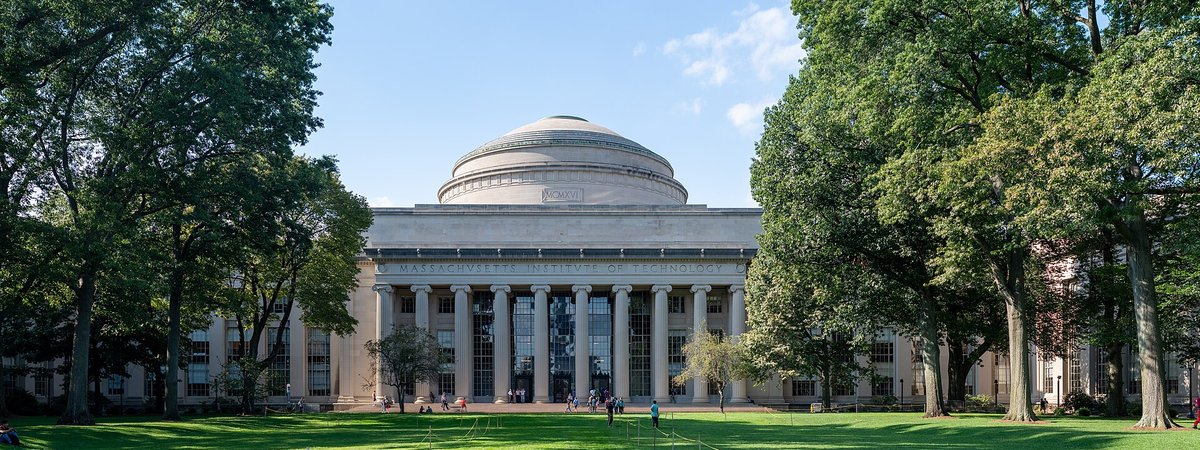
Chen thought that was a joke. His MIT background — math, computer science, linguistics, drawn partly by Noam Chomsky — told him that language and reasoning couldn't be graded by checkbox clickers. In his phrase, data labeling wasn't grunt work; it was "coding human richness" — translating the judgment of PhDs, professors, doctors, and lawyers into something a machine could learn from.
When GPT-3 launched in 2020 and revealed that models could now code, use tools, and attempt complex creative tasks, Chen saw the opening: the old labeling playbook was obsolete, and nobody was building the new one. A month after GPT-3's release, he started Surge.

The decade that paid for it: Clarium to Meta
Chen didn't start from zero — he started from ten years of elite paychecks, which became his seed fund:
| Period | Role | What it taught him |
|---|---|---|
| 2008+ | Algorithmic trader, Clarium Capital (Peter Thiel's hedge fund) | Quantitative rigor; how smart money evaluates bets |
| 2010s | Senior data science / research scientist, Twitter | Real-world data messiness at social scale |
| 2010s | Research scientist, Google | Frontier ML research; the data bottleneck firsthand |
| 2010s | Research scientist, Facebook/Meta | Applied AI at billion-user scale |
| 2020 | Founder & CEO, Surge AI | Everything, all at once |
The throughline: at every stop, the binding constraint on better models was data quality, not algorithms or compute. By 2020 he had both the diagnosis and the savings to act on it — "ten years' worth of paychecks from big tech," as one profile put it, bet on a single idea.
His unusual résumé also shaped hiring. About 20% of Surge's early staff came from non-tech backgrounds — including a drummer Chen hired because he loved the intersection of tech and the humanities. The Florida native who speaks French, Spanish, and Mandarin was building a company that valued judgment over credentials.
The bootstrap playbook: 60 people, $1B revenue
Surge's operating numbers remain the most startling in the AI industry. Per Lenny's Podcast (December 2025), the company surpassed $1 billion in revenue with around 60–70 people, completely bootstrapped — which host Lenny Rachitsky called a feat he didn't believe anyone had ever accomplished: the fastest company in history to $1B while bootstrapped.
How? Three compounding advantages:
1. Premium pricing on premium labor. Where rivals built gig-economy labeling farms, Surge recruited vetted domain experts and charged AI labs accordingly. When your customers are OpenAI and Anthropic racing to ship the smartest model on earth, "good enough" data is worthless — and the best data commands whatever price Surge names.
2. Tiny headcount, elite density. Chen's stated philosophy: "We could fire 90% of the people and we would move faster because the best people wouldn't have all these distractions." Surge was built "a lot more like a research lab than a typical startup" — curiosity and intellectual rigor over quarterly metrics and board decks.
3. No VC treadmill. Without investors demanding blitzscale hiring, Surge grew revenue per employee instead of headcount. By 2025: ~$1.4 billion in revenue with ~110 employees — roughly $13 million per employee, a ratio essentially unheard of in tech.
RLHF: the product that prints money
Surge's core product is reinforcement learning from human feedback (RLHF) — the process by which human experts grade, rank, and correct AI model outputs so the models learn what "good" looks like. It's the reason ChatGPT gives helpful answers instead of confident nonsense, and every frontier lab needs it at massive scale.
Surge's edge is who does the grading. Its platform connects AI developers with a curated network of doctors, lawyers, and research scientists — Wikipedia notes the workforce has included Goldman Sachs analysts, Stanford researchers, and U.S. Navy SEALs — providing expert feedback for complex reasoning tasks that commodity labelers can't touch.
The suite has expanded into RL environments (interactive simulations where AI agents learn by doing), red-teaming, and evaluation benchmarks — Hemingway-bench for writing quality, AdvancedIF for instruction following, EnterpriseBench for agentic tasks. Each layer deepens switching costs: once a lab's training pipeline runs on Surge's expert loops, ripping them out means retraining on worse data.

The customer list: everyone, all at once
Surge's client roster reads like the AI industry's phone book: OpenAI, Anthropic, Google, Meta, and Microsoft, plus the U.S. Army. When every frontier lab is racing the same model race, they all need the same scarce input — and Surge is the premium supplier.
The roster got stronger in June 2025, when Meta's $14 billion investment in rival Scale AI made Surge the independent alternative. Labs competing with Meta didn't want their training data flowing through a Meta-aligned vendor; Google, OpenAI, and xAI business shifted to Surge, in one analysis's words, as "newly uncontested opportunities."
Scale matters here: Surge worked with about 1 million annotators in 2025 (Wikipedia) through its platform, with ~50,000 vetted domain experts at the premium tier. The company also absorbed capabilities via subsidiaries Get Hybrid, Task Up, and Data Annotation — quiet acquisitions that extended its reach.
The math of $18B: why ownership percentage is everything
Compare Chen's outcome with the standard Silicon Valley path:
| Scenario | Founder stake | At $24B valuation |
|---|---|---|
| Typical VC-backed founder (Series A→D) | 10–15% | $2.4–3.6B |
| Edwin Chen (bootstrapped) | ~75% | ~$18B |
Same company value, 5–7x the personal fortune — purely from refusing dilution. This is the entire financial story of Edwin Chen: not a better product idea than his rivals (Scale AI does similar work), but a radically different capital strategy that left him owning three-quarters of the upside.
It's also why the July 2025 funding talks matter so much. If Surge raises its first external round at the projected $30 billion valuation, Chen's stake — even slightly diluted — reprices toward $22 billion. The bootstrap got him here; the first priced round will put a public number on it.
“Without us, AGI simply won't happen”
Chen's most famous line, given to Forbes: "I truly think our work is so important for all AI models that without us, AGI simply won't happen."
Strip away the bravado and there's a real argument: as models approach human-level reasoning, the bottleneck shifts from compute and algorithms to judgment — and judgment can only be supplied by humans who have it. If that thesis holds, Surge isn't a services company; it's infrastructure, as essential to AGI as fabs are to chips.
Whether or not one buys the maximal version, the market has voted with $1.4 billion in annual revenue. Chen bet his life savings that human expertise was the scarce input in the AI gold rush — and spent six years proving it. For the current state of that bet, see the $18B net worth breakdown.
Frequently asked questions
How did Edwin Chen make his money?
Chen made his ~$18 billion fortune by founding Surge AI in 2020 and keeping ~75% of it. He bootstrapped the data-labeling company — no venture capital — and rode the explosion in AI labs' demand for elite human feedback to over $1 billion in annual revenue with fewer than 100 employees.
What did Edwin Chen do before Surge AI?
He was an algorithmic trader at Peter Thiel's Clarium Capital hedge fund starting in 2008, then held senior data science and research scientist roles at Twitter, Google, and Facebook/Meta. At MIT he studied math, computer science, and linguistics.
Why didn't Edwin Chen raise venture capital?
By his own account, he thought the Silicon Valley playbook was 'ridiculous' — he believed a small elite team would move faster than a bloated one. Bootstrapping let him keep ~75% ownership instead of the 10–20% typical for VC-backed founders, which is the entire reason his fortune is $18B rather than $2B.
How does Surge AI make money?
Surge charges AI labs premium prices for high-quality human feedback on model training (RLHF). Its vetted network of tens of thousands of domain experts — doctors, lawyers, scientists — reviews model outputs. Clients include OpenAI, Anthropic, Google, Meta, and Microsoft; 2025 revenue was ~$1.4 billion.
When did Edwin Chen become a billionaire?
Forbes first listed him on the 2026 World's Billionaires list (published March 2026) at $18 billion, naming him the richest newcomer of the year. The fortune was built in roughly six years, from Surge's 2020 founding to the 2025–2026 valuation surge.
Sources
- Forbes — Edwin Chen ProfileForbes
- Surge AISurge AI
- Edwin Chen — WikipediaWikipedia