Quick answer
Galen G. Weston made his money by inheriting a retail dynasty and then expanding it. The platform was built by his great-grandfather (a Toronto bakery in 1882), his grandfather (Associated British Foods and Primark in the UK), and his father (the rescue of Loblaw, the creation of President's Choice, the $12.4 billion Shoppers Drug Mart buy, and the 2003 purchase of Selfridges). Galen took operational charge of Loblaw in 2006 at age 33, became chairman of George Weston Limited in 2016, and took control of the family holding company Wittington Investments in 2020 — then sold Selfridges for £4 billion and, in 2026, agreed the US$8.9 billion acquisition of Boots.
The headline number: the Weston family fortune reached £18.939 billion (about US$24 billion) on the Sunday Times Rich List 2026. See the full Galen Weston net worth breakdown for where every pound sits.
1882: a Toronto bakery and the dynasty's first pound
The fortune's origin is almost absurdly modest. In 1882, American-born George Weston — Galen's great-grandfather — bought a bakery in Toronto. What followed was a century of compounding: the bakery became a food empire, and the Weston name became synonymous with bread, biscuits, and groceries across Canada. The lesson of generation one: own the supply chain, not just the storefront.
The second generation went global. W. Garfield Weston crossed the Atlantic in the 1930s and, in 1935, founded what became Associated British Foods — today the FTSE-listed owner of Primark. One of Garfield's most consequential moves was backing Irish retailer Arthur Ryan, whose first Penneys store opened in Dublin in 1969 — the chain later renamed Primark, now a fast-fashion colossus with hundreds of stores across Europe and the US. The Weston family's UK branch still holds a majority stake in AB Foods through Wittington Investments, alongside Fortnum & Mason and Heal's.
1974–2021: the father who built the modern empire
The third generation — W. Galen Weston (1940–2021) — is the reason the fortune is measured in tens of billions. He took executive control of George Weston Limited in 1974 and, over 47 years, transformed a food company into a retail-and-property empire:
| Year | Move | Why it mattered |
|---|---|---|
| 1972 | Took charge of struggling Loblaw | Rescued it from near-bankruptcy |
| 1978–1983 | Launched No Name, then President's Choice | Private-label brands became profit engines |
| 2003 | Bought Selfridges Group | Luxury department stores, UK + Ireland + Netherlands |
| 2013 | Bought Shoppers Drug Mart (~$12.4B CAD) | Canada's biggest retail deal ever at the time |
| 2015–2021 | Sold Weston Foods bakery arm (2022, FGF Brands) | Focused the empire on retail + property |
The father's playbook was consistent: buy heritage brands cheap, invest patiently, hold for decades. He bought Selfridges when UK department stores were unfashionable and sold them 19 years later for £4 billion. He retired as chairman of George Weston Limited in 2016, handing the title to his 43-year-old son, and died in April 2021 at 80.
2006: the 33-year-old takes Loblaw
Galen G. Weston became executive chairman of Loblaw in October 2006, aged 33 — one of the youngest leaders of a major North American retailer. His early years were defined by a massive operational overhaul: supply-chain modernization, a renewed push on the President's Choice and No Name private labels, and the expansion of Joe Fresh fashion into hundreds of stores.
The defining deal of his tenure came in 2013: the acquisition of Shoppers Drug Mart for about $12.4 billion CAD. The logic was elegant — Loblaw's grocery footprint plus Shoppers' pharmacy-and-beauty network created a combined health-and-food retailer with unmatched Canadian scale. The deal is widely seen as the making of Galen Jr.'s reputation as an operator, not just an heir.
He also professionalized the corporate structure. In early 2024, Galen stepped back from Loblaw's day-to-day running when Per Bank — the Danish retail executive who had run the Salling Group — became CEO. Galen stayed on as chairman, keeping his focus on George Weston Limited, Wittington Investments, and — as 2026 showed — the family's biggest strategic moves.
2020–2021: the formal handover
The legal transfer of power happened in December 2020, when Galen G. Weston succeeded his father as the controlling shareholder of Wittington Investments — the private holding company through which the family owns roughly 63% of George Weston Limited. Four months later, his father died, and the fourth generation was fully in charge.
It was not a quiet inheritance. By 2023, Galen was being grilled by a Canadian parliamentary committee over grocery prices, and in 2024 a consumer boycott of Loblaw made him the public face of the country's cost-of-living anger. His executive compensation — $8.4 million in 2022, up 55% — became a national talking point. Through it all, the underlying businesses kept generating cash: Loblaw's stock has traded near record highs for much of the decade.
2022: selling Selfridges for £4 billion
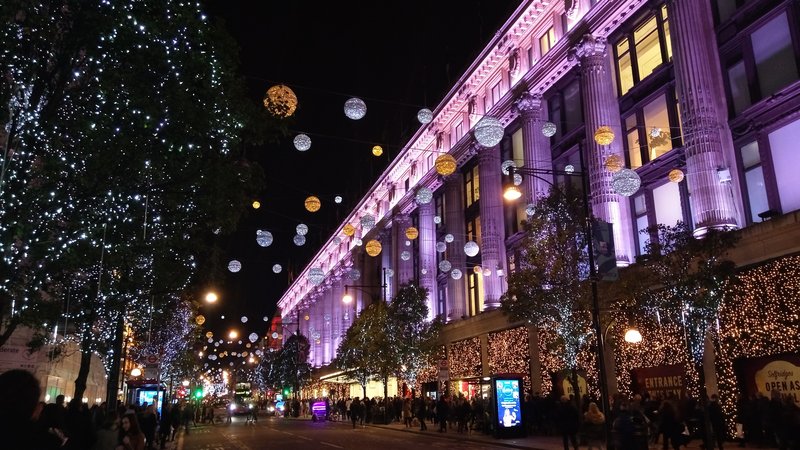
In 2022 the family sold the Selfridges Group — Selfridges in the UK, Brown Thomas and Arnotts in Ireland, De Bijenkorf in the Netherlands — for a reported £4 billion. Wittington had owned it since 2003, when Galen's father bought the chain. The sale was a masterclass in the family method: buy out of fashion, hold for a generation, sell at the top. The proceeds recycled into the next phase of the empire — including, eventually, Boots.
2026: the $8.9 billion Boots bet
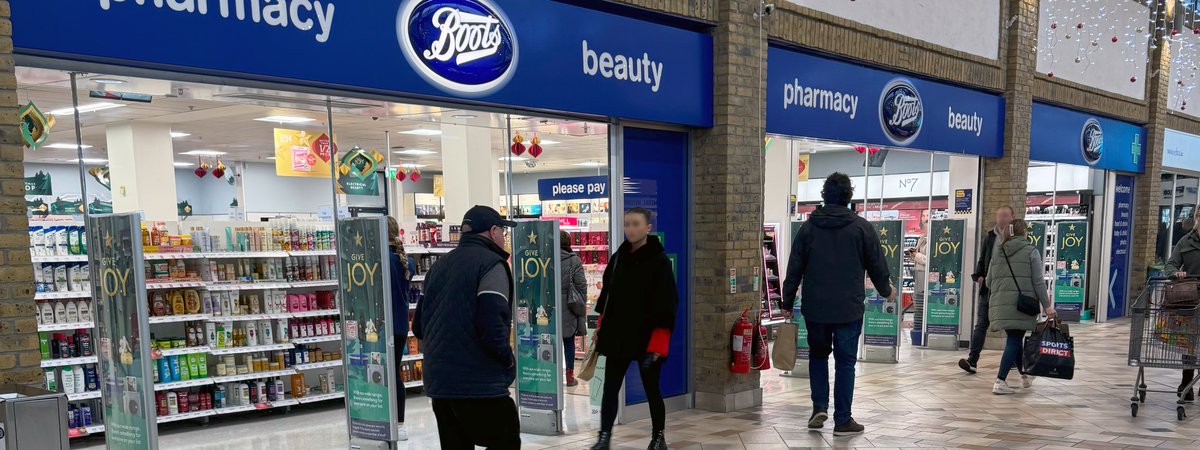
On October 7, 2026, Wittington Investments agreed to buy Boots from Sycamore Partners and the Pessina family for US$8.9 billion (£6.7 billion) including debt, in partnership with Fairfax Financial. Wittington takes operational control; Fairfax puts up to ~$2.3 billion for roughly half the equity; Galen G. Weston becomes chairman of Boots when the deal closes in Q1 2027.
The strategic logic mirrors Shoppers Drug Mart: a heritage pharmacy-and-beauty chain (about 1,800 UK and Ireland stores, 50,000+ employees, the No7 beauty brand, Boots Opticians) that the family can run for decades. It is the family's biggest UK acquisition since the Selfridges purchase 23 years earlier — and a statement that the fourth generation intends to be a builder, not just a custodian. For the complete inventory of what the family now owns, see the Weston companies guide.
The Weston wealth formula
Strip away four generations of detail and the formula is simple: control the holding company, own the grocery cash flow, buy pharmacy and beauty brands, hold forever. Galen G. Weston inherited the platform — but the $12.4 billion Shoppers deal, the £4 billion Selfridges sale, and the $8.9 billion Boots acquisition are his own entries in the family ledger. That is how an 1882 bakery became a $24 billion fortune.
Frequently asked questions
How did Galen Weston make his money?
By inheriting a retail dynasty and then growing it. His great-grandfather founded the George Weston bakery business in 1882; his grandfather built Associated British Foods and Primark in the UK; his father rescued Loblaw and bought Selfridges. Galen G. Weston took charge of Loblaw in 2006 at 33, became chairman of George Weston Limited in 2016, and has since sold Selfridges for £4 billion and agreed a US$8.9 billion Boots acquisition.
Did Galen Weston inherit everything or build it himself?
Both. The platform was inherited — Wittington Investments, the family holding company, came under his control in December 2020. But he personally led Loblaw for nearly two decades, oversaw the $12.4 billion Shoppers Drug Mart acquisition in 2013, professionalized the private-label machine, and executed the Boots deal in 2026.
When did Galen Weston take over the family business?
He became executive chairman of Loblaw in October 2006 at age 33. He succeeded his father as chairman of George Weston Limited in 2016, and became the controlling shareholder of Wittington Investments in December 2020, shortly before his father's death in April 2021.
What was the Shoppers Drug Mart acquisition?
In 2013 Loblaw bought Shoppers Drug Mart — Canada's largest pharmacy, health and beauty retailer — for about $12.4 billion CAD. It was the biggest retail acquisition in Canadian history at the time and gave the Weston group a national pharmacy network of more than 1,300 stores.
Why did the Weston family sell Selfridges?
The family sold the Selfridges Group — owned through Wittington since 2003 — for a reported £4 billion in 2022. The sale crystallized two decades of value creation in luxury department stores and freed capital for new bets, including the 2026 Boots acquisition.
Is Galen Weston married?
Yes. Galen G. Weston married Alexandra Schmidt in 2005. She is a granddaughter of Thomas J. Bata, the founder of the Bata shoe empire. The couple has two sons.
How old is Galen Weston in 2026?
Galen G. Weston was born on December 19, 1972, in Dublin, Ireland — making him 53 years old in 2026.
Where does Galen Weston live?
Galen Weston is based in the Toronto area, where the family lives on a large private estate in Caledon, Ontario, reportedly about 500 acres and bought from the Eaton family in 2014.