Quick answer
Keith Dunleavy made his money the slow way, then accelerated the fast way. For 26 years he built one company — Inovalon — from an idea conceived during his medical residency into a healthcare data-analytics giant he took public in 2015 and sold for $7.3 billion in 2021. Then, through his self-funded investment firm Apandion, he backed SpaceX before its IPO — the bet that pushed his fortune to $4.6 billion and earned him a debut on the September 2026 Forbes 400 at rank #375. For the numbers breakdown, see Keith Dunleavy's net worth.
The residency idea (1998)
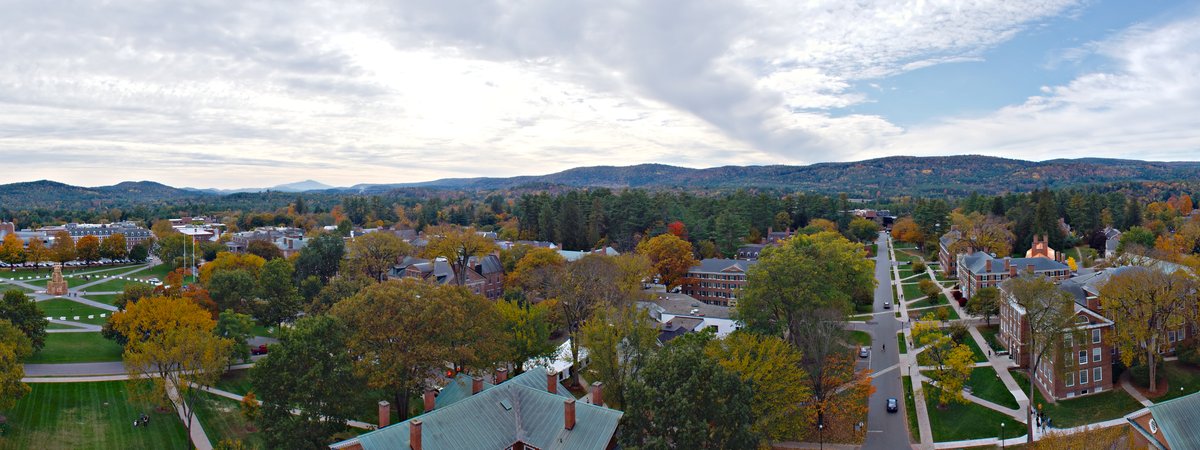
Every fortune has a founding scene, and Dunleavy's is unusually clinical. In the late 1990s he was completing an internal medicine residency at The Johns Hopkins Hospital in Baltimore, having earned his MD from Harvard Medical School and a Dartmouth degree ('91) before it. Watching how healthcare data was trapped in silos, he conceived Inovalon's founding thesis: cloud-based software and data analytics could improve both clinical outcomes and the economics of the entire healthcare system. Dartmouth's later profile of him called it "the audacious goal of leveraging data and analytics to improve patient outcomes."
In 1998, at 29, he made the decision that defines the money story: he founded the company and became its CEO — a post he would hold for the next 26 years. He also became chairman in 2006. There was no dramatic pivot, no second company, no side hustle that mattered. For a quarter century, the money story is one company, compounding.
| Year | Milestone | Why it mattered |
|---|---|---|
| 1991 | Dartmouth graduation | Biology modified with engineering, high honors |
| 1998 | Inovalon founded; CEO | 26-year run begins |
| 2015 | Nasdaq IPO (INOV) | Public-market validation |
| 2021 | $7.3B take-private | The big liquidity event; rolled equity |
| 2025 | CEO retirement | March 1, 2025; moved to board |
| 2026 | Forbes 400 debut | $4.6B, rank #375 |
Building the data machine (1998–2015)
For its first 17 years, Inovalon grew the way durable software companies do: customers, datasets, acquisitions. Dunleavy led more than ten acquisitions and divestitures, assembling the Inovalon ONE Platform — a cloud-based system connecting health plans, hospitals, physicians, pharmacies, and life-sciences organizations. Colleagues from the era remembered him as the first one in the office in the morning and the last to leave at night; the "superpower," one Dartmouth speaker said, was "the desire to make life better for others."
The company reached escape velocity in 2015, when Dunleavy took Inovalon public on the Nasdaq under the ticker INOV. The IPO converted two decades of private compounding into public equity value — and made his majority stake visible to the market for the first time. Going public also did something subtler: it gave Inovalon acquisition currency and put its data assets — already measured in tens of billions of medical events — on the industry's map.
The $7.3 billion exit (2021)
On August 19, 2021, Inovalon announced the definitive agreement that made Dunleavy's fortune: acquisition by an equity consortium led by Nordic Capital, with Insight Partners as lead co-investor, 22C Capital, and Dunleavy himself plus certain Class B stockholders, at an enterprise value of about $7.3 billion. Public shareholders got $41.00 per share in cash — a 25.3% premium.
Here is the crucial money detail: Dunleavy owned and controlled about 64% of Inovalon's stock going into the deal, per the merger disclosures, and he was on the buy side of the transaction. He did not simply cash out. He rolled a large portion of his equity into the private company — which is why Forbes says he still holds roughly 15% of Inovalon today and sits on its board. The sale gave him massive liquidity and kept him exposed to the upside. It was, financially, the best of both worlds.
The quiet growth years (2021–2025)
After the take-private, Inovalon vanished from public filings, but the business kept compounding under Dunleavy's CEO tenure. The company executed a three-year transformation into a pure-play cloud-based SaaS and data platform provider, pushed AI into its product portfolio, and grew revenue, gross margin, and adjusted EBITDA at double-digit compound annual rates through the period. By September 2026, its platform data covered more than 99 billion medical, pharmacy, and lab events across 461 million unique lives for over 50,000 active, licensed customers.
On March 1, 2025, after 26 years as CEO, Dunleavy retired and transitioned to the board, handing the role to Adam Kansler. The press release framed it as a baton-pass after completing the transformation. In money terms, it marked his shift from operator to allocator — which is where Apandion comes in.

Apandion: the SpaceX bet
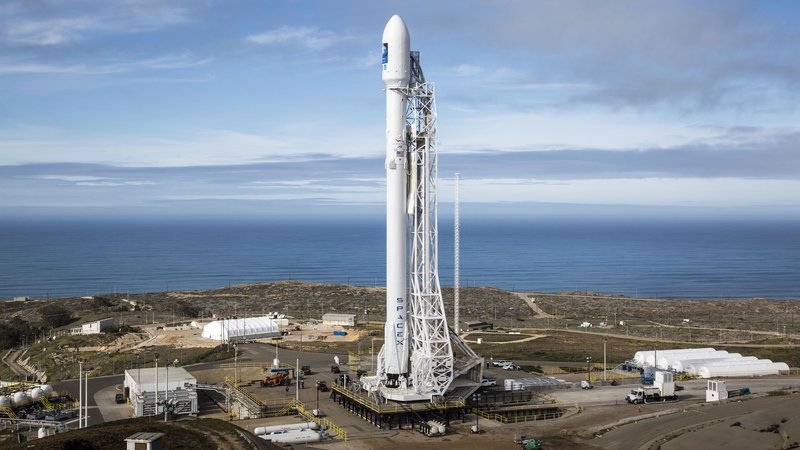
With liquidity from the Inovalon era, Dunleavy founded Apandion — an investment firm backed solely by his own funds, with an emphasis on founder-led technology companies. Forbes identifies two portfolio names: SpaceX and Shield AI. The SpaceX position is the money story's second engine: Apandion backed the rocket company before its IPO, and the June 2026 listing turned that paper stake into public-market value listed on Dunleavy's Forbes profile.
Think about what that means for how he made his money. The Inovalon equity — the 26-year compounding — built the base. The Apandion portfolio, led by SpaceX, added the step-change that took him from very rich to Forbes 400. It is a portfolio construction lesson: concentrate on what you built, then concentrate your bets on founders you believe in.
What salary never did
One of the striking facts of the money story is how little of it came from pay. As Inovalon's founder-CEO, Dunleavy's base salary was $205,000 — with no bonus eligibility and no equity compensation by choice, per the company's proxy disclosures. The board itself said his pay was "significantly below competitive levels," and that his motivation came from his equity ownership. The $4.6 billion was built by owning the company, not by being paid by it. For the full picture, see Keith Dunleavy's salary.
The full money arc
Put it together and the arc is clean: a doctor conceives a data company in residency (1998), runs it for 26 years through an IPO (2015) and a $7.3 billion sale (2021) while rolling equity, keeps ~15%, founds a self-funded investment firm (Apandion), backs SpaceX pre-IPO, and debuts on the Forbes 400 at $4.6 billion in September 2026. No inheritance, no lottery-ticket startup flip — just compounding, concentration, and one well-timed rocket bet. For the corporate map behind the fortune, see Keith Dunleavy's companies.
Frequently asked questions
How did Keith Dunleavy make his money?
Dunleavy made his money by founding Inovalon, a healthcare data-analytics company he conceived during his Johns Hopkins internal medicine residency. He served as CEO from 1998 to 2025 — 26 years — taking Inovalon public on the Nasdaq in 2015 and selling it to a Nordic Capital-led consortium for $7.3 billion in 2021. He then founded Apandion, a self-funded investment firm that backed SpaceX before its IPO.
How much did Keith Dunleavy make from the Inovalon sale?
The 2021 deal carried an enterprise value of about $7.3 billion, with shareholders receiving $41.00 per share in cash. Dunleavy owned and controlled about 64% of Inovalon's stock ahead of the take-private, according to merger disclosures, and rolled much of that equity into the private company rather than cashing out — Forbes says he still holds roughly a 15% stake today.
When did Keith Dunleavy found Inovalon?
Dunleavy founded Inovalon in 1998 and became its CEO the same year, running it for 26 years until his retirement on March 1, 2025. He conceived the idea — using cloud software and data analytics to improve clinical outcomes and healthcare economics — during his internal medicine residency at Johns Hopkins.
What is Apandion, Keith Dunleavy's investment firm?
Apandion is a self-funded investment firm founded by Dunleavy and backed solely by his own money, focused on founder-led technology companies. Forbes names two of its investments: SpaceX, which Apandion backed before its June 2026 IPO, and Shield AI, the San Diego defense-tech company building AI pilots for aircraft.
Did Keith Dunleavy invest in SpaceX before the IPO?
Yes. Forbes says Apandion, Dunleavy's self-funded firm, became a pre-IPO backer of SpaceX, and his Forbes profile lists Space Exploration Technologies Corp. (SPCX-US) among his financial assets. The stake crystallized in value after SpaceX's blockbuster June 2026 IPO and helped push Dunleavy onto the 2026 Forbes 400.
Is Keith Dunleavy married?
Yes, Dunleavy is married and has four children, according to Forbes. In 2020 he and his wife created the Dunleavy Foundation, supporting education, social entrepreneurship, and U.S. service members and veterans. His wife's name is not a matter of public record.
How old is Keith Dunleavy in 2026?
Keith Dunleavy was born on June 25, 1969, making him 57 in 2026. He graduated from Dartmouth College in 1991, earned his MD from Harvard Medical School, and completed his residency at Johns Hopkins Hospital before founding Inovalon at 29.
Where does Keith Dunleavy live?
Forbes lists his residence as Annapolis, Maryland, the Chesapeake Bay city about 30 miles east of Inovalon's Bowie headquarters. He has stayed rooted in the Maryland region through the entire arc of building and selling Inovalon.