
Quick answer
Zhang Yiming made his money by founding ByteDance in March 2012 and building it around one insight: machine-learning algorithms that recommend content to users, instead of making them search for it or follow the right accounts. The news aggregator Toutiao (2012) proved the model in China; Douyin (2016) and TikTok (2017) took it global. His estimated 21% stake in the privately held company is now valued at an estimated $84–105 billion — that is, $84B to $105B — with Bloomberg's September 2026 estimate of $105.5 billion making him Asia's richest person for the first time. He stepped down as CEO in 2021 and has held no executive role since, yet his fortune keeps growing on the strength of a company he no longer runs day-to-day.
This is the full story of that fortune — the failed startups, the algorithm bet, the Musical.ly deal, and the AI pivot now driving the latest leg of his wealth. For the numbers behind the fortune, see Zhang Yiming's net worth breakdown.
The engineer: Kuxun, Microsoft, and a failed startup
Zhang was born on April 1, 1983, in Longyan, Fujian, to parents who were civil servants; he was an only son. In 2001 he enrolled at Nankai University in Tianjin, majored in microelectronics before switching to software engineering, and graduated in 2005 — meeting his future wife along the way. What followed was a rapid-fire apprenticeship in the Chinese internet industry.
In February 2006 he became the fifth employee and first engineer at Kuxun, a travel website, and was promoted to technical director within a year. In 2008 he left for Microsoft but quickly felt stifled by its corporate rules and quit for Fanfou, a microblogging startup that eventually failed. When Expedia moved to acquire Kuxun in 2009, Zhang took over its real estate search business and started 99fang.com — his first company — which he ran for about three years. The pattern was already visible: a restless engineer who learned fast, hated bureaucracy, and kept betting on mobile software.
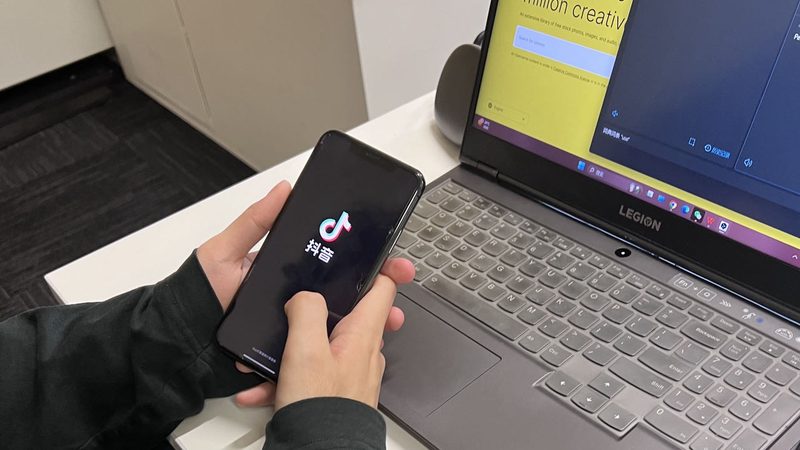
2012: a four-bedroom apartment in Beijing
In March 2012, Zhang founded ByteDance in a four-bedroom Beijing apartment with university friend Liang Rubo. His core idea was not a social network — it was machine ranking: give people what they are most likely to keep watching, without requiring them to follow anyone. The timing was deliberate. Zhang had recognized the shift from desktop computers to smartphones before most of China's internet giants had reorganized around it.
The first product, Toutiao ("Today's Headlines"), launched in August 2012 — an algorithm-driven news aggregator that became one of China's most popular mobile apps. It monetized through advertising and proved that recommendation engines could beat both search and social graphs at capturing attention. Every large competitor eventually rebuilt around the same principle: Meta shifted Instagram and Facebook feeds toward recommended content, Google built YouTube Shorts, Snapchat followed. The industry's convergence on ByteDance's model is the clearest measure of the idea's force.
Douyin, TikTok, and the Musical.ly masterstroke
ByteDance launched Douyin in China in 2016, then TikTok for international markets in 2017. The decisive move came that same year: ByteDance acquired the lip-syncing app Musical.ly for a reported roughly $800 million to $1 billion and merged it into TikTok — instantly buying a young Western user base instead of building one from scratch. TikTok grew into a global cultural phenomenon with more than a billion active users, and ByteDance became one of the most valuable private technology companies on earth.
Revenue followed attention. The company expanded across entertainment and news apps — Toutiao, Douyin, TikTok, Xigua Video — and built an advertising machine on top of the world's most addictive recommendation engine. Today ByteDance says it employs more than 150,000 people across nearly 120 cities.
2021: stepping back at the peak
In May 2021 Zhang announced he would step down as chief executive, completing the handover to Liang Rubo in November 2021 and relinquishing the chairmanship the same month. His stated reason was disarmingly honest: he was more interested in research and long-range thinking than in management, and he lacked the social qualities the role required. The timing coincided with an intense regulatory crackdown on Chinese tech companies — several other founders stepped back in the same period — which has fueled persistent speculation that the decisions were not purely personal.
Whatever the motive, the financial structure he left behind is the key to this story: Reuters reported he retained more than 50% of ByteDance's voting rights even after leaving management. He stepped away from operations but kept control — and kept the equity that is now worth an estimated $84–105 billion.
The AI second act: Doubao and the 2026 re-rating
The latest leg of Zhang's fortune has little to do with dancing videos. ByteDance has pushed aggressively into artificial intelligence, and institutional investors have re-rated the company accordingly. Its Doubao AI assistant reportedly counts roughly 200 million monthly active users, and the company has invested heavily in AI infrastructure, chips, and video-generation models such as Seedance. Fortune described AI as one of the biggest wealth drivers behind Zhang's 2026 surge.
The mechanics are direct: when BlackRock, Fidelity, and T. Rowe Price marked up their ByteDance valuations in September 2026 — citing the AI business alongside the core platforms — Bloomberg's estimate of Zhang's fortune jumped more than $12 billion in a single month, carrying him past Gautam Adani to become Asia's richest person. The algorithm founder's wealth is now being priced, in part, as an AI fortune.
| Year | Milestone | Effect on fortune |
|---|---|---|
| 2009–2012 | Runs 99fang.com, his first company | Seed capital and mobile expertise |
| Mar 2012 | Founds ByteDance | 21% stake created |
| Aug 2012 | Toutiao launches | Algorithm model proven |
| 2016–2017 | Douyin, TikTok, Musical.ly deal | Global scale; 1B+ users |
| Mar 2019 | Bloomberg begins tracking: ~$13B | Baseline |
| Nov 2021 | Steps down as CEO | Keeps stake + >50% voting rights |
| Sep 2026 | AI re-rating; +$12B in a month | ~$105.5B; Asia's richest |
The money lesson: own the engine, not the salary
Zhang never got rich from a paycheck — ByteDance is private and discloses no executive compensation, and as a founder his economics were always equity. The fortune is a pure play on ownership of a recommendation engine that turned out to be the most valuable attention-capture technology of the mobile era, now being repriced as an AI asset. From a $13 billion estimate in 2019 to $105.5 billion in 2026, the math is simple: 21% of a company the market keeps deciding is worth more. How that stake compares to his compensation setup is covered in Zhang Yiming's salary and income, and the full asset list in the companies he owns.
Frequently asked questions
How did Zhang Yiming make his money?
Zhang Yiming made his fortune by founding ByteDance in March 2012 and building it on a single insight: machine-learning algorithms that recommend content instead of making users search or follow accounts. The news app Toutiao (2012) proved the model in China; Douyin (2016) and TikTok (2017) took it global. His roughly 21% stake in the privately held company is now estimated at $84–105 billion — Bloomberg put it at $105.5 billion in September 2026.
What was Zhang Yiming's first company?
Before ByteDance, Zhang's first company was 99fang.com, a real estate search engine he started in 2009 after taking over Kuxun's property-search business. He ran it for about three years before quitting to found ByteDance in 2012. Earlier, he was the fifth employee and first engineer at the travel site Kuxun (2006), spent a brief stint at Microsoft in 2008, and worked at the failed microblogging startup Fanfou.
How much did the Musical.ly acquisition cost ByteDance?
ByteDance acquired the lip-syncing app Musical.ly in 2017 for a reported sum of roughly $800 million to $1 billion, then merged it into TikTok. The deal gave TikTok an instant user base in the United States and other Western markets, accelerating its rise into a global cultural phenomenon with more than a billion users.
Why did Zhang Yiming step down as ByteDance CEO?
He announced in May 2021 that he would step down, completing the handover to co-founder Liang Rubo in November 2021 and relinquishing the chairmanship the same month. He said he was more interested in research and long-term thinking than in day-to-day management, and that he lacked some of the social qualities the CEO role required. He has held no executive position since, though Reuters reported he retained more than 50% of ByteDance's voting rights.
How much is ByteDance worth in 2026?
ByteDance is privately held, so its value is estimated from institutional investors' marks. Bloomberg's September 2026 valuation — which underpinned Zhang's $105.5 billion fortune — was built on updated valuations reported by BlackRock, Fidelity Investments, and T. Rowe Price, with a 10% risk discount applied for the company's private status. Bloomberg had valued the company at around $268 billion in a December 2023 share buyback, showing how much the marks have risen since.
Is Zhang Yiming married?
He met his wife while studying at Nankai University, according to his Wikipedia biography, which cites Chinese media profiles. Her identity has never been made public, and she stays entirely out of the spotlight — consistent with Zhang's famously guarded personal life.
How old is Zhang Yiming in 2026?
Zhang Yiming was born on April 1, 1983, in Longyan, Fujian province, China, making him 43 years old in 2026. He graduated from Nankai University in 2005 and founded ByteDance in March 2012 at age 29.
What did Zhang Yiming study in college?
He enrolled at Nankai University in Tianjin in 2001, began in microelectronics engineering, switched to software engineering, and graduated in 2005 with a bachelor's degree in computer engineering. That engineering foundation — recommendation systems, machine learning, mobile software — became the technical core of ByteDance's algorithm-first products.
Sources
- Mint — Who is Zhang Yiming? Meet the TikTok founder and Asia's richest personMint
- Entrepreneur India — ByteDance Founder Zhang Yiming Becomes Asia's Richest PersonEntrepreneur India
- BusinessDay — How AI helped TikTok founder Zhang Yiming overtake Asia's billionaire eliteBusinessDay
- Celebrity Net Worth — TikTok Founder Zhang Yiming's Soaring Net Worth Made Him Asia's RichestCelebrity Net Worth