Quick answer
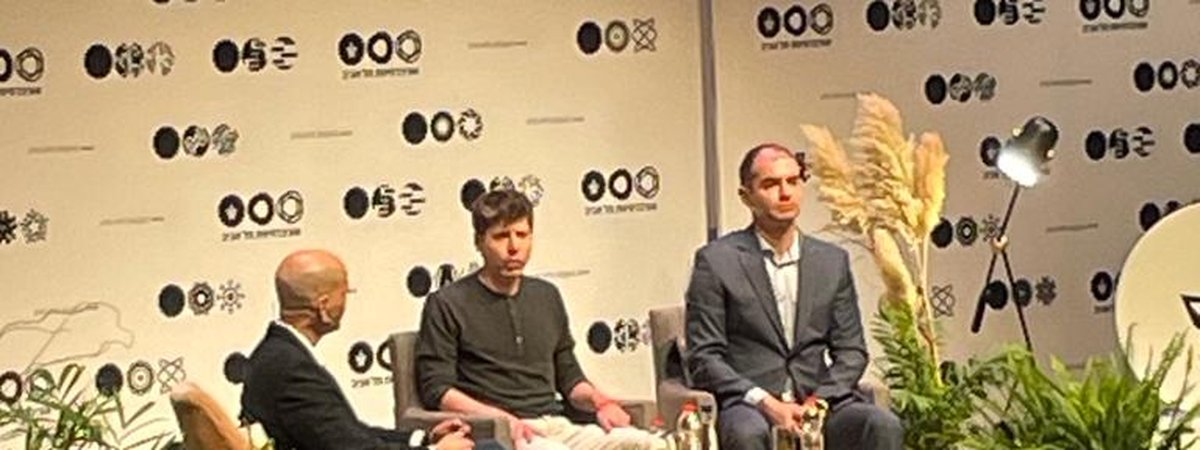
Ilya Sutskever's net worth is estimated at roughly $7 billion in 2026. The number comes from sworn testimony in the Musk vs OpenAI case, which estimated the former OpenAI chief scientist's stake at about $7 billion — the most credible figure on record. His wealth is almost entirely paper equity: a legacy stake in OpenAI and his ownership of Safe Superintelligence (SSI), the AI research lab he co-founded in 2024 and valued at $32 billion. Neither holding is publicly disclosed, so every figure here is an estimate, not a verified balance sheet.
Context matters: some outlets speculate much higher — CelebrityNetWorth floated $35-50 billion in May 2026 by benchmarking co-founder Greg Brockman's court-disclosed ~$30 billion stake — but that math requires assumptions nobody outside the company can verify. The $7 billion court-testimony figure is the conservative, documented anchor.
Net worth breakdown: where the $7 billion sits
Sutskever's fortune has two engines, and both are private equity with no public price tag. Understanding the estimate means understanding the two assets.
Engine one: OpenAI. Sutskever co-founded OpenAI in 2015 and served as chief scientist through the breakthrough years — GPT models, ChatGPT, the reasoning models like o1. Court testimony in the Musk vs OpenAI trial estimated his personal stake at roughly $7 billion. By comparison, the same testimony put co-founder Greg Brockman's stake at nearly $30 billion and confirmed that CEO Sam Altman holds zero direct equity in the company. Sutskever departed OpenAI in May 2024; whether he sold any of his stake on the way out is not public.
Engine two: Safe Superintelligence. Founded in June 2024 with Daniel Gross and Daniel Levy, SSI raised $1 billion at a $5 billion valuation in September 2024, then $2 billion at a $32 billion valuation in April 2025 (Greenoaks led with $500 million; Andreessen Horowitz, DST Global, Lightspeed, Alphabet, and Nvidia participated). In July 2026, Nvidia added a $5 billion strategic investment plus access to its Vera Rubin GPU platform. If Sutskever owns even 10-20% of SSI, that stake alone is worth $3-6 billion on paper. His exact ownership percentage is not disclosed.
| Asset | Basis | Estimated value |
|---|---|---|
| OpenAI stake (legacy) | Court testimony, Musk vs OpenAI (2026) | ~$7 billion |
| SSI ownership (10-20% assumed) | $32B valuation (Apr 2025 round) | ~$3-6 billion |
| OpenAI salary/earnings (2015-2024) | Cash compensation, incl. ~$1.9M/yr in 2016 | Low tens of millions |
| Google Brain / DNNresearch (2013-2015) | Salary + Google acquisition | Single-digit millions |
The honest range: the $7 billion headline figure is defensible from sworn testimony. If his OpenAI stake was never diluted or sold and his SSI ownership is large, the real number could be materially higher — which is why some outlets speculate $35-50 billion. We report the documented figure and label the rest as estimates.
The AlexNet breakthrough that started it all (2012)
Sutskever's money story begins with a neural network. In 2012, he co-created AlexNet with Geoffrey Hinton and Alex Krizhevsky — a deep convolutional neural network that won the ImageNet computer vision competition by a margin so large it shocked the field. AlexNet is widely credited with launching the modern deep learning era; it showed that large neural networks, trained with enough data and compute, could dramatically outperform everything that came before.
The trio incorporated DNNresearch Inc. around the work, and Google acquired the company in 2013, bringing Sutskever into Google Brain as a research scientist. At Google Brain he co-developed sequence-to-sequence learning with Oriol Vinyals and Quoc V. Le — the foundational technique behind modern machine translation — and contributed to TensorFlow, the open-source machine learning framework. Before Google, he was a postdoctoral researcher in Andrew Ng's group at Stanford.
The Google years made him a respected researcher, not a billionaire. His PhD (University of Toronto, 2013, under Hinton; thesis on training recurrent neural networks) and AlexNet gave him the reputation that would make him OpenAI's indispensable scientific leader — and eventually a multi-billionaire on paper.
The OpenAI years: co-founder to chief scientist (2015-2024)
In 2015, Sutskever co-founded OpenAI with Sam Altman, Elon Musk, Greg Brockman, and others, becoming its chief scientist. He oversaw the research breakthroughs that produced the GPT series, ChatGPT, DALL-E, CLIP, and later the reasoning models like o1. Musk himself called him "the linchpin for OpenAI being successful."
The money was made silently. Unlike startup founders with public IPO windfalls, Sutskever's wealth accumulated inside a private company whose valuation climbed into the hundreds of billions. His 2016 salary — disclosed in a tax filing reported by the New York Times — was more than $1.9 million, a large paycheck but rounding error against the equity.
Then came the rupture that changed everything: the boardroom drama of November 2023, when Sutskever voted with the nonprofit board to fire Altman — only to reverse himself within days, sign the employee letter demanding Altman's return, and step down from the board. He never fully returned to work, and in May 2024 he announced his departure.
Safe Superintelligence: the $32 billion bet on safety
One month after leaving OpenAI, Sutskever announced Safe Superintelligence Inc. (SSI), co-founded with Daniel Gross (ex-Apple AI chief) and Daniel Levy (ex-OpenAI researcher). The mission, in his words: "We will pursue safe superintelligence with a singular focus on one goal and one product." No consumer apps, no chatbots — research first, product later. Offices in Palo Alto and Tel Aviv.
Investors paid for the name on the door. September 2024: $1 billion at a $5 billion valuation (Sequoia, Andreessen Horowitz, DST Global, SV Angel). April 2025: $2 billion at $32 billion — a sixfold jump in seven months for a company with no product and roughly 20 employees. July 2026: Nvidia invested $5 billion in a long-term partnership giving SSI access to the Vera Rubin platform, raising its compute capacity tenfold; the valuation held around $32 billion.
The July 2025 leadership shuffle made the wealth picture clearer: co-founder Daniel Gross departed for Meta (June 29, 2025), and Sutskever took over as CEO — a founder who is now also the operator of a $32 billion company, with the equity package that implies.
How Sutskever's wealth compares to AI founders
Among AI lab founders, Sutskever sits in a distinctive position. Dario Amodei (Anthropic) is estimated by Forbes at $15.5 billion on a ~1.7% stake in a $965 billion company. Sam Altman, famously, holds zero OpenAI equity and is worth around $3.1 billion from early investments like Loopt.
What makes Sutskever's position unusual: nearly all of it is concentrated in two private AI labs, neither of which he can easily sell out of, and both of whose valuations reflect investor conviction about superintelligence rather than revenue. For a head-to-head breakdown, see our Ilya Sutskever vs Dario Amodei comparison.
Methodology: why we say "estimated"
NetWorthTelevision's $7 billion figure rests on sworn court testimony from the Musk vs OpenAI case (2026), which estimated Sutskever's OpenAI stake at roughly $7 billion. His SSI ownership percentage and any OpenAI share sales are undisclosed, so we do not invent them. Older aggregator estimates ($150 million-$4.2 billion) predate the SSI valuation surge; newer speculative ones ($35-50 billion) extrapolate from Brockman's disclosed ~$30 billion stake. We report the documented figure, show our work, and label everything else.
Frequently asked questions
What is Ilya Sutskever's net worth in 2026?
Ilya Sutskever's net worth is estimated at roughly $7 billion. That figure comes from testimony in the Musk vs OpenAI court case in 2026, which estimated the former OpenAI chief scientist's stake at about $7 billion. Because his OpenAI holdings and his ownership of Safe Superintelligence are private and unconfirmed, all figures are estimates — some outlets speculate much higher (up to $35-50 billion), but $7 billion is the figure with the most credible legal record behind it.
How did Ilya Sutskever make his money?
Sutskever's wealth comes almost entirely from equity, not salary. He was a co-founder and the chief scientist of OpenAI (2015-2024), where he held a stake estimated at around $7 billion in court testimony, and in 2024 he co-founded Safe Superintelligence (SSI), which raised $2 billion at a $32 billion valuation in April 2025 and took a $5 billion Nvidia investment in July 2026. Before OpenAI, he was a Google Brain researcher and co-created AlexNet, the 2012 breakthrough that launched the deep learning era.
Does Ilya Sutskever still own part of OpenAI?
That is not publicly confirmed. Court testimony in 2026 estimated his OpenAI stake at roughly $7 billion, which suggests he retained a significant legacy holding after departing in May 2024. OpenAI's exact ownership structure and any secondary sales by early insiders are not disclosed, so the precise size of his remaining stake is unknown.
What is Safe Superintelligence worth?
Safe Superintelligence (SSI), the AI research lab Sutskever co-founded in June 2024 with Daniel Gross and Daniel Levy, was valued at $32 billion after a $2 billion funding round led by Greenoaks in April 2025. In July 2026, Nvidia announced a $5 billion strategic investment and compute partnership with SSI, with the valuation still reported around $32 billion — despite the company having no public product or revenue.
Is Ilya Sutskever married?
There is no public information about whether Ilya Sutskever is married. He keeps his personal life entirely private — no public record names a spouse or children, and he does not discuss relationships in interviews or on social media.
How old is Ilya Sutskever in 2026?
Ilya Sutskever was born in 1986 in Gorky, Soviet Union (now Nizhny Novgorod, Russia), which makes him 39 or 40 in 2026. Some sources give his exact birthdate as December 8, 1986, while a few report 1985 — the year is the one point on which nearly all credible sources agree.
Where does Ilya Sutskever live?
His exact residence is not publicly disclosed. Safe Superintelligence is headquartered in Palo Alto, California, with a second office in Tel Aviv, and Sutskever is based in the San Francisco Bay Area for his work at the company. He is an Israeli-Canadian citizen who grew up in Jerusalem and later moved to Canada for university.
Who is Ilya Sutskever's PhD advisor?
Geoffrey Hinton, the University of Toronto computer scientist known as a godfather of deep learning and the 2024 Nobel Physics laureate. Sutskever earned his BSc, MSc, and PhD in computer science from the University of Toronto under Hinton, completing his doctorate in 2013 with a thesis on training recurrent neural networks. He co-created AlexNet with Hinton and Alex Krizhevsky in 2012.