Quick answer
John B. Poindexter owns one company — J.B. Poindexter & Co. — and it owns everything else. The Houston-based diversified manufacturer he founded in 1985 now runs nine core business units plus a tenth added by acquisition, employs 8,500 people across 71 locations in the U.S., Mexico, and Canada, and generates more than $2.7 billion in annualized revenue. He is its sole owner, founder, chairman, and CEO — and at 81, he is still acquiring.
The portfolio dominates the unglamorous corners of American industry: the bodies of UPS's brown delivery trucks, roughly two-thirds of U.S. class-five step vans, half the North American box-truck body market. This is the company-by-company breakdown. (And for clarity: this is the Houston industrialist — not the Reagan-era admiral of Iran-Contra fame.)
J.B. Poindexter & Co.: the parent
J.B. Poindexter & Co., Inc. (JBPCO) describes itself as a business enterprise providing commercial automotive and manufacturing goods and services, applying "innovative operational and financial disciplines" across its units. In practice it is a holding company with a banker's operating system: just 150 support staff at the Houston parent centralize HR, finance, accounts payable, and continuous improvement, while each subsidiary keeps its own operations, sales, marketing, and engineering — plus a shared bench of more than 250 engineers and designers.
The ownership is the point. A 2010 SEC filing states that "JBPCO is owned and controlled by John Poindexter" — 100%, one man. That is why the New York Times and Fortune call him a billionaire while publishing no net worth figure: the entire $2.7 billion-revenue enterprise sits in one private pair of hands. The company marked its 40th year in 2025 at NTEA's Work Truck Week, and Poindexter shows no interest in selling or stepping back. See how that ownership translates into his fortune and how he built it deal by deal.
The business units at a glance
| Business unit | What it makes | Market position |
|---|---|---|
| Morgan Truck Body | Truck bodies for dry-freight & refrigerated trucks | ~50% of North American box-truck body market |
| Morgan Olson | Step-van bodies (parcel, food, linen delivery) | ~66–70% of North American step vans; builds UPS truck bodies |
| Reading Truck Group | Service bodies & work-truck upfits | ~35% of U.S. service bodies |
| Truck Accessories Group (LEER) | Truck caps, tonneau covers, bed enclosures | ~60% of North American commercial truck cap market |
| Masterack | Cargo-management systems for work vans | 8,000+ vehicle upfits per year |
| EFP | Expandable foam packaging | The original 1985 acquisition |
| MIC Group | Precision machined components | Specialty industrial parts |
| Federal Eagle | Specialty vehicle products | Niche commercial segments |
| EAVX | Electric-vehicle innovation (founded 2021) | VX digital fleet platform |
| Demers Braun Crestline Medix | Ambulances (4 brands) | 70,000+ units in 40+ countries |
Morgan Truck Body & Morgan Olson: the crown jewels
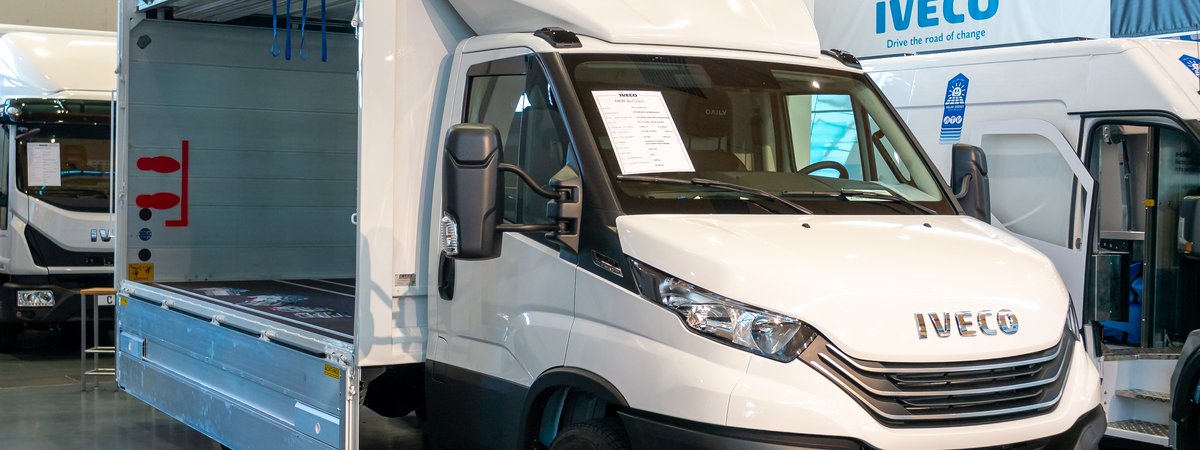
If JBPCO has a core, it is the two Morgans. Morgan Truck Body — acquired in 1990 — employs 3,000 team members across 14 manufacturing locations and 8 service centers in North America and holds about 50% of the box-truck body market. It builds the dry-freight and refrigerated bodies that ride on chassis from Ford, Freightliner, and the rest — the literal boxes behind American logistics.
Morgan Olson — acquired in 2003 — is arguably the more strategic asset: the walk-in step van, the vehicle of the e-commerce era. The company accounts for nearly 70% of step-van sales in North America (about two-thirds of the U.S. class-five delivery segment), and it builds the bodies of UPS's iconic brown trucks. When parcel volumes surged through the 2010s and 2020s, Morgan Olson was the toll booth. Together the two units are the revenue engine Poindexter spent the 1990s and 2000s assembling — and the reason the "billionaire" label needs no published number to be credible.
Reading, LEER, and Masterack: the work-truck stack
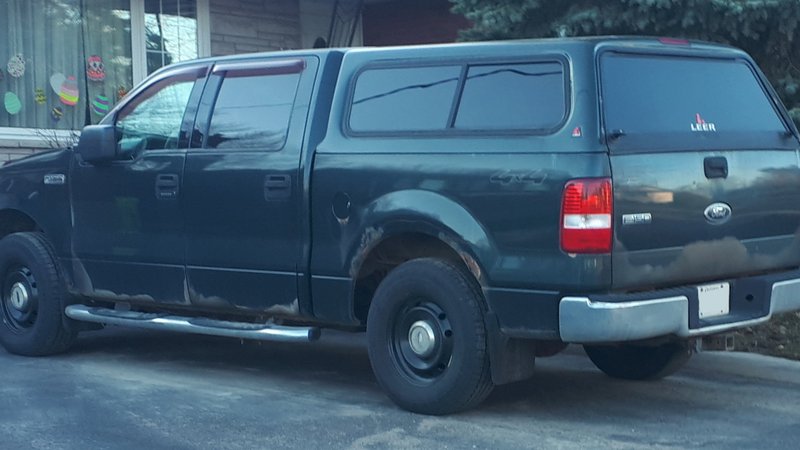
Around the Morgans sits a full work-truck stack. The Reading Truck Group — acquired in 2015 — supplies 35% of U.S. service bodies: the utility bodies with side compartments that turn a chassis into a plumber's, electrician's, or telecom crew's rolling workshop. The Truck Accessories Group, operating as the LEER Group — the company's first commercial-vehicle business, bought in 1987 — leads the truck cap and tonneau industry with its Leer, Century, and Raider brands at roughly 60% of the North American commercial truck cap market.
Masterack — acquired in 2017 — completes the picture with cargo-management upfits: shelving, partitions, and systems installed in work vans at a pace of more than 8,000 vehicles a year. The logic of owning all three layers is pure Poindexter: the group sells the body, the cap, and the interior fit-out — capturing the full value chain of a working truck from a single customer relationship.
EFP, MIC Group, Federal Eagle: the specialty layer
Not everything is trucks. EFP — Engineered Foam Packaging, the original 1985 acquisition that started it all — still makes expandable foam plastics. MIC Group produces precision machined components, and Federal Eagle covers specialty vehicle products. These are the smaller, older industrial businesses that survived the post-2003 pruning, when Poindexter divested several unrelated businesses to concentrate the group on commercial vehicles.
Their survival is telling: Poindexter buys to hold, not to flip. Businesses acquired in the 1980s still sit in the portfolio four decades later, improved by the shared-services machine rather than sold for a quick return. It is the same long-hold instinct now visible in the Shafter, Texas ghost town project — buy something real, improve it patiently, keep it.
EAVX and the ambulance deal: still expanding at 81
The portfolio is not frozen in amber. EAVX, founded in 2021 as JBPCO's innovation hub, develops VX — a digital platform integrating fleet features like cargo-breach alerts, asset tracking, and driver-safety systems — positioning the truck-body empire for the electric and connected era. It is the group's bet that the box on wheels gets smarter, not obsolete.
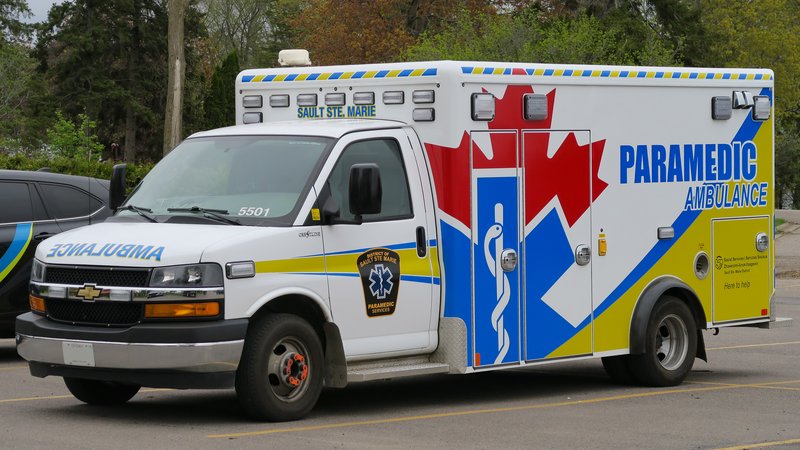
Then came the Demers Braun Crestline Medix acquisition — one of North America's largest ambulance manufacturers, headquartered in Beloeil, Quebec, with four legacy brands (Demers, Braun, Crestline, Medix) and more than 70,000 units delivered in 40+ countries. The deal pushed JBPCO's total revenue toward $3 billion and headcount past 10,000, adding emergency-response vehicles to a portfolio that already owned last-mile delivery and work trucks. At 81, Poindexter is still doing what he has done since 1985: buying the leader in an adjacent niche.
The footprint: 8,500 people, 71 locations, one owner
Step back and the shape of the fortune is clear: 8,500 employees (10,000+ after the ambulance deal), 71 operating locations across the United States, Mexico, and Canada, nine to ten business units with dominant shares in their niches, $2.5 billion in 2024 revenue rising to more than $2.7 billion annualized — and a single name on the ownership line. A 2024 EY regional Entrepreneur of the Year award recognized the four-decade build; the company's 40th anniversary in 2025 celebrated it.
That footprint is also the succession story. With no heirs — "I've never been married, I have no children" — the empire's future runs through the Tidewater and Big Bend Foundation, endowed in 2020 with nearly $67 million and destined to own all of Poindexter's properties. The companies make the money; the foundation will decide what the money means. For the money story behind the portfolio, read how John Poindexter made his money — and for the honest answer on his pay, his salary, explained.
Frequently asked questions
What companies does John Poindexter own?
John B. Poindexter is the sole owner of J.B. Poindexter & Co. (JBPCO), the Houston-based diversified manufacturer he founded in 1985. Its business units include Morgan Truck Body, Morgan Olson, the Reading Truck Group, the LEER Group (Truck Accessories Group), Masterack, EFP, MIC Group, Federal Eagle, the EAVX electric-vehicle arm, and ambulance maker Demers Braun Crestline Medix.
What is J.B. Poindexter & Co. worth in revenue?
The company generates more than $2.7 billion in annualized revenue, according to a 2024 EY announcement naming Poindexter a regional Entrepreneur of the Year. It reported $2.5 billion in 2024 revenue, and the Demers Braun Crestline Medix ambulance acquisition pushed the total toward $3 billion.
Does J.B. Poindexter & Co. build UPS trucks?
It builds the bodies of UPS's brown delivery trucks. Morgan Olson — the JBPCO unit behind step vans — manufactures the truck bodies UPS uses, and the company says it produces about two-thirds of the step vans in the U.S. class-five delivery market.
How many employees does J.B. Poindexter & Co. have?
About 8,500 employees across 71 operating locations in the United States, Mexico, and Canada, as reported at the company's 40th anniversary in 2025. With the Demers Braun Crestline Medix acquisition, headcount rose past 10,000.
When was J.B. Poindexter & Co. founded?
In 1985, when John B. Poindexter formed it as a venture-capital partnership and acquired Engineered Foam Packaging. The first commercial-vehicle business, the Leer Group, was added in 1987; Morgan Truck Body followed in 1990 and Morgan Olson in 2003.
Is John Poindexter married?
No — he has never been married and has no children. When the New York Times asked why his family would not inherit his wealth, the 81-year-old answered: 'I've never been married, I have no children.' There is no public record of a spouse or partner.
How old is John Poindexter in 2026?
He is 81. The New York Times, Fortune, Inc., and CEOWORLD all describe him as 81 years old in their 2026 coverage. No publicly verified birth date has been published.
Where does John Poindexter live?
He is a Houston native and Houston-based industrialist; J.B. Poindexter & Co. is headquartered in Houston, Texas. He also owns significant West Texas property, including the 30,000-acre Cibolo Creek Ranch south of Marfa, which his Tidewater and Big Bend Foundation is expected to own eventually.