Quick answer
Chris Olah's net worth is estimated at just under $8 billion by the Bloomberg Billionaires Index — while Forbes puts it at about $15.5 billion. Both figures are real estimates from credible trackers; they differ because they assume different ownership stakes. Bloomberg's methodology (PitchBook data, prior rounds, Carta equity records) credits each Anthropic co-founder with less than 1% of the company. Forbes' reporting credits each with over 1.6%. Multiply either stake by Anthropic's $965 billion valuation — set by the $65 billion Series H round in May 2026 — and you get the two headline numbers.
Either way, the story is the same: nearly all of Olah's fortune is co-founder equity in Anthropic, the AI lab he helped start in 2021 after leaving OpenAI. And with Anthropic's IPO prospectus leaking in early October 2026 ahead of a possible mid-November listing at a targeted $1.8 trillion to $2 trillion valuation, that paper fortune is about to be tested in public markets.
Two numbers, one fortune: why $8B and $15.5B are both "right"
Wealth trackers rarely disagree this loudly about the same person — but Olah's case shows why private-company fortunes are inherently fuzzy. The math both trackers use is identical; only one input differs.
| Tracker | Estimated stake | Valuation used | Net worth estimate |
|---|---|---|---|
| Bloomberg Billionaires Index | Less than 1% | $965B (May 2026 round) | ~$8B |
| Forbes | Over 1.6% | $965B (May 2026 round) | ~$15.5B |
Bloomberg's estimate rests on PitchBook data, disclosures from previous funding rounds, and Carta records adjusted for typical employee equity grants — a conservative, dilution-heavy model. Forbes' reporting, which circulated after the May 2026 round, assigns each of the seven co-founders slightly more than 1.6%. At $965 billion, 1.6% is $15.44 billion — the source of the $15.5 billion figure.
The honest answer: nobody outside Anthropic's cap table knows the real number. Co-founder stakes get diluted through every funding round, and Anthropic has raised enormous sums — including the $65 billion Series H. Olah himself has never commented on his wealth. We present both estimates and label them clearly, because the methodology gap matters more than picking a winner.
The $965 billion engine: how May 2026 changed everything
Forbes first reported in 2025 that Olah had become a billionaire on the back of Anthropic's rising valuation. But the wealth creation went into overdrive in May 2026, when Anthropic announced it had raised $65 billion at a $965 billion valuation — the round that made all seven co-founders billionaires many times over in a single day.
The round was led by Altimeter Capital, Dragoneer, Greenoaks, and Sequoia Capital, and it carried a symbolic milestone: for the first time, Anthropic's valuation surpassed rival OpenAI, which had been valued at about $852 billion after its own March funding round. Anthropic became the world's most valuable privately held AI company.
The personal-wealth fallout was historic. All seven co-founders — Dario Amodei, Daniela Amodei, Tom Brown, Jack Clark, Jared Kaplan, Sam McCandlish, and Chris Olah — joined the Bloomberg Billionaires Index simultaneously, the largest single-day addition of founders from one company in the index's history. Bloomberg put each stake at about $8 billion; Forbes' separate methodology landed at $15.5 billion each.
What fueled the number: Anthropic's revenue was exploding. The company expected second-quarter 2026 revenue of roughly $10.9 billion, more than double the prior quarter, driven by the Claude chatbot and enterprise AI products like Claude Code.
The IPO catalyst: what October 2026 means for his stake
This is the trending part of the story — and the reason Olah's name is in the news this week. Anthropic confirmed on June 1, 2026 that it had confidentially submitted a draft Form S-1 to the U.S. Securities and Exchange Commission for a proposed IPO. In early October 2026, the prospectus details began leaking into public view — first reported by Fortune, then covered by Reuters — ahead of a possible listing targeted for mid-November 2026, with investor meetings scheduled in San Francisco starting October 14.
The leaked filing sketches a company scaling far ahead of its income: 2025 revenue grew roughly twelvefold to about $4.6 billion, against a reported net loss near $42 billion — though more than $34 billion of that came from a change in the fair value of liabilities, with operating losses above $8 billion. The filing also commits Anthropic to at least $518 billion in cloud and compute contracts over the next decade, mostly non-cancelable.
For Olah, the IPO math is simple and staggering. Investor chatter centers on a valuation of $1.8 trillion to $2 trillion — roughly double the private mark. At $2 trillion, a sub-1% stake is worth up to $20 billion; a 1.6% stake is worth $32 billion. The catch: IPO lock-ups typically prevent insiders from selling for months, and the final number depends entirely on where the offering prices.
Doing the stake math: what <1% vs 1.6% actually means
Because the valuation is the one hard number, the whole debate reduces to a single multiplication:
| Hypothetical stake | At $965B (today) | At $2T (IPO target) |
|---|---|---|
| 0.8% (inside Bloomberg's "<1%") | ~$7.7B | ~$16B |
| 1.0% | ~$9.7B | ~$20B |
| 1.6% (Forbes estimate) | ~$15.4B | ~$32B |
A few caveats the trackers themselves would stress. First, co-founder equity is usually a mix of common stock and options that vest over time; the "headline" stake may overstate what's actually owned today. Second, every funding round dilutes earlier holders — and Anthropic has raised at a pace few startups ever have. Third, tax and liquidity: paper billions in a private company can't be spent until there's a market, which is exactly what the November IPO would create.
Until Anthropic's S-1 goes fully public with a capitalization table, every figure — including ours — is an estimate. We say so explicitly because the alternative (picking one number and presenting it as fact) is how net-worth misinformation spreads.
The path: from Toronto dropout to AI billionaire
Olah's fortune is unusual even among tech billionaires: he built it as a researcher, not a CEO or operator. Born in Canada in 1991 or 1992, he studied mathematics at the University of Toronto for one year before dropping out. At 18 he left university; in 2012 he won a $100,000 Thiel Fellowship, the grant Peter Thiel's foundation gives young people to skip college and pursue independent work.
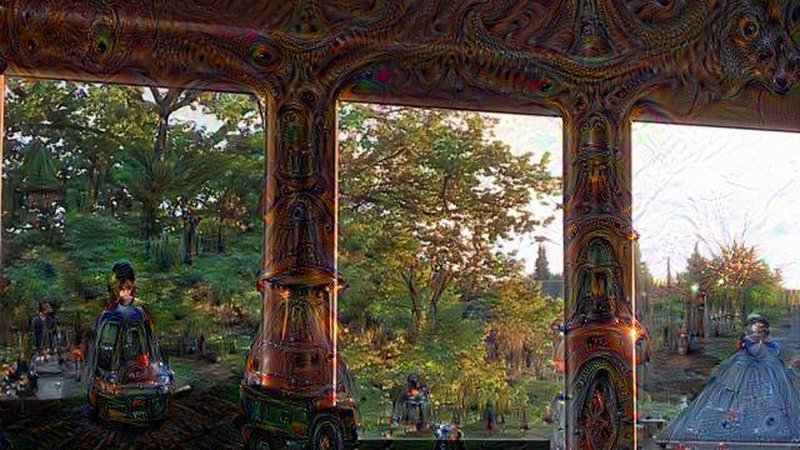
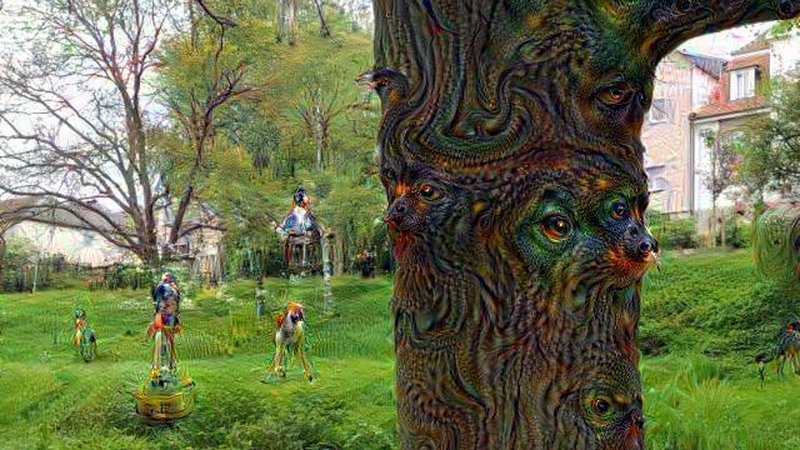
He joined Google Brain as an intern in 2015, rising to research scientist, and was a co-author on the launch of DeepDream — the trippy neural-network visualization project that briefly became a cultural phenomenon. In 2017 he co-founded Distill, an interactive machine-learning journal aimed at making AI research transparent and readable. A Distill paper led him to OpenAI in 2018, where he founded and led the interpretability team (the Clarity team), producing the landmark Circuits research thread and the discovery of multimodal neurons in CLIP — neurons that fire for a concept like "Spider-Man" whether it appears as a photo, a drawing, or text.
In December 2020, Olah left OpenAI alongside six colleagues over AI-safety concerns, and in 2021 they co-founded Anthropic. He now heads the company's interpretability program — the "mechanistic interpretability" agenda of reverse-engineering large language models — and was named to the TIME100 AI list in 2024.
What could move the number next
Three variables will decide where Olah's net worth lands by year-end. First, the IPO price. A $2 trillion listing roughly doubles every private-mark estimate; a softer debut does the opposite. Second, dilution and lock-up. The IPO will create new shares and insiders typically can't sell for ~180 days, so the "spendable" number lags the headline. Third, the business itself. The leaked prospectus shows a company burning enormous sums on compute ($518 billion committed) while revenue scales twelvefold — the market will decide whether that trade is genius or reckless.
Longer term, Olah's wealth is a pure play on one question: does Anthropic justify a multi-trillion-dollar valuation? With Claude's enterprise adoption accelerating and the IPO weeks away, the answer is about to get its first public-market test.
Context: where Olah sits among AI billionaires
Olah is part of the largest single wealth-creation event in AI history — seven co-founders entering the billionaire ranks together. But in the broader AI wealth hierarchy he sits well below the chip layer: Nvidia's Jensen Huang, whose hardware powers the AI boom, is worth north of $177 billion. Among the seven Anthropic founders, public estimates treat them as roughly equal, since the same stake assumptions are applied to each — though in reality the CEO's grant (Dario Amodei) and early-employee grants likely differ from a research co-founder's.
What distinguishes Olah's story is the source of the wealth: peer-reviewed papers on understanding neural networks, a journal about explaining AI clearly, and a bet — made in 2020 — that safety-focused AI research could become one of the most valuable enterprises on earth. For more on how he built the fortune step by step and how he compares to Dario Amodei, see the rest of this cluster.
Frequently asked questions
What is Chris Olah's net worth in 2026?
Chris Olah's net worth is estimated at just under $8 billion by the Bloomberg Billionaires Index, while Forbes estimates it at about $15.5 billion. The gap comes from methodology: Bloomberg credits the Anthropic co-founder with less than 1% of the company, while Forbes estimates his stake at more than 1.6%. Both figures trace back to Anthropic's $965 billion valuation from its May 2026 funding round.
Why do Bloomberg and Forbes disagree on Chris Olah's net worth?
They use different estimates of his ownership stake. Bloomberg's analysis — based on PitchBook data, prior funding rounds, and Carta equity records — puts each Anthropic co-founder at less than 1%, worth roughly $8 billion at the $965 billion valuation. Forbes' reporting puts each founder's stake above 1.6%, which works out to about $15.5 billion. Neither Anthropic nor Olah has disclosed the actual figure, so both are educated estimates.
How did Chris Olah become a billionaire?
Almost entirely through co-founder equity in Anthropic. Olah was one of seven OpenAI employees who left in late 2020 and founded Anthropic in 2021. Forbes first reported he had become a billionaire in 2025 as Anthropic's valuation climbed. The May 2026 round — $65 billion raised at a $965 billion valuation, led by Altimeter, Dragoneer, Greenoaks, and Sequoia — multiplied his paper wealth several times over.
Will the Anthropic IPO make Chris Olah richer?
Very likely. Anthropic confirmed a confidential draft S-1 filing with the SEC in June 2026, and its IPO prospectus details leaked in early October 2026 ahead of a possible mid-November listing. Investor chatter has centered on a valuation of $1.8 trillion to $2 trillion — roughly double the $965 billion private valuation. If the IPO prices near that range, Olah's stake could be worth on the order of $15 billion to $30 billion on paper, before any lock-up sales.
What does Chris Olah actually do at Anthropic?
He leads the company's interpretability research — the science of understanding what happens inside neural networks. He is widely considered a pioneer of 'mechanistic interpretability': his work on feature visualization, activation atlases, the Circuits thread, and later 'towards monosemanticity' research aims to reverse-engineer large language models. He previously led OpenAI's interpretability team and co-founded the interactive ML journal Distill in 2017.
Is Chris Olah married?
There is no public record of Chris Olah being married or in a relationship. Unlike his fellow co-founder Dario Amodei, whose 2022 marriage to Camilla Clark is publicly documented, Olah keeps his personal life entirely private and has never publicly discussed a spouse or partner.
How old is Chris Olah in 2026?
Chris Olah was born in Canada in 1991 or 1992, according to Wikipedia (updated October 2026), which makes him 33 or 34 years old in 2026. He dropped out of the University of Toronto at 18, won a Thiel Fellowship in 2012, and joined Google Brain as an intern in 2015.
Where does Chris Olah live?
Chris Olah is based in San Francisco, California, where Anthropic is headquartered. He has not publicly disclosed details of any home or property, and there is no verified public record of real-estate purchases in his name.
Sources
- Wikipedia — Chris OlahWikipedia
- Bloomberg Billionaires IndexBloomberg
- Forbes Real-Time BillionairesForbes