Quick answer
Chris Olah made his money as a co-founder of Anthropic. Nearly his entire fortune — estimated at just under $8 billion (Bloomberg) or ~$15.5 billion (Forbes) — is his ownership stake in the AI lab, valued at $965 billion after the $65 billion Series H round in May 2026. Before Anthropic, he was a salaried research scientist at Google Brain and OpenAI: comfortable, but not billionaire money. The wealth came from a single decision in late 2020 — leaving OpenAI to found a safety-focused AI lab — compounded by five years of Anthropic's valuation compounding from startup to near-trillion-dollar company.
It is one of the purest "researcher-to-billionaire" stories in tech: no IPO windfall yet, no acquired company, no trading fortune. Just founder equity, paper-valued, about to be tested by Anthropic's November 2026 IPO.
Act one: the researcher years (2012–2020)
Olah's money story starts with deliberate poverty, almost. Born in Canada in 1991 or 1992, he studied mathematics at the University of Toronto for a single year, then dropped out at 18. In 2012 he accepted a $100,000 Thiel Fellowship — Peter Thiel's grant for young people to skip college and build — and spent it on independent research into how neural networks work.
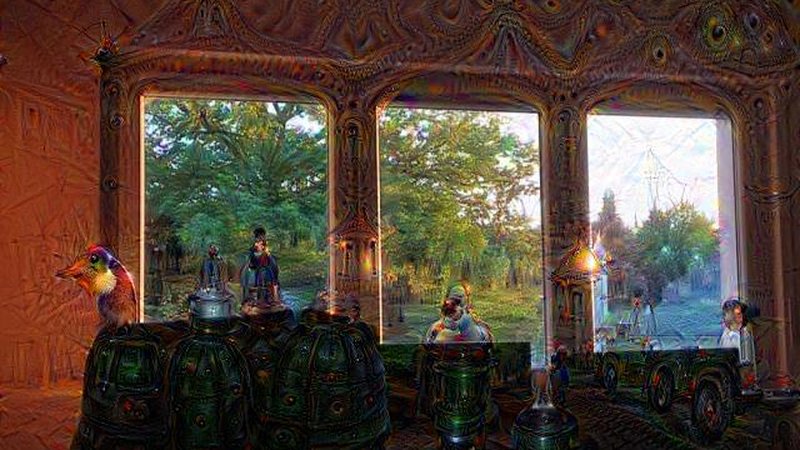
That bet paid off in credibility, not cash. He joined Google Brain as an intern in 2015, worked his way up to research scientist, and became a co-author on the launch of DeepDream (2015) — the neural-network visualization project that turned AI's inner workings into viral psychedelic art. In 2017 he co-founded Distill, an interactive machine-learning journal dedicated to explaining AI research clearly; its readership ran into the millions.
A Distill paper caught OpenAI's attention, and in 2018 Olah left Google to found and lead OpenAI's interpretability team (the Clarity team). There his group produced two landmark results: the Circuits research thread, which argued neural networks contain identifiable, human-readable structures; and the discovery of multimodal neurons in CLIP — neurons that fire for "Spider-Man" whether the input is a photo, a drawing, or text. Prestigious? Enormously. Lucrative? As an employee, no — he left in December 2020, before OpenAI's valuation went vertical.
The exit: seven researchers walk out (December 2020)
The founding of Anthropic is the hinge of Olah's wealth story. In late 2020, Olah was one of seven OpenAI employees — including CEO-to-be Dario Amodei — who left over concerns about AI safety and the company's direction. In 2021 they founded Anthropic in San Francisco as a public benefit corporation, with a mission to build safe, reliable AI systems.
The financial mechanics matter: as a co-founder, Olah received founder equity — a far larger ownership slice than any employee grant, and one that vests as the company grows. At founding, Anthropic was worth essentially nothing; the stake was a lottery ticket on the team's ability to execute. Five years later, that ticket is marked at up to $15.5 billion.
This is the classic founder-wealth formula, but with a twist: Olah's contribution was research leadership, not business operations. He became the company's interpretability research lead — the scientist trying to reverse-engineer what large language models are actually doing inside. His companies and affiliations trace this arc from Google Brain through OpenAI to Anthropic.
The compounding: funding rounds that minted the fortune
Founder equity only becomes wealth when someone will pay for the company. Anthropic's funding history did the compounding:
| Milestone | What happened | Effect on Olah's stake |
|---|---|---|
| 2021 — founding | Seven co-founders start Anthropic | Paper value near zero |
| 2025 | Valuation climbs; Forbes reports Olah a billionaire | First billion, on paper |
| May 2026 — Series H | $65B raised at $965B valuation (Altimeter, Dragoneer, Greenoaks, Sequoia) | ~$8B (Bloomberg) / ~$15.5B (Forbes) |
| Nov 2026 (targeted) | IPO at $1.8T–$2T discussed | Could roughly double again |
The May 2026 round was the detonation event: all seven co-founders joined the Bloomberg Billionaires Index on the same day — the largest single-day founder addition in the index's history. Anthropic's valuation passed OpenAI's ($852 billion after its March round) for the first time, and expected Q2 2026 revenue of ~$10.9 billion (more than double the prior quarter) gave investors a growth story to underwrite the price.
Note what Olah did not do to make this money: he didn't sell a company, didn't trade stocks, didn't take a massive salary (more on that in our salary breakdown). The wealth is unrealized equity — valuable on paper, spendable only after liquidity events. And note the timing luck embedded in the story: had Anthropic's Series H priced at half the $965 billion — still an astronomical number — every estimate of his fortune would halve with it. Founder wealth at this scale is a leveraged bet on a single valuation multiple, which is why the November IPO pricing matters more to his net worth than anything he has done since 2021.
Why research itself was the leverage
Here's the underappreciated part: Olah's specific research was the business moat. Anthropic's pitch to investors has always rested on building AI systems that are safe and interpretable — and Olah is the person most associated with that agenda. His "mechanistic interpretability" program (the Transformer Circuits Thread, "Towards Monosemanticity" in 2023, "Scaling Monosemanticity" in 2024) gave Anthropic a research identity distinct from OpenAI's scale-at-all-costs approach.
That identity attracted a specific kind of capital and talent: safety-conscious researchers, enterprise customers who need trustworthy AI, and investors betting that reliability — not just capability — wins the enterprise market. When Claude became Anthropic's flagship product line (via web, API, Amazon Bedrock, and apps), the interpretability story helped sell it to risk-averse corporate buyers. In a very real sense, Olah's papers helped justify the $965 billion.
He was named to the TIME100 AI list in 2024 for these contributions — recognition that his scientific reputation and his company's valuation rose together.
The liquidity question: when paper becomes spendable
As of October 2026, Olah's billions are almost entirely illiquid: private-company equity with no public market. That changes with the IPO. Anthropic confirmed a confidential draft S-1 in June 2026; the prospectus leaked in early October 2026 (first reported by Fortune, covered by Reuters October 1–2); investor meetings are scheduled for October 14 in San Francisco; and a listing is targeted for mid-November 2026, possibly trading before Thanksgiving.
The leaked numbers frame the stakes: 2025 revenue of ~$4.6 billion (up ~12x), a net loss near $42 billion (over $34 billion of it a non-cash fair-value accounting change; operating losses above $8 billion), and at least $518 billion in mostly non-cancelable compute commitments over a decade. If public investors buy the growth story at $1.8–$2 trillion, Olah's stake could be worth $16–$32 billion on paper — before the typical ~180-day lock-up lets insiders sell a share.
Until then, the honest summary of Chris Olah's net worth is: a world-class researcher who placed one enormous, correct bet — and is still waiting for the payout window to open.
The money story by the numbers
| Figure | Value | Source / note |
|---|---|---|
| Thiel Fellowship (2012) | $100,000 | Grant to skip college for research |
| Anthropic Series H (May 2026) | $65B at $965B valuation | Altimeter, Dragoneer, Greenoaks, Sequoia |
| Estimated stake | <1% – 1.6%+ | Bloomberg vs Forbes methodology |
| Net worth estimate | $8B – $15.5B | Bloomberg vs Forbes, 2026 |
| IPO target valuation | $1.8T – $2T | Investor chatter, Oct 2026 |
| 2025 revenue | ~$4.6B (up ~12x) | Leaked IPO prospectus |
Frequently asked questions
How did Chris Olah make his money?
Chris Olah made his money as a co-founder of Anthropic, the AI company valued at $965 billion in its May 2026 funding round. His ownership stake — estimated at less than 1% by Bloomberg (worth ~$8 billion) or over 1.6% by Forbes (worth ~$15.5 billion) — accounts for nearly all of his fortune. Before Anthropic, he was a salaried researcher at Google Brain and OpenAI.
Did Chris Olah make money from Google or OpenAI?
Not at billionaire scale. At Google Brain (2015–2018) and OpenAI (2018–2020), Olah was a research scientist — well-paid by normal standards, but with equity worth a fraction of what his Anthropic co-founder stake became. He left OpenAI in December 2020 before its valuation explosion, trading employee equity for founder equity in a new company.
What is Chris Olah's ownership stake in Anthropic?
The exact figure is not public. Bloomberg's analysis (PitchBook data, prior rounds, Carta records) estimates each co-founder holds less than 1%, worth about $8 billion at the $965 billion valuation. Forbes estimates each holds over 1.6%, worth about $15.5 billion. Both are estimates — Anthropic has never disclosed its cap table.
How much did Anthropic raise in 2026?
In May 2026, Anthropic raised $65 billion at a $965 billion valuation, led by Altimeter Capital, Dragoneer, Greenoaks, and Sequoia Capital. The round made Anthropic the world's most valuable privately held AI company, surpassing OpenAI's $852 billion March valuation for the first time.
What did Chris Olah do before Anthropic?
He was a neural-network interpretability researcher: a Google Brain intern-turned-research-scientist (2015–2018) who co-authored the DeepDream launch; co-founder of the interactive ML journal Distill in 2017; and founder/lead of OpenAI's interpretability (Clarity) team (2018–2020), where his group produced the Circuits research thread and discovered multimodal neurons in CLIP.
Is Chris Olah married?
There is no public record of Chris Olah being married. He keeps his personal life entirely private and has never publicly discussed a spouse or partner.
How old is Chris Olah in 2026?
Chris Olah was born in Canada in 1991 or 1992 (per Wikipedia, updated October 2026), making him 33 or 34 years old in 2026. He dropped out of the University of Toronto at 18 and received a $100,000 Thiel Fellowship in 2012.
Where does Chris Olah live?
Chris Olah is based in San Francisco, California, where Anthropic is headquartered. He has not publicly disclosed any home or property details.
Sources
- Wikipedia — Chris OlahWikipedia
- Anthropic — Official SiteAnthropic
- Distill — Machine Learning ResearchDistill