Quick answer
Elon Musk leads six companies in 2026: SpaceX (founder/CEO, ~42–48%), Tesla (CEO, ~12–20%), xAI (founder — now a SpaceX subsidiary), X Corp (owner), Neuralink (co-founder/CEO, ~51%), and The Boring Company (founder, ~60%). Together they underpin his ~$942B fortune. See the main net worth breakdown.
Breakdown: stake and value per company
| Company | Musk's stake | Est. value to him | Status |
|---|---|---|---|
| SpaceX | ~42–48%, 80%+ votes | $644–900B | Public since Jun 2026 IPO ($1.77T) |
| Tesla | ~12–20% + options | $165B+ | Public (TSLA) |
| X Corp | ~100% | Below $44B cost | Private |
| Neuralink | ~51% | ~$4.5B | Private (~$9B val., Jun 2025) |
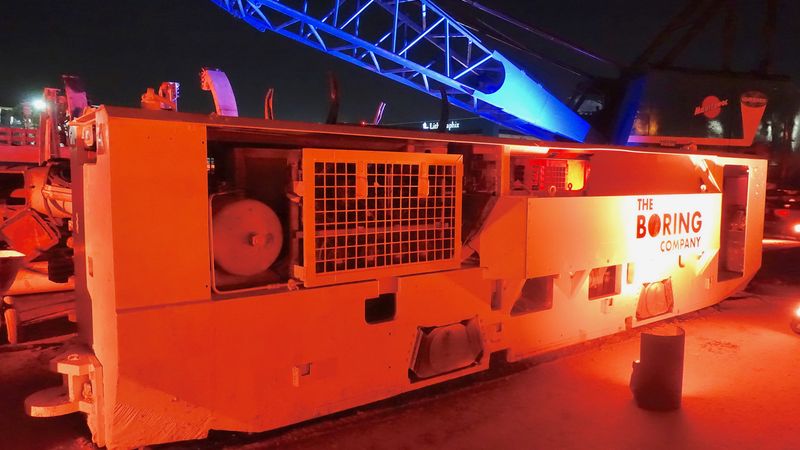
| Boring Co. | ~60% | ~$14B | Private ($23B val., Sep 2026) |
SpaceX: rockets, Starlink, and AI
The crown jewel: Falcon launches, Starship, Starlink internet (the cash cow), NASA contracts — plus the AI compute business from the xAI acquisition (~$2.56B Q2 2026 revenue). Project Starmind aims at orbital AI data centers.

Tesla: the AI/robotics pivot
FSD subscriptions (1.48M active), Cybercab robotaxis, Optimus robots (zero delivered yet), and Tesla Energy. Musk's $0-salary $1T package vests only on an $8.5T market cap — see the salary breakdown.

xAI, X, Neuralink, Boring Co.
xAI (Grok) now lives inside SpaceX. X is the $44B megaphone + data firehose for AI training. Neuralink is past first human implants into wider trials. Boring Co. digs the Vegas loop at a $23B valuation.

Why private-company values are the fuzziest numbers here
SpaceX and Tesla have market prices; the other four don't. Neuralink's ~$9B and Boring's $23B come from their latest priced rounds — real transactions, but a year old and illiquid. X has had no priced round since the $44B buyout; any value is inferred. That's why every private figure above carries an tag — honest trackers do the same.
How the empire was assembled
| Year | Addition | How |
|---|---|---|
| 2002 | SpaceX | Founded with ~$100M of PayPal proceeds |
| 2004 | Tesla | Lead investor; CEO from 2008 |
| 2016 | Neuralink, Boring Co. | Founded (SolarCity merged into Tesla) |
| 2022 | X (Twitter) | $44B acquisition |
| 2023 | xAI | Founded as OpenAI rival |
| 2026 | xAI → SpaceX | Acquisition; SpaceX IPO follows in June |
Deep dive: SpaceX — the $2 trillion engine
SpaceX is no longer a rocket startup; since its June 2026 Nasdaq listing it is the most valuable company Musk controls and the engine of his fortune. The IPO priced at $135 a share for a $1.77T valuation, closed its first day up 19% at $160.95, and briefly topped $2.1T on June 16. By mid-September 2026 the stock traded around $152.79, putting the market cap near $2.01T — meaning Musk's ~45% stake is worth roughly $900B on paper, the single largest line item in his ~$942B net worth.
The business now has three revenue pillars. Connectivity (Starlink) did $4.29B in Q2 2026 revenue (+66% YoY) with 12 million subscribers, and Wells Fargo forecasts 47 million subscribers and $51B in Starlink revenue by 2028. AI infrastructure — the former xAI business — contributed about $2.56B in the quarter, selling Colossus compute to customers including Anthropic and Google. Launch keeps winning government work: NASA added a $946M Commercial Crew modification in September 2026, lifting the contract's total value to $5.92B through 2030. Q2 2026 total revenue was about $7.8B (+92% YoY) with $3.5B in adjusted EBITDA.
Deep dive: Tesla — the AI and robotics bet
Tesla is Musk's second-largest holding and the one most exposed to public-market mood swings. At roughly $355 a share in early October 2026, the company is worth about $1.40T — well off its $498.46 all-time high from December 2025, but still one of the world's most valuable companies. Musk's ~12–20% stake plus options translates to roughly $165B+, a fraction of his SpaceX position but still larger than most billionaires' entire fortunes
The investment case has shifted decisively from cars to AI. Q2 2026 automotive revenue was $28.24B with a disappointing $0.33 EPS, but the market prices Tesla at over 300x earnings because of four future pillars: Robotaxi service (operating in Austin and the Bay Area with the purpose-built Cybercab), Full Self-Driving subscriptions, Tesla Energy (Megapack grid storage, widely seen as undervalued), and the Optimus humanoid robot, which management targets for commercial production by end of 2026. Morgan Stanley's bull case puts the stock at $840 on an Optimus/robotaxi breakthrough, versus a $400 base case. Musk's own $1T pay package only vests if Tesla reaches an $8.5T market cap — see the salary breakdown.
Deep dive: xAI & X — the AI stack, now inside SpaceX
xAI no longer exists as an independent company, and understanding why explains the whole empire's logic. Founded by Musk in March 2023 as an OpenAI rival, xAI merged with X Corp in March 2025, raised a $20B Series E at a $230B valuation in January 2026, then was acquired by SpaceX on February 2, 2026 at a $250B valuation — a combined $1.25T entity and the largest private merger in history. It was rebranded SpaceXAI that July.
The economics show why the merger happened: xAI lost $6.4B on $3.2B of 2025 revenue, burning roughly $1B a month on GPU compute. Inside SpaceX, Grok (about $500M annualized revenue run-rate by mid-2026, targeting $2B) and the Colossus supercomputer — some 555,000 Nvidia GPUs and ~$18B in hardware in Memphis — became the "AI infrastructure" segment doing $2.56B quarterly revenue. SpaceXAI even acquired AI coding company Cursor in August 2026. X itself, bought for $44B in 2022, functions as the data firehose training Grok and is carried on Musk's books below cost — its strategic value is as fuel for the AI stack, not as a standalone asset.
Which company matters most for his net worth?
Ranked by contribution to Musk's ~$942B fortune:
| # | Company | Value to Musk | Share of fortune |
|---|---|---|---|
| 1 | SpaceX (incl. xAI) | $644–900B | ~70–95% |
| 2 | Tesla | ~$165B+ | ~15–20% |
| 3 | The Boring Company | ~$14B | ~1.5% |
| 4 | Neuralink | ~$4.5B | ~0.5% |
| 5 | X Corp | Below $44B cost | Small |
Two footnotes matter. First, the small bets are growing fast: Boring Co. closed a $3B Series D in late 2026 at a $23B valuation (up from $5.7B in 2022), led by UAE backers, and Neuralink — $650M raised at a $9B valuation in June 2025 — was being priced as high as $42B on secondary markets by September 2026. Second, not everything worked: the Hyperloop city projects (Los Angeles, Washington DC, Chicago) were quietly shelved, SolarCity was absorbed into Tesla, and OpenAI — which Musk co-founded in 2015 — became a rival he is now suing. The empire's lesson: one $2T winner covers a lifetime of failed side bets.
The concentration is the real story: roughly 85–90% of the $942B sits in just two listed equities, SpaceX and Tesla. That is why his net worth can swing hundreds of billions in a single month — as in July 2026 on the SpaceX selloff — while the other four companies barely move the needle. Musk is a two-stock portfolio with four venture-capital lottery tickets attached.
Frequently asked questions
What companies does Elon Musk own in 2026?
Six: Tesla (CEO), SpaceX (founder/CEO), xAI (founder, now a SpaceX subsidiary), X Corp (owner), Neuralink (co-founder/CEO), and The Boring Company (founder).
Which Elon Musk company is worth the most?
SpaceX — his ~42–48% stake is worth roughly $644–900B depending on the share price, dwarfing his Tesla stake and everything else combined.
Did Elon Musk found Tesla?
He was the lead investor in 2004 and became CEO in 2008; a 2009 lawsuit settlement legally recognizes him as a co-founder alongside Martin Eberhard and Marc Tarpenning.
Is xAI still independent?
No — SpaceX acquired xAI in February 2026. It now operates as SpaceX's AI division.
What happened to SolarCity?
Musk's solar company merged into Tesla in 2016 for $2.6B in stock and operates today as Tesla Energy (solar + Megapack storage).
Sources
- Tesla Investor RelationsTesla
- SEC EDGAR — Tesla FilingsSEC
- SpaceXSpaceX