Quick answer
Elon Musk's Tesla salary is $0 — no base pay, no cash bonus. His entire compensation is the $1 trillion performance stock package approved by 75%+ of shareholders in November 2025: 423.7 million restricted shares in 12 tranches, vesting only if Tesla hits an $8.5 trillion market cap plus operational milestones by September 2035.
Breakdown: the $1T package, tranche by tranche
Each of the 12 tranches (~35.3M shares) requires both a market-cap milestone and an operational milestone:
| Tranche | Market cap | Key operational hurdle |
|---|---|---|
| 1–3 | $2T → $3T | 20M cumulative vehicles (10M done by Q3 2026) |
| 4–6 | $3.5T → $4.5T | 10M FSD subscriptions (1.48M in Q2 2026) |
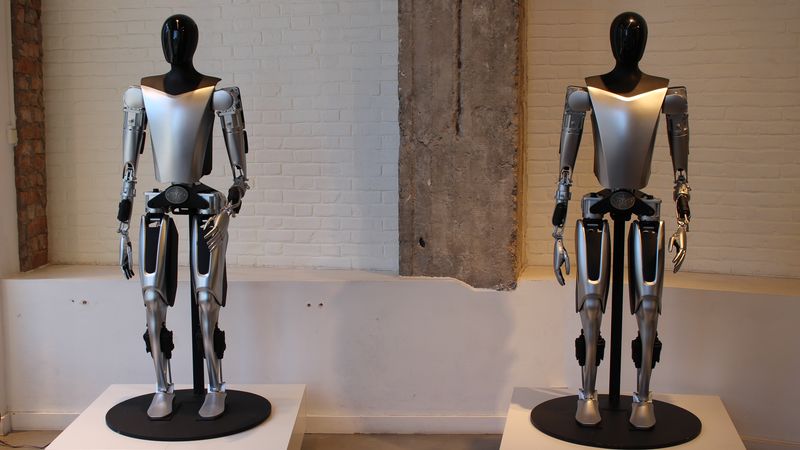
| 7–9 | $5T → $6T | 1M Optimus robots delivered (zero yet) |
| 10–12 | $6.5T → $8.5T | 1M robotaxis + $400B adjusted EBITDA (vs $14.6B in 2025) |
An $8.5T market cap would exceed Apple, Microsoft, and Nvidia combined at 2026 valuations. The package would lift Musk's Tesla voting power from ~13.6% to ~24.9% — control he says he needs for Tesla's AI/robotics bets.
The 2018 package it replaced
304 million options at a $23.34 strike — fully earned, ~$116B exercised — then voided by a Delaware judge who found the board too close to Musk. Tesla re-ran the vote (passed by more), reincorporated in Texas, and designed the 2025 package under Texas law.
This $0-salary model is central to how his $942B net worth works and how he built it.

Why "salary" numbers for Musk are misleading
Headlines sometimes cite Musk's "pay" as $1 trillion — but that's a ceiling over ten years, not annual income. Realized pay in any given year is $0 unless tranches vest, and none can vest before March 2033 under the award terms. Comparing it to a normal CEO salary is apples-to-oranges: it's an at-risk, decade-long bet.
Compensation history
| Year | Package | Outcome |
|---|---|---|
| 2018 | 304M options @ $23.34 | Fully earned (~$116B), then voided by Delaware court |
| 2024 | Re-vote + Texas move | Shareholders re-approve; company reincorporates |
| 2025 | 423.7M shares, up to $1T | Approved Nov 2025 (75%+); vests 2033–2035 on milestones |
The 2018 package: how it actually worked
The deal that started it all was granted in 2018: 12 tranches of stock options that vested as Tesla's market cap climbed from $100 billion to $650 billion in $50 billion steps, each paired with revenue or adjusted-EBITDA targets. Musk hit every milestone — turning a package originally valued near $56 billion into more than $100 billion as Tesla's stock rallied.
Then the courts intervened. Shareholder Richard Tornetta sued, and in January 2024 Delaware Chancellor Kathaleen McCormick voided the package, calling the board's approval process "deeply flawed" and finding that Musk "controlled Tesla" during negotiations. She reaffirmed the ruling in December 2024 — even after shareholders re-approved the package by supermajority in June 2024 — and awarded $345 million in attorney fees to the plaintiffs' lawyers.
Tesla's response was structural: shareholders voted to reincorporate in Texas, the board granted Musk an interim ~$29 billion award in August 2025, and the company appealed to the Delaware Supreme Court. The saga is the direct reason the 2025 package was designed under Texas law — to keep the next fight out of Delaware entirely.
The $1 trillion package: milestones explained
Proposed by Tesla's board in September 2025 and approved by over 75% of voting shareholders on November 6, 2025, at the Austin annual meeting, the package grants up to 423.7 million restricted shares — roughly 12% of Tesla's stock — in 12 equal tranches. Each tranche vests only when a pair of milestones is met: one market-cap target, one operational target.
The market-cap ladder starts at $2 trillion and rises in $500 billion steps to $6.5 trillion, then jumps to $7.5 trillion and finally $8.5 trillion — each measured on sustained 30-day and six-month averages. The operational pairs are: 20 million cumulative vehicles delivered, 10 million paid Full Self-Driving subscriptions, 1 million Optimus robots delivered, 1 million robotaxis in commercial operation, and adjusted EBITDA climbing from $50 billion to $400 billion across four consecutive quarters (the $400B bar must be cleared three separate times).
How hard is that? Tesla's 2025 adjusted EBITDA was just $14.6 billion — the $400 billion target is 27x higher — and zero Optimus robots have been delivered yet. Musk has until September 2035 to earn the tranches, must stay in a top leadership role, and forfeits anything unmet. If fully earned, his voting power rises from ~13.6% to ~24.9% — the control he says Tesla's AI and robotics bets require.
How does Musk actually get cash?
With a $0 salary, Musk's spending money comes from his balance sheet, not a paycheck. The main tool is stock-backed borrowing: pledging Tesla shares as collateral for personal loans. Tesla's own pledging policy caps this at roughly $3.5 billion — a fraction of his stake, but enough to fund a lifestyle without selling a single share.
This is the classic billionaire playbook known as "buy, borrow, die": hold appreciating stock, borrow against it to spend (loans aren't taxable income), and let heirs inherit the shares with a stepped-up tax basis. When Musk has sold — notably tens of billions in Tesla stock across 2021–2022 — it was to fund the Twitter acquisition and cover the resulting tax bills, not to draw a salary.
SpaceX pays him only a modest salary; virtually all his SpaceX wealth sits in his ~42–48% equity stake. The model is simple: zero income, maximum equity, debt for liquidity — which is also why "Musk's salary" headlines quoting $1 trillion confuse a decade-long at-risk ceiling with take-home pay.
How Musk's pay compares to other CEOs
The $1 trillion headline exists in a different universe from normal CEO pay. Tim Cook earned $74.3 million in total 2025 compensation at Apple (proxy statement), and his 2026 package as incoming Executive Chair targets ~$47 million. Sundar Pichai took home $10.7 million from Alphabet in 2024. Satya Nadella's Microsoft package runs near $96 million a year. Musk's maximum is more than 10,000x Pichai's annual pay.
Even Musk's previous record — the 2018 package, worth $56 billion at grant — was already the largest in corporate history before the 2025 deal made it look small. Critics (Norway's sovereign wealth fund, ISS, Glass Lewis) call the new package excessive dilution with weak governance; supporters note it pays $0 unless Tesla roughly 6x's in value, and that shareholders 10x'd their money under the 2018 deal.
The fair comparison isn't salary-to-salary — it's guaranteed pay versus at-risk upside. Cook, Pichai, and Nadella get paid whether their stocks rise or not. Musk gets nothing if Tesla stalls. That structure is exactly what makes the package both the most controversial and the most shareholder-aligned in corporate history.
Frequently asked questions
What is Elon Musk's salary in 2026?
Zero base salary from Tesla, with no cash bonus. His only Tesla compensation is the 2025 performance stock package worth up to $1 trillion if all milestones are hit by 2035.
Does Elon Musk take a salary from SpaceX?
SpaceX provides only a modest salary; the overwhelming majority of his SpaceX wealth is his ~42–48% equity stake, not pay.
What happens if Tesla misses the $1T package targets?
Unearned tranches simply never vest. The $1 trillion is a ceiling, not a guarantee — if Tesla's stock stays flat, Musk earns $0 over the decade.
Why did Delaware cancel his 2018 pay package?
A Delaware judge ruled Tesla's board lacked independence from Musk and shareholders weren't fully informed — voiding the package. Tesla reincorporated in Texas and shareholders re-approved it.
Who opposed the $1 trillion package?
Norway's sovereign wealth fund and CalPERS voted against it, but retail shareholders carried the 75%+ approval in November 2025.