Quick answer
Greg Brockman's business empire is remarkably concentrated: two companies explain virtually all of his estimated $25.5 billion fortune. The first is OpenAI, which he co-founded in 2015 and where he serves as president — his stake of slightly under 3% is worth about $25.5 billion at the company's $852 billion March 2026 valuation. The second is Stripe, where he was employee number 4 and CTO from 2010 to 2015; his retained shares are estimated at $471 million. Around the edges sit angel investments totaling under $5 million.
Brockman, born November 29, 1987, in Thompson, North Dakota, is not a serial founder in the Musk mold. Brockman has exactly one founding credit as a principal — OpenAI — and has spent his career going deep inside generational companies rather than collecting them. For the dollar-by-dollar math, see Brockman's net worth breakdown.
OpenAI: the ~3% that built the fortune
OpenAI is not just Brockman's biggest asset; it is essentially his entire fortune. Forbes attributes the whole $25.5 billion estimate to a holding of slightly under 3%, anchored to the $852 billion post-money valuation from the record $122 billion funding round that closed in March 2026. The arithmetic is clean: 3% of $852 billion is about $25.56 billion.
His relationship with the company runs through every phase of its strange history. He co-founded it as a nonprofit research lab in late 2015 alongside Sam Altman, Ilya Sutskever, Elon Musk and others, served as CTO through the GPT-2/GPT-3 era, and became president as the company commercialized. He led the technical programs that defined it — OpenAI Gym, the OpenAI Five Dota 2 bot, GPT-2, GPT-3, Codex, and the GPT-4 live demo in March 2023.
The position survived two near-death moments. In November 2023 he resigned within hours of Altman's ouster, risking the equity entirely, and returned days later when Altman was reinstated. In the 2026 Musk trial he testified the stake was worth "over $20 billion, closer to $30 billion" — and that he had never invested a dollar of his own money. Early talks reported in September 2026 for a new round at $1.2 trillion or more would lift the paper value toward $35 billion, though each mega-round also dilutes his percentage.
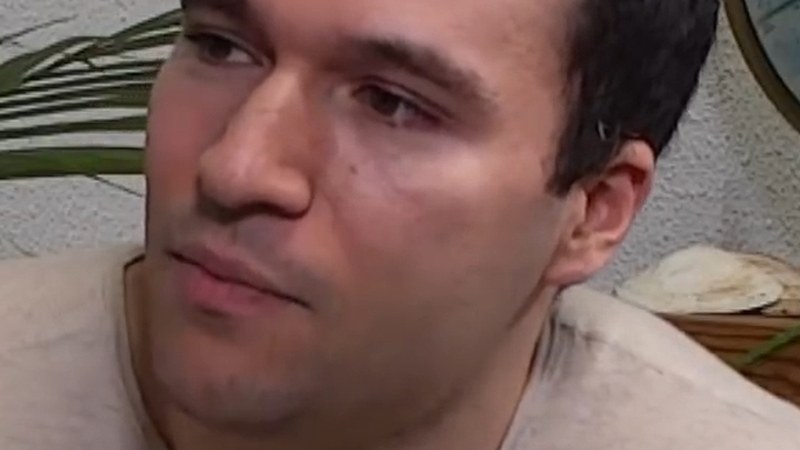
Stripe: the $471 million second act that came first
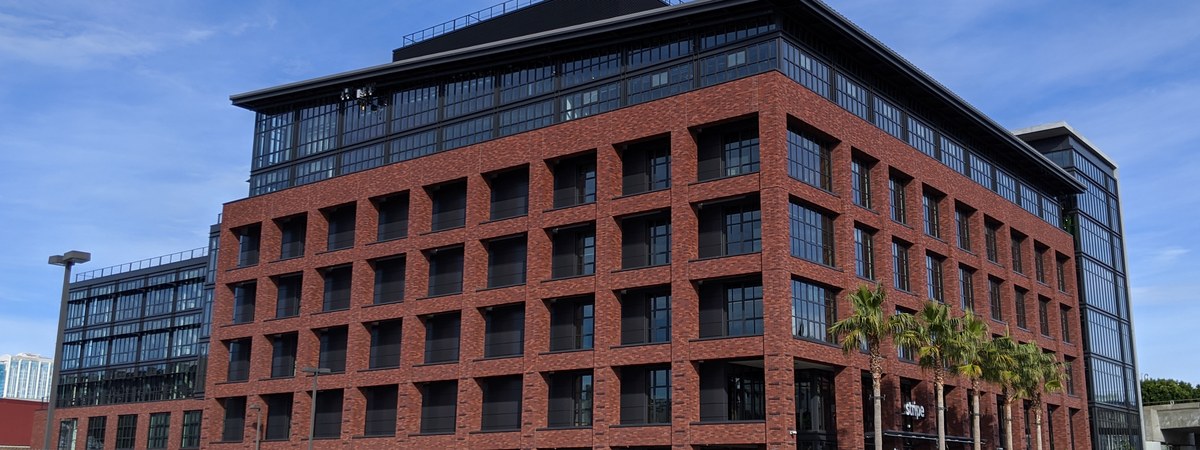
Chronologically, Stripe came first — and it remains the second pillar of Brockman's wealth. He joined in 2010 as employee number 4, became CTO by 2013, and helped scale the payments startup from a handful of people to more than 200 employees before leaving in 2015 to start OpenAI.
| Company | Brockman's position | Estimated value (2026) | Valuation benchmark |
|---|---|---|---|
| OpenAI | Co-founder, president; ~3% | ~$25.5 billion | $852B (March 2026) |
| Stripe | Ex-employee #4, ex-CTO | ~$471 million | $159B (Feb 2026) |
| Angel portfolio | 20+ startups | Under $5 million disclosed | — |
The Stripe shares are arguably his most "normal" asset: a retained employee position in a company whose private valuation has been set by institutional rounds for over a decade. Stripe's $159 billion February 2026 valuation makes his slice worth an estimated $471 million — about 2% of his total fortune, and more than most tech executives earn in a lifetime. How both positions were built is the story of how Brockman made his money.
The angel portfolio: betting on the AI supply chain
Beyond the two giants, Brockman has been a steady angel investor — more than 20 startup investments as of 2021. The disclosed names, totaling under $5 million, read like a shopping list for the AI boom's infrastructure layer: Cerebras (AI chips), CoreWeave (GPU cloud), and Helion (fusion energy). All three have done business with OpenAI.
The amounts are trivial next to $25.5 billion, but the pattern is revealing. Brockman invests in the inputs his own company consumes — compute, chips, energy — suggesting his angel checks double as industry intelligence. It is the same instinct that made him employee #4 at a payments company in 2010: find the infrastructure, get in early, hold.
The political vehicles: Leading the Future
One non-company entity deserves mention because Brockman helped create it. Leading the Future is a super PAC dedicated to AI deregulation that he co-founded with Andreessen Horowitz co-founders Marc Andreessen and Ben Horowitz. Brockman and his wife donated $50 million to it, on top of $12.5 million each to Donald Trump's MAGA Inc. super PAC in 2025 — making them among Trump's biggest donors — plus another $25 million to each vehicle in 2026.
This is not an investment vehicle; it is influence spending, which Brockman links to OpenAI's mission of advancing AI. But it marks a new phase: the fortune built quietly inside two companies is now being deployed politically. In October 2026 he represented OpenAI at President Trump's White House "Super Intelligence" summit, signing the voluntary AI safety accord in Sam Altman's place — the company's president acting as its public face.
The dilution question: will he stay at ~3%?
A ~3% stake in a private company is a moving target. Every mega-round OpenAI raises sells new shares, shrinking every existing holder's percentage even as the valuation climbs. The March 2026 round — $122 billion at $852 billion post-money — is what set the current mark; the $1.2 trillion round reportedly in early talks would cut his percentage again while potentially lifting the dollar value toward $35 billion.
This is the paradox of Brockman's position: the same fundraising that makes him richer on paper makes him a smaller owner. So far the trade has worked overwhelmingly in his favor — the pie has grown far faster than his slice has shrunk. But it means the $25.5 billion is best read as a snapshot, not a balance. A down round, a regulatory shock, or simply a slower growth phase could re-price the stake downward just as quickly as the last three years re-priced it upward.
What he doesn't own (and why it matters)
The most interesting thing about Brockman's company list may be its brevity. He holds no known stake in Anthropic, xAI, or any OpenAI competitor. He has not started a second company. He is not, like Altman, a sprawling angel investor with hundreds of positions — his disclosed outside bets total under $5 million. Concentration is the strategy: two generational companies, held for a decade-plus each, and almost nothing else.
That concentration is also the risk. Unlike a diversified portfolio, Brockman's wealth has a single point of failure: OpenAI's private valuation. A down round, a regulatory shock, or dilution from the next mega-raise moves his net worth by billions in either direction. The $1.2 trillion round reportedly in early talks would be the upside case; the company's confidential June 2026 IPO filing — with Altman saying a 2026 listing would be unwise — shows the path to liquidity is not yet settled. For how his pay works inside this structure, see Greg Brockman's salary, and for the head-to-head with his CEO, Brockman vs Altman.
Frequently asked questions
What companies does Greg Brockman own?
Two meaningful positions: a stake of slightly under 3% in OpenAI — estimated at $25.5 billion against the company's $852 billion March 2026 valuation — and Stripe shares estimated at $471 million from his 2010–2015 tenure as employee #4 and CTO. He also holds disclosed angel investments totaling under $5 million in companies including Cerebras, CoreWeave, and Helion.
Is Greg Brockman the CEO of OpenAI?
No. Brockman is OpenAI's president and co-founder; Sam Altman is CEO. Brockman served as CTO in the early years and now focuses on product direction — including Codex — and increasingly represents the company publicly, as when he attended President Trump's White House AI summit in October 2026 in Altman's place.
Did Greg Brockman found any company besides OpenAI?
No operating companies — OpenAI is his only founding credit as a principal. Unlike serial founders, Brockman has been a builder inside two generational companies (Stripe, then OpenAI) plus an angel investor in more than 20 startups. His company-building energy has gone into OpenAI for over a decade.
What is Greg Brockman's role at OpenAI in 2026?
He is president, after serving as CTO from the 2015 founding. He led technical programs including OpenAI Gym, OpenAI Five, GPT-2, GPT-3, Codex and GPT-4. After a sabbatical from August to November 2024, he returned focused on a small set of products, and he now handles high-profile representation — signing the White House AI safety accord in October 2026.
Does Greg Brockman still own part of Stripe?
Yes. He joined Stripe in 2010 as employee number 4, became CTO by 2013, and left in 2015 to co-found OpenAI — but kept shares now estimated at $471 million, based on Stripe's $159 billion valuation in February 2026. It is the second-largest piece of his estimated $25.5 billion fortune.
Is Greg Brockman married?
Yes. Brockman married Anna in November 2019 after about a year of dating, in a ceremony held at OpenAI's offices on a workday. Fellow OpenAI co-founder Ilya Sutskever officiated the wedding.
How old is Greg Brockman in 2026?
Reports differ between 37 and 38. Most biographical profiles give his birth date as November 29, 1987, in Thompson, North Dakota, which would make him 38 for most of 2026; Forbes' own tables have listed both 37 and 38.
Where does Greg Brockman live?
Brockman is based in San Francisco, California — the city where both Stripe and OpenAI are headquartered, and where he has lived since joining Stripe in 2010. Forbes lists California as his state of residence.