Quick answer
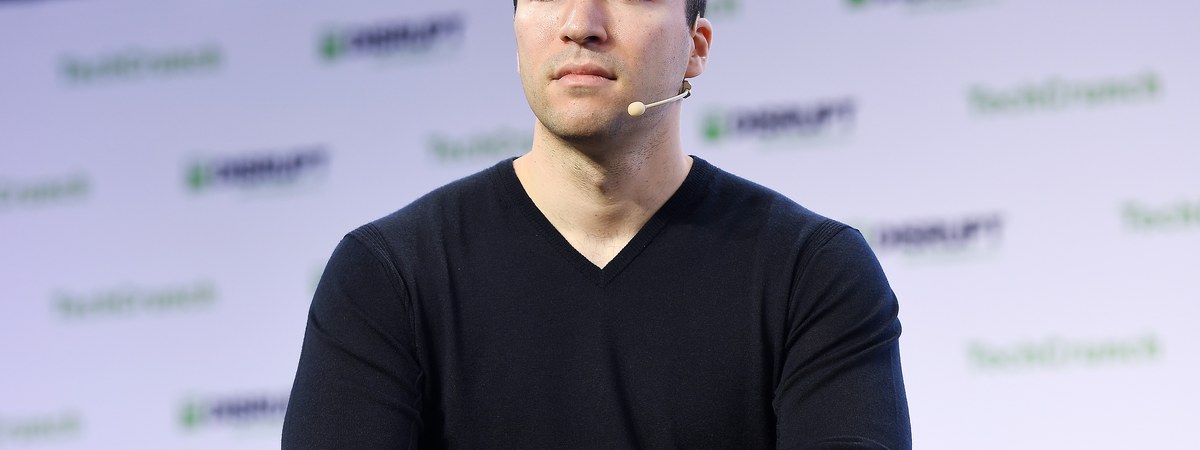
Greg Brockman made his money twice — and the second time was roughly fifty times bigger than the first. Bet one: joining Stripe in 2010 as employee number 4 and staying through its rise to a $159 billion valuation, keeping shares now estimated at $471 million. Bet two: leaving Stripe in 2015 to co-found OpenAI, taking founder's equity that Forbes now values at $25.5 billion against OpenAI's $852 billion March 2026 valuation.
The remarkable part: he never invested a dollar of his own money in OpenAI. He told a federal court in May 2026 that his entire stake — "over $20 billion, closer to $30 billion" by his own testimony — came from equity compensation granted when the company was a nonprofit research lab. It is one of the purest examples in business history of wealth created by being early and never selling, rather than by deploying capital.
Act one: Stripe, 2010–2015 — employee #4
Brockman's first fortune began with a dropout's gamble. Born November 29, 1987, in Thompson, North Dakota, he enrolled at Harvard in 2009 and then MIT in 2010 — leaving both without a degree — he joined a tiny payments startup called Stripe as employee number 4. By 2013 he was its chief technology officer, helping scale the company from a handful of people to more than 200 employees and building the infrastructure that would make Stripe the backbone of internet payments.
He left in 2015, but like many early startup employees, he kept a meaningful slice. Those retained shares are now estimated at $471 million, based on Stripe's $159 billion valuation in February 2026. It is the second-largest component of his net worth and, by any normal standard, a life-changing fortune on its own — it just happens to sit next to a $25.5 billion OpenAI stake. For the full asset map, see Greg Brockman's net worth breakdown.
Act two: the OpenAI bet, 2015 — equity when it was worthless
In late 2015, Brockman walked away from a rocket ship to join something with no business model at all. OpenAI was founded as a nonprofit AI research lab by Brockman, Sam Altman, Ilya Sutskever, Elon Musk and others, with a mission to ensure artificial general intelligence benefits humanity. There was no revenue, no product, and no commercial valuation — the equity Brockman received as a co-founder and CTO was, on paper, nearly worthless.
What followed was a decade of compounding. As CTO and later president, Brockman led the technical programs that defined modern AI: OpenAI Gym (the reinforcement-learning toolkit), OpenAI Five (the Dota 2 bot that beat world champions), GPT-2, GPT-3, Codex, and GPT-4, which he demonstrated live in March 2023. Each breakthrough raised the company's private valuation — and with it, the value of equity he had never paid a cent for.
| Year | Milestone | Effect on his equity |
|---|---|---|
| 2015 | Co-founds OpenAI (nonprofit) | Founder equity, near-zero paper value |
| 2019 | For-profit arm created; GPT-2 | Equity gains first real valuation anchor |
| 2020–2022 | GPT-3, Codex, ChatGPT | Valuation climbs into tens of billions |
| 2023 | GPT-4 demo; boardroom crisis | He resigns, returns — stake preserved |
| 2026 (Mar) | $122B raise at $852B valuation | ~3% stake ≈ $25.5 billion |
The loyalty gamble that saved the fortune
The fortune almost vanished in November 2023. When OpenAI's board suddenly fired Sam Altman on November 17, Brockman was told he was removed from the board but could stay at the company. Within hours, he resigned anyway — fully aware that walking out could mean forfeiting his equity. Microsoft CEO Satya Nadella immediately announced that both men would join Microsoft to lead a new AI research team. Days later, after a deal reinstated Altman as CEO, Brockman returned to OpenAI.
It was the highest-stakes career decision of his life, made in hours: his entire net worth, staked on loyalty. Had he stayed quiet and kept his board seat, he might have kept the shares with less drama — but he chose the risk. The gamble preserved the position that Forbes now values at $25.5 billion. He later took a sabbatical from August to November 2024, then returned to focus the company on products like Codex.
The $0 investment: wealth without capital
Perhaps the most striking detail of Brockman's story emerged under oath. During the May 2026 trial in Elon Musk's lawsuit against OpenAI, Musk's lawyer pressed him on his compensation. Brockman confirmed his stake was worth over $20 billion, closer to $30 billion — and that he had never personally invested any money in the company. He had even pledged $100,000 to OpenAI at its founding and never followed through.
This inverts the usual billionaire story. Most fortunes of this size involve capital at risk: money invested, companies bought, bets hedged. Brockman's involved none. His only investment was a decade of his working life and, in 2023, a few hours of terrifying career risk. The 2017 journal entry read aloud in court — "Financially, what will take me to $1B?" — shows he once thought in billions. The answer turned out to be closer to $25 billion, achieved without writing a single check.
There is one exception worth noting: in 2017, Altman gave Brockman a $10 million stake in Altman's personal family office, revealed during the trial — a sign of how close the two were long before the money arrived.
The side bets: angel investing in the AI supply chain
Around the edges of the two giant positions, Brockman has been an active angel investor — more than 20 startup investments as of 2021. The disclosed names cluster in one theme: the infrastructure layer of the AI boom. His sub-$5 million in disclosed positions include chipmaker Cerebras, cloud provider CoreWeave, and fusion-energy startup Helion — all three have done business with OpenAI.
The pattern is consistent with everything else about his career: bet on the picks and shovels, hold for a very long time, and let compounding do the work. Whether the next decade treats him as well as the last depends on the same variables as OpenAI itself — the subject of the companies behind his wealth.
Two paths at the same company
Brockman's story is inseparable from Sam Altman's — and the contrast explains the wealth gap. Altman, who joined as co-founder and later became CEO, holds no direct OpenAI equity by design, a consequence of the company's nonprofit origins and capped-profit structure. His estimated $3.3 billion comes from investments made outside OpenAI. Brockman held founder's equity from day one and never let go. Same company, same decade, an 8-to-1 wealth ratio — determined entirely by who held the shares. The full comparison is at Brockman vs Altman, and the mechanics of his pay at Greg Brockman's salary.
Frequently asked questions
How did Greg Brockman make his money?
Brockman made his money twice: first as employee number 4 and CTO of Stripe (2010–2015), keeping shares now estimated at $471 million; then as co-founder of OpenAI in 2015, where his founder's equity — slightly under 3% — is worth an estimated $25.5 billion at the company's $852 billion March 2026 valuation. He never invested his own money in OpenAI; both fortunes came from early equity, held for years.
When did Greg Brockman join Stripe?
Brockman joined Stripe in 2010 as employee number 4, shortly after leaving MIT. He became chief technology officer by 2013 and stayed until 2015, when he left to co-found OpenAI. His retained Stripe shares are estimated at $471 million based on Stripe's $159 billion valuation in February 2026.
What did Greg Brockman do at OpenAI?
Brockman co-founded OpenAI in late 2015 with Sam Altman, Ilya Sutskever, Elon Musk and others, serving first as CTO and later as president. He led technical work on OpenAI Gym, OpenAI Five (the Dota 2 bot), GPT-2, GPT-3, Codex and GPT-4, which he demonstrated live in March 2023.
Did Greg Brockman invest his own money in OpenAI?
No. He testified in federal court in May 2026 that he never personally invested a dollar in OpenAI. His entire stake — disclosed as worth over $20 billion, closer to $30 billion — came from founder and executive equity granted when the company was still a nonprofit research lab.
Why did Greg Brockman leave Stripe?
He left in 2015 to co-found OpenAI, betting that artificial general intelligence was the most important technical challenge of his lifetime. At the time OpenAI was a nonprofit with no commercial valuation; the equity he received was nearly worthless on paper — a bet that compounded into an estimated $25.5 billion.
Is Greg Brockman married?
Yes. Brockman married Anna in November 2019 after about a year of dating, in a ceremony held at OpenAI's offices on a workday. Fellow OpenAI co-founder Ilya Sutskever officiated the wedding.
How old is Greg Brockman in 2026?
Reports differ between 37 and 38. Most biographical profiles give his birth date as November 29, 1987, in Thompson, North Dakota, which would make him 38 for most of 2026; Forbes' own tables have listed both 37 and 38.
Where does Greg Brockman live?
Brockman is based in San Francisco, California, where both Stripe and OpenAI are headquartered. He has lived in the city since joining Stripe in 2010, and Forbes lists California as his state of residence.