
Quick answer
Jeff Bezos controls four companies in 2026: Amazon (founder/executive chairman, ~8% — worth ~$219B), Blue Origin (founder, near-wholly owned, valued ~$130–140B), The Washington Post (owner since 2013, bought for $250M), and Prometheus (co-founder/co-CEO, the AI startup valued at $41B). Around them sit the Bezos Earth Fund ($10B climate pledge) and a vast venture portfolio through Bezos Expeditions (early Google, Uber, Airbnb, Twitter). Together they underpin a fortune Forbes pegged at $378B in September 2026. See the main net worth breakdown.
| Company | Bezos's stake | Est. value to him | Status |
|---|---|---|---|
| Amazon | ~879M shares, ~8.1% | ~$219B | Public (AMZN); ~$2.68T market cap |
| Blue Origin | Near-wholly owned | $100B+ | Private (~$130–140B valuation) |
| Prometheus | Co-founder, co-CEO; lead investor | Billions | Private ($41B valuation, Jun 2026) |
| Washington Post | 100% | Well below $250M cost | Private; breaking even in 2026 |
| Bezos Earth Fund | Founder/executive chair | $7B+ committed, unspent | Philanthropy; $2.4B granted so far |
Deep dive: Amazon — the fortune's foundation
Amazon is not just Bezos's biggest asset; it is practically his entire fortune in liquid form. As of his August 2026 SEC filing, Bezos owned about 879.3 million Amazon shares, roughly 8.1% of the company — down from ~950 million in the May 2026 proxy after sales and donations, and down from ~8.8% earlier in the year. At the September 2026 price of ~$249, that stake is worth about $219 billion.
The company itself is trading near record highs. Amazon's market cap sat at roughly $2.68 trillion on October 1, 2026 — and it briefly became only the fifth company in history to cross $3 trillion in August 2026. Forbes's 2026 revenue figures put Amazon at $742.8B in sales with $90.8B in profits, and Bezos remains its largest individual shareholder by a wide margin, ahead of Vanguard and BlackRock.
The profit engine — and the reason the market assigns such a premium — is AWS. Amazon Web Services is only about 20% of Amazon's revenue but accounts for more than half of its operating profit, with margins above 35% for three straight years. Q2 2026 was a blowout: AWS revenue jumped 36.7% to $42.2B, its fastest growth since 2021, generating $16.6B in operating income — 61% of the entire company's profits. In Q1 2026 AWS grew 28%, and analysts note the segment's AI-driven acceleration is what pushed the stock toward $3 trillion. Bezos stepped down as CEO in 2021 (Andy Jassy took over) but stays on as executive chairman — and as long as AWS keeps printing money, the Amazon stake does the heavy lifting for his net worth. He has sold more than $50 billion of Amazon stock over his career, largely to fund Blue Origin.
Deep dive: Blue Origin — the $130B+ moonshot
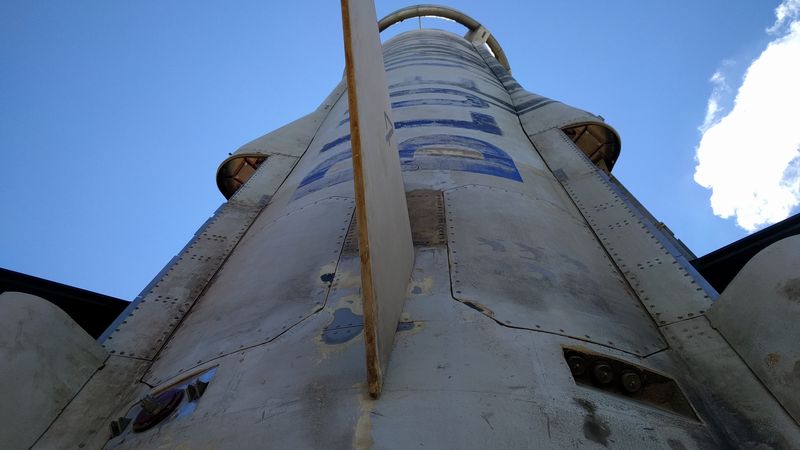
Blue Origin is the most expensive hobby in business history — and it's suddenly worth real money. Bezos founded the rocket company in 2000 and has personally poured $32 billion into it since, per documents reviewed by The Wall Street Journal, including a fresh $2 billion this year. For a quarter-century it was Bezos-funded alone; in July 2026 it took outside money for the first time: a $10B raise at a $130B pre-money valuation, led by Coatue's ~$4B commitment plus $2B more from Bezos himself. A later, oversubscribed close valued it around $140B.
The valuation is a bet on government contracts, not current results. Blue Origin has ~15,000 employees, generated only $800M in 2025 revenue (guiding to $1.4B in 2026), and has yet to launch a commercial payload to orbit — its heavy-lift New Glenn rocket exploded during a hot-fire test in late May 2026, damaging its only Cape Canaveral launchpad. CEO Dave Limp has vowed to return to flight by year-end 2026 with reengineered infrastructure.
What justifies the price tag is the pipeline: a $3.4B NASA contract for the Blue Moon crewed lunar lander (won 2023), a $188M contract awarded in May 2026 to deliver rovers to the lunar south pole by 2028, national-security launch deals, and the new TeraWave satellite-communications constellation aimed at enterprise and government customers. Analysts estimate the full government contract book could reach ~$30B if every option is exercised. It trails SpaceX (which IPO'd at ~$1.77T in June 2026) by roughly 14x on valuation — but if New Glenn flies and the Artemis schedule holds, Blue Origin is Bezos's second fortune.
Deep dive: The Washington Post — the $250M prestige asset
On August 5, 2013, Bezos stunned the media world by buying The Washington Post — personally, not through Amazon — for $250 million in cash from the Graham family. For a few years it looked like a turnaround story: the "Democracy Dies in Darkness" era brought subscriber growth and profitability.
Then the empire-builder era turned painful. The paper has lost money every year since 2022. After the controversial decision to kill a planned Kamala Harris endorsement before the 2024 election, hundreds of thousands of subscribers canceled; former editor Marty Baron called it self-inflicted brand destruction. On February 5, 2026, the Post cut more than 300 of its ~800 journalists — nearly a third of the newsroom, eliminating the sports and books desks and gutting local and foreign coverage. CEO Will Lewis resigned days later; Jeff D'Onofrio, a former CFO, was named permanent CEO and publisher in September 2026.
The good news: the Post says it is "on track to break even" this year — its closest path to profitability in five years — and sold 300,000+ subscriptions in 2026. But the paper's market value today is widely assumed to be far below the $250M purchase price. It's a rounding error in Bezos's fortune — worth more as a civic and political asset than a financial one.
Deep dive: Bezos Earth Fund — the $10B climate pledge
In 2020 Bezos pledged $10 billion — the largest individual environmental commitment ever — to fight climate change by 2030. Six years in, the fund has awarded 335 grants totaling about $2.4 billion, leaving more than $7B to spend in about four years — meaning it must average roughly $1.8B a year from here, versus $183M granted in 2025 and at least $400M so far in 2026.
Recent grants show the pace quickening: $25M+ for Pacific Ocean protection (September 2026), a $200M species-recovery partnership with Re:wild (August 2026), $34M for sustainable textiles, and $100M commitments for urban parks and endangered species. Lauren Sánchez Bezos — vice chair since inception and now Bezos's wife since June 2025 — has become the fund's public face, announcing the grants personally. The Earth Fund doesn't add to Bezos's net worth — it's money going out the door — but it is one of the two places (alongside Blue Origin) where Amazon-sale proceeds go.
Other investments: Google, Airbnb, Prometheus, and the portfolio
Bezos was a venture capitalist before it was fashionable, and his hit list is elite. His most famous early bet: $250,000 in Google in 1998 — he was one of the company's first outside investors; the shares, had he kept them, "would probably be worth billions today," Business Insider noted. Through Bezos Expeditions, his personal VC firm, he backed Uber (in a $37M 2011 round) and Airbnb (~$112M invested in 2011), plus Twitter, Workday, Domo, Business Insider, General Assembly, Juno Therapeutics, Nextdoor, Stack Overflow, Zocdoc, D-Wave, General Fusion and dozens more.
His newest venture is operational, not just capital: Project Prometheus, the AI startup he co-founded with Vik Bajaj in late 2025. Prometheus builds AI for engineering and manufacturing — Bezos calls it "a very, very modern version of CAD" and "nothing to do with robotics" — and Bezos is its co-CEO, his first operating role since leaving Amazon in 2021. It launched with $6.2B, closed a $10B round at a $38B valuation in April 2026 (JPMorgan, BlackRock), and raised $12B at a $41B valuation in June 2026. Bezos is also an early backer of Altos Labs, the anti-aging biotech, and his real estate portfolio — Indian Creek "billionaire bunker" (~$237M across three Miami homes), Beverly Hills ($165M), Maui ($78M), plus DC, Seattle and New York — is estimated around $700M. Then there's the $500M superyacht Koru.
Which company matters most for his net worth?
Ranked by contribution to Bezos's ~$280–380B fortune:
| # | Company | Value to Bezos | Share of fortune |
|---|---|---|---|
| 1 | Amazon | ~$219B | ~60–75% |
| 2 | Blue Origin | $100B+ | ~25–35% |
| 3 | Prometheus | Billions | ~1–3% |
| 4 | Bezos Expeditions portfolio | Billions | ~1% |
| 5 | Real estate + yacht | ~$1.2B | <1% |
| 6 | Washington Post | Well below $250M cost | ~0% |
Two footnotes matter. First, concentration is the whole story: roughly 90% of Bezos's wealth sits in two assets — Amazon stock and Blue Origin. Everything else (the Post, the VC portfolio, real estate, Prometheus) is financially decorative. Second, the two bets are correlated to nothing except himself: Amazon's value is driven by AWS cloud demand; Blue Origin's by whether New Glenn flies and NASA keeps paying. Unlike Musk's interconnected empire, Bezos's holdings are largely separate businesses — but they share one owner, and one cash spigot: the Amazon share sales that have funded $32B of Blue Origin and a $10B climate pledge.
Frequently asked questions
What companies does Jeff Bezos own in 2026?
Four directly: Amazon (founder/executive chairman, ~8% stake), Blue Origin (founder, near-wholly owned), The Washington Post (owner since 2013), and Prometheus (co-founder/co-CEO, the AI startup). He also runs the $10B Bezos Earth Fund and a large venture portfolio through Bezos Expeditions.
Which Jeff Bezos company is worth the most?
Amazon, by far — his ~879 million shares (~8% of the company) were worth about $219 billion at September 2026 prices, roughly two-thirds of his fortune. Blue Origin (~$130–140B valuation) is a distant second.
How much did Bezos pay for The Washington Post?
$250 million in cash, in August 2013, paid personally (not through Amazon).
What is Bezos Expeditions?
Bezos's personal venture-capital firm. It backed Google in 1998, plus Uber, Airbnb, Twitter, Workday, Domo, Business Insider, General Assembly, Juno Therapeutics, Altos Labs and dozens of others.
What is Project Prometheus?
Bezos's AI startup, co-founded with Vik Bajaj in late 2025. It builds AI tools for engineering and manufacturing — an 'artificial general engineer' — and raised $12 billion at a $41 billion valuation in June 2026, with Bezos as co-CEO.
Sources
- Amazon Investor RelationsAmazon
- SEC EDGAR — Amazon FilingsSEC
- Blue OriginBlue Origin