Quick answer
Jensen Huang made his money the oldest way in Silicon Valley: he founded a company, kept his shares, and never sold the position that mattered. As co-founder, president and CEO of Nvidia since 1993, he still owns 870.6 million shares — 3.58% of the company — a stake worth about $201 billion at early-October 2026 prices. That one position is roughly 97% of his $206.7 billion fortune (Forbes, October 6, 2026).
But the money is only the scoreboard. The story is how a graphics-chip startup founded over breakfast at a Denny's in San Jose became the first company ever valued above $5 trillion — and how Huang's two biggest bets, both mocked at the time, positioned Nvidia to own the AI era.
The Denny's bet: April 5, 1993
On his 30th birthday, Huang and two fellow engineers — Chris Malachowsky and Curtis Priem — sketched out a company to build dedicated graphics chips for PCs. Each co-founder put in $200. Huang brought the chip-design experience: four years at AMD as a microprocessor designer starting in 1984, then a directorship at LSI Logic, plus an Oregon State electrical engineering degree (1984) and a Stanford master's completed in 1992 while working full-time.
The early years were brutal. Nvidia nearly died in the late 1990s after a failed chip contract, survived on a lifeline from Sega, and went public in 1999. Malachowsky and Priem eventually sold most of their shares. Huang did not. That refusal to dilute — repeated for three decades — is the entire financial engine of the fortune: a founder's stake, held through every boom and bust, compounding at Nvidia's growth rate.
The gaming years: building the GPU (1999–2005)
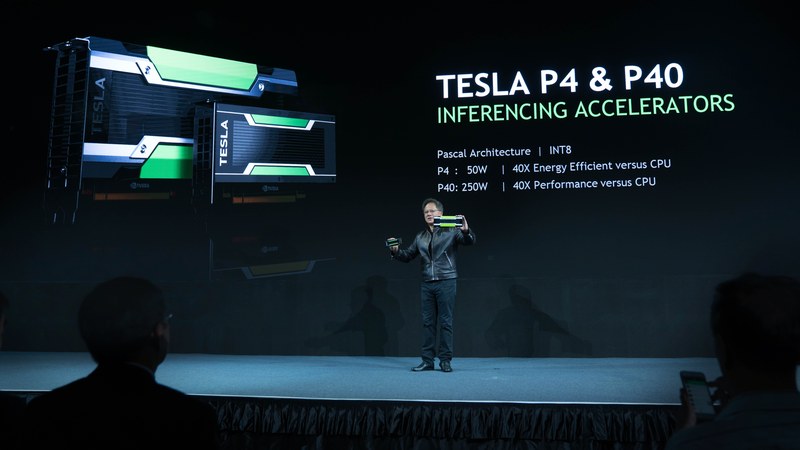
Through the 2000s, Nvidia owned PC gaming graphics, inventing the GPU as a product category in 1999 and out-executing rival ATI. The company was successful but not yet transformative — a solid mid-cap chipmaker in a cyclical industry. Huang's net worth during this era was measured in hundreds of millions, not billions. He was already known for two things: the black leather jacket he has worn on stage for at least 20 years, and an almost monastic focus on a single company.
Crucially, he took almost no money off the table. There were no headline stock dumps, no side startups, no venture portfolio. While peers diversified into angel investing and real estate, Huang's wealth stayed in one place: Nvidia shares. In a cyclical semiconductor industry, that concentration was a risk. It would become the opportunity of the century.
The CUDA gamble: 2006
In 2006, Huang made the bet that defines his career. He launched CUDA, a software platform that turned Nvidia's gaming GPUs into general-purpose parallel computers — and he funded it like a second company inside Nvidia, spending years and hundreds of millions of dollars while Wall Street asked why a graphics company was building developer tools.
CUDA was a commercial failure for nearly a decade. Then, in 2012, AI researchers at the University of Toronto used Nvidia GPUs to win the ImageNet competition, proving that deep neural networks trained on graphics chips could do things no CPU could. Overnight, a decade of "wasted" investment became the deepest moat in technology: every AI lab on earth now trained on CUDA. Nobody builds a competing stack from scratch. This is the moment the fortune's trajectory changed — though the stock would take another decade to reflect it.
The AI inflection: 2016–2024
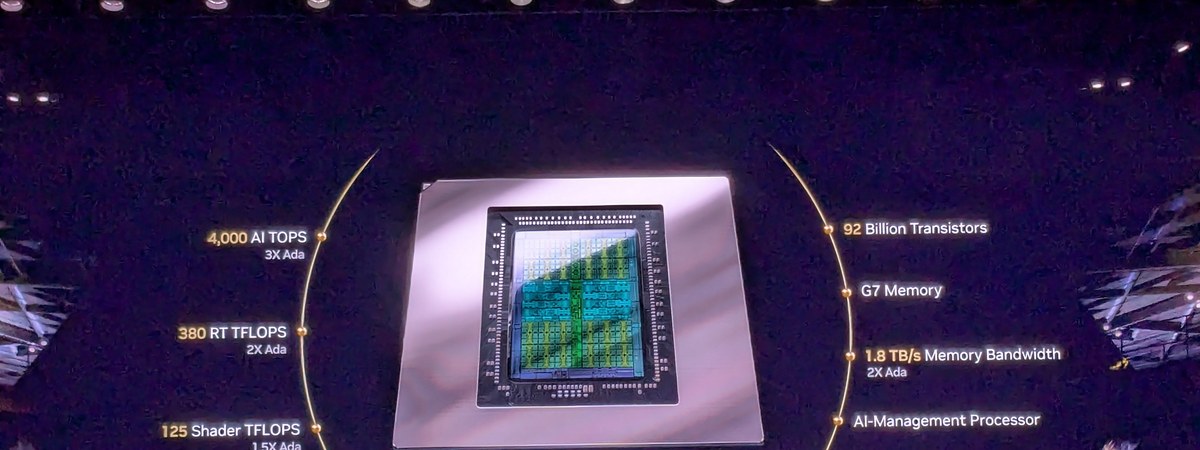
From 2016, data-center revenue began its exponential climb: Hopper, then Blackwell architectures, each generation selling out before launch — and the Vera Rubin platform waiting in the wings to extend the lead. The generative-AI explosion of late 2022 turned a strong business into a historic one. Nvidia's market capitalization crossed $1 trillion (2023), then $2 trillion, then $3 trillion — and in October 2026 it became the first company ever to pass $5 trillion, with roughly $500 billion of disclosed AI-chip orders on the books through 2026.
| Era | What happened | Effect on the fortune |
|---|---|---|
| 1993–1999 | Founded at Denny's; IPO 1999 | Founder's stake worth hundreds of millions |
| 2006 | CUDA launched | Decade-long investment; no payoff yet |
| 2012 | Deep-learning inflection | GPUs become AI's default hardware |
| 2022–2024 | Generative AI boom; 10-for-1 split June 2024 | Stake crosses tens of billions |
| 2025–2026 | $5T market cap; Hugging Face $12.9B deal | $206.7B (Forbes, Oct 6, 2026) |
Through all of it, the 3.58% barely moved. The 10-for-1 stock split of June 2024 multiplied his share count tenfold without changing the percentage. Every rally repriced the same 870.6 million shares higher. This is the purest form of founder wealth: one decision in 1993, compounded.
Refusing to sell: the discipline
Huang's selling history reads like a rounding-error ledger. A Rule 10b5-1 plan adopted March 20, 2025 authorized sales of up to 6 million shares through the end of that year — about $865 million at the time — and sales began in June 2025. On June 17, 2026, he sold 45,723 shares at $207.41, roughly $9.5 million, on the same day CFO Colette Kress sold a similar block. Against a $201 billion position, these are housekeeping transactions, not exits.
Compare the discipline to his peers: most founder-CEOs of his generation sold down to single-digit-billion stakes years ago, funding foundations and side ventures. Huang's foundation — the Jen-Hsun and Lori Huang Foundation — holds about 58.7 million shares (~$12.9 billion at mid-2026 prices), but the shares are still Nvidia. The fortune is one company, and it always has been. See the full $206.7 billion fortune breakdown for how the number is calculated.
Salary is a rounding error
For completeness: Huang's Nvidia compensation was $36.3 million in fiscal 2026, down 27% from $49.9 million the prior year, with a $1.5 million base salary. It is one of the largest CEO pay packages in the S&P 500 — and it represents less than two-hundredths of one percent of his net worth. The money was made by ownership, never by salary.
What the fortune funds
The one place the money visibly flows is philanthropy through the Jen-Hsun and Lori Huang Foundation, which Fortune has estimated at over $10 billion in assets: $50 million to Oregon State University in 2022 for a namesake research complex, $30 million to Stanford for an engineering center, $22.5 million to the California College of the Arts, and a $75 million gift to Vanderbilt's new San Francisco campus in July 2026 — his largest higher-education gift to date. Even in giving, the pattern holds: funded by the stake, directed at institutions that shaped him. See the companies and assets behind the wealth for the full picture.
Frequently asked questions
How did Jensen Huang make his money?
Huang made his money as the co-founder, president and CEO of Nvidia, which he started in 1993. He kept a large ownership stake — 870.6 million shares, or 3.58% of the company — for more than 30 years while Nvidia pivoted from gaming graphics chips to the processors powering the global AI boom, turning one founder's stake into a $206.7 billion fortune (Forbes, October 6, 2026).
What did Jensen Huang do before Nvidia?
Before Nvidia, Huang was a chip designer at AMD starting in 1984, then a director at LSI Logic, where he worked on graphics and parallel-computing hardware. He earned his electrical engineering degree from Oregon State University in 1984 and a master's from Stanford in 1992, all while working full-time in the chip industry.
What was the bet that made Nvidia valuable?
Two bets. First, the 2006 launch of CUDA, which turned Nvidia's gaming GPUs into programmable parallel computers — a decade-long investment Wall Street hated. Second, the 2012 deep-learning inflection, when AI researchers discovered those CUDA-capable GPUs could train neural networks, making Nvidia's hardware the default engine of the AI era.
Does Jensen Huang still own Nvidia stock?
Yes. As of Nvidia's 2026 proxy (March 23, 2026), Huang beneficially owns 870.6 million shares, or 3.58% of the company, making him its largest individual shareholder. He sells only small, pre-planned blocks — including a 6-million-share 10b5-1 plan in 2025 worth about $865 million — against a roughly $201 billion position.
How much has Jensen Huang made from stock sales?
Almost nothing compared to the stake. His documented sales include the 2025 10b5-1 plan authorizing up to 6 million shares (about $865 million at announcement) and a June 17, 2026 sale of 45,723 shares at $207.41 — about $9.5 million. Virtually his entire $206.7 billion fortune remains in unsold Nvidia stock.
Is Jensen Huang married?
Yes. Huang is married to Lori Huang (née Mills), whom he met as a fellow electrical engineering student and lab partner at Oregon State University. They have been married for over 40 years, have two children — a son and a daughter — and run the Jen-Hsun and Lori Huang Foundation together.
How old is Jensen Huang in 2026?
Jensen Huang was born on February 17, 1963, in Tainan, Taiwan, and is 63 years old in 2026. He was sent to the United States at age nine, grew up in Oregon, graduated from Oregon State in 1984, and finished his Stanford master's in 1992.
Is Lisa Su related to Jensen Huang?
Yes, distantly. AMD CEO Lisa Su was also born in Tainan, and per her Wikipedia biography, Su's mother is a first cousin of Huang's mother. The two rival chip CEOs are related by family as well as by industry — a detail that makes the Huang vs. Su net-worth comparison more than just business.
Sources
- Forbes Real-Time BillionairesForbes
- Bloomberg Billionaires IndexBloomberg
- NVIDIA — Official SiteNVIDIA