Quick answer
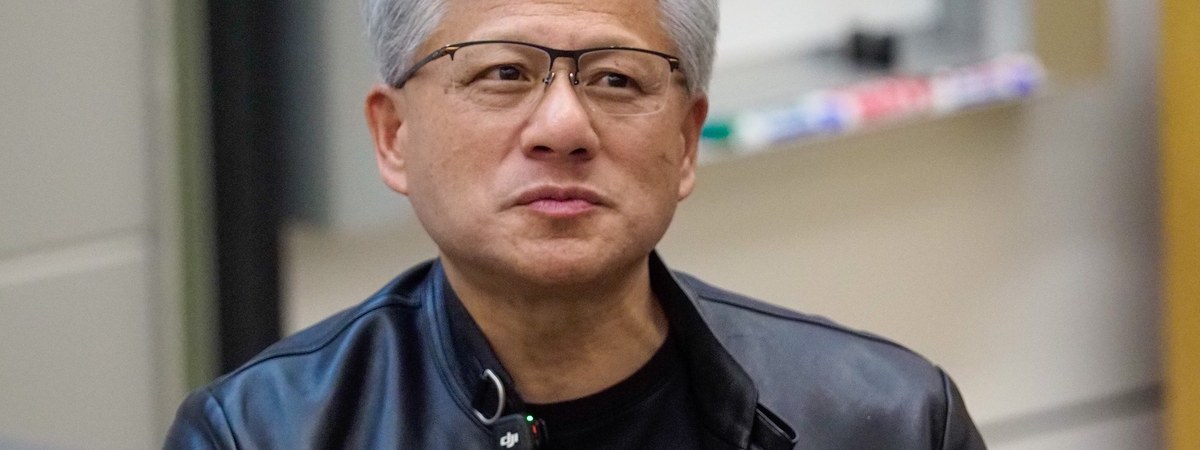
Jensen Huang is worth $206.7 billion; Lisa Su is worth roughly $3.4 billion. The Nvidia co-founder outranks the AMD CEO by about 60 to 1 — one of the widest wealth gaps between two people who do essentially the same job. Yet the comparison is irresistible: both were born in Tainan, Taiwan, both are electrical engineers who climbed to the top of the chip industry, both run AI-chip giants — and they are related by family.
This is the story of two fortunes built two opposite ways: the founder who never sold, and the turnaround CEO who earned every share.
The numbers: $206.7B vs. $3.4B
Start with the scoreboard. Forbes' real-time tracker put Huang at $206.7 billion on October 6, 2026 — seventh-richest in the world — after Nvidia crossed the $200 billion line for his fortune on October 2 and became the first $5 trillion company. Su's fortune, estimated at roughly $3.4 billion in 2026, is almost entirely AMD stock: some 3.6 to 4 million shares accumulated through performance-based pay since October 2014.
| Jensen Huang | Lisa Su | |
|---|---|---|
| Net worth (2026) | $206.7B (Forbes, Oct 6) | ~$3.4B (estimates) |
| Source of wealth | 3.58% of Nvidia (870.6M shares) | ~3.6–4M AMD shares |
| Role | Co-founder, president & CEO | Chair, president & CEO |
| Since | 1993 (33 years) | October 2014 |
| Company market cap | Above $5 trillion | Hundreds of billions |
| Born | Feb 17, 1963, Tainan | Nov 7, 1969, Tainan |
Su's $3.4 billion would make her the protagonist of any other wealth story — she is among the richest self-made women in tech. Against Huang, it is a rounding error: his stake moves more than her entire fortune on an average trading day. For the full breakdown of his number, see Huang's $206.7B fortune.
Two paths to billions: founder vs. turnaround
Huang's path is the founder's compounding machine: start Nvidia in 1993 at a Denny's, keep 3.58%, survive 33 years, let the AI era do the rest. He never had to prove himself to a board; he was the board's reason for existing. His wealth is a single decision in 1993, marked to market daily.
Su's path is the operator's mountain climb. When she became AMD's CEO in October 2014, the stock traded near $3, the company was hemorrhaging share to Intel, and analysts debated when — not whether — AMD would die. She bet the company on the Zen architecture, executed flawlessly through Ryzen and EPYC, closed the $49 billion Xilinx acquisition in 2022, and turned a near-bankrupt chipmaker into an AI-era heavyweight. Her shares were earned as compensation for that resurrection, granted over a decade. Founders who never sell beat even the greatest hired-gun CEO in wealth — but only one of the two had to save a dying company to earn her billions.
Nvidia vs. AMD: the business gap
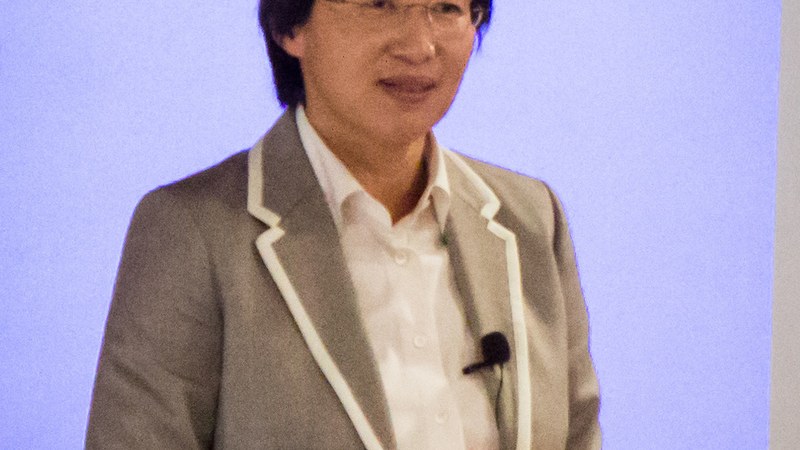
The wealth gap mirrors the business gap. Nvidia is the first $5 trillion company, with roughly $500 billion in disclosed AI-chip orders through 2026 and a reported ~92% share of data-center AI GPUs. AMD is a formidable second: hundreds of billions in market value, the Instinct accelerator line gaining traction, and the only company with a credible end-to-end alternative to Nvidia's CUDA stack.
In AI chips, Su is genuinely the one rival Huang watches — the only CEO whose products compete for the same data-center budgets. Nvidia's FY2026 10-K even flags customer concentration (two buyers at 22% and 14% of revenue) as a risk; AMD's pitch to those same hyperscalers is simple: a second source. The rivalry is real, asymmetric, and — as the next section shows — personal.
The family connection: cousins in the chip wars
Here is the detail that elevates this from a business comparison to a family saga. Both Huang and Su were born in Tainan, Taiwan — six years apart — and per Su's Wikipedia biography, Su's mother is a first cousin of Huang's mother. They did not grow up together; Su has said they first met at an industry event after both were already running major chip companies.
So the two people defining the AI-chip duopoly share a hometown, a profession, and blood — and a roughly $203 billion wealth gap between them. It is the kind of fact that makes the rivalry irresistible: Thanksgiving dinner between the founder who kept everything and the cousin who earned everything.
Pay compared: $36.3M vs. performance equity
On salary, the gap narrows dramatically — which proves the point. Huang's fiscal 2026 pay was $36.3 million ($1.5 million base), down 27% on paper. Su's compensation has historically been weighted toward performance stock that only pays if AMD hits aggressive targets; her FY2025 package was reported around $55 million, and she was the highest-paid CEO in the S&P 500 in 2020 at $58.5 million. As employees, they are paid on the same planet. As owners, they live in different galaxies — because one of them owns the company.
The Tainan parallel: same city, different centuries
Tainan, Taiwan's oldest city, has now produced the two most important chip CEOs alive. Huang was born there on February 17, 1963; his family moved to Thailand when he was young, then sent him and his brother to America at age nine, where a mix-up landed them at the Oneida Baptist Institute in Kentucky — a reform school his relatives mistook for a prep school. He cleaned bathrooms, learned resilience, reunited with his family in Oregon, and graduated from Oregon State in 1984.
Su's arc rhymes. Born November 7, 1969, also in Tainan, she moved with her family to Queens, New York at age three — her father a statistician, her mother an accountant turned entrepreneur. Where Huang's family fled instability, Su's pursued opportunity; where Huang learned Mandarin as an adult working at AMD, Su grew up between cultures. Both ended up as Taiwanese-born American engineers running the companies that define the AI age. And per Su's Wikipedia biography, the family link is literal: Su's mother is a first cousin of Huang's mother, making the rival CEOs distant cousins.
It is a statistical absurdity — one mid-sized Taiwanese city producing both sides of the most valuable technology rivalry in history — and it reframes the wealth gap. Huang's $206.7 billion and Su's $3.4 billion are not just two numbers; they are two answers to the same starting question, asked six years apart in the same city.
Who wins?
On wealth, there is no contest: $206.7 billion to $3.4 billion, founder's compounding over a decade of earned equity. On the operating question — who built the more impressive career arc — reasonable people pick Su: turning around a dying AMD is arguably harder than riding a winner you founded, and she did it as an outsider CEO, not an owner.
The market has rendered its own verdict on the companies: Nvidia above $5 trillion, AMD at a fraction of that, with Su's Instinct line as the only real challenger. But challengers matter — Nvidia's dominance, and Huang's fortune, both depend on staying ahead of exactly one person. She happens to be family. Explore the companies behind Huang's wealth and how he made his money for the full picture.
Frequently asked questions
Who is richer: Jensen Huang or Lisa Su?
Jensen Huang, by roughly 60 to 1. Huang's net worth is $206.7 billion (Forbes, October 6, 2026), making him the world's seventh-richest person, while AMD CEO Lisa Su is estimated at roughly $3.4 billion — nearly all of it in AMD stock. The gap reflects the difference between founding Nvidia and turning around AMD.
What is Lisa Su's net worth in 2026?
Lisa Su's net worth is estimated at roughly $3.4 billion in 2026, almost entirely in AMD equity — about 3.6 to 4 million shares earned through performance-based compensation since she became CEO in October 2014. She built it by resurrecting AMD from near-bankruptcy, not by founding a company.
Are Jensen Huang and Lisa Su related?
Yes, distantly. Both were born in Tainan, Taiwan — Huang in 1963, Su in 1969 — and per Su's Wikipedia biography, Su's mother is a first cousin of Huang's mother. They are reported to have first met at an industry event after both were already running major chip companies, and they now compete directly in the AI-chip market.
Who founded the bigger company: Huang or Su?
Huang founded Nvidia in 1993 and still runs it; the company passed a $5 trillion market cap in October 2026, the first ever. Su did not found AMD — she took over as CEO in October 2014 when the stock traded near $3 and the company was widely expected to fail, then led a turnaround that multiplied the stock more than 14,000% by some counts.
Why is the wealth gap so large?
Ownership timing. Huang kept a founder's 3.58% stake (870.6 million shares) for 33 years through Nvidia's entire compounding; Su joined AMD as an executive in 2014 and earned her shares as compensation, starting from zero. Founders who never sell beat hired-gun CEOs in wealth almost every time — even the best hired gun in the industry's history.
Is Jensen Huang married?
Yes. Huang is married to Lori Huang (née Mills), his former lab partner at Oregon State University, where they both studied electrical engineering in the early 1980s. They have two children, a son and a daughter, and have been married for over 40 years.
How old are Jensen Huang and Lisa Su in 2026?
Jensen Huang was born February 17, 1963, in Tainan, Taiwan, and is 63 in 2026. Lisa Su was born November 7, 1969, also in Tainan, and is 56 in 2026. Both are Taiwanese-born American engineers who rose to the top of the semiconductor industry.
Could Lisa Su ever catch Jensen Huang?
Only in the stock chart, not the wealth chart. For Su's $3.4 billion to approach Huang's $206.7 billion, AMD would need to roughly 60x relative to Nvidia — or Nvidia would need to collapse while AMD holds. As operators, though, Su is the one rival Huang watches: AMD's Instinct accelerators are Nvidia's only credible competition in AI chips.
Sources
- Forbes Real-Time BillionairesForbes
- Bloomberg Billionaires IndexBloomberg
- NVIDIA — Official SiteNVIDIA