Quick answer
Jensen Huang's business empire is the most concentrated of any modern billionaire: one company — Nvidia — plus the family foundation that holds its shares. He co-founded Nvidia in 1993, has been its president and CEO for 33 years, and owns 870.6 million shares, or 3.58%, worth about $201 billion at early-October 2026 prices. That single position is the engine of his $206.7 billion fortune (Forbes, October 6, 2026).
There is no portfolio of startups, no side fund, no diversified holding company. Below is the complete map of what he owns, runs, and funds.
Nvidia: the $5 trillion machine
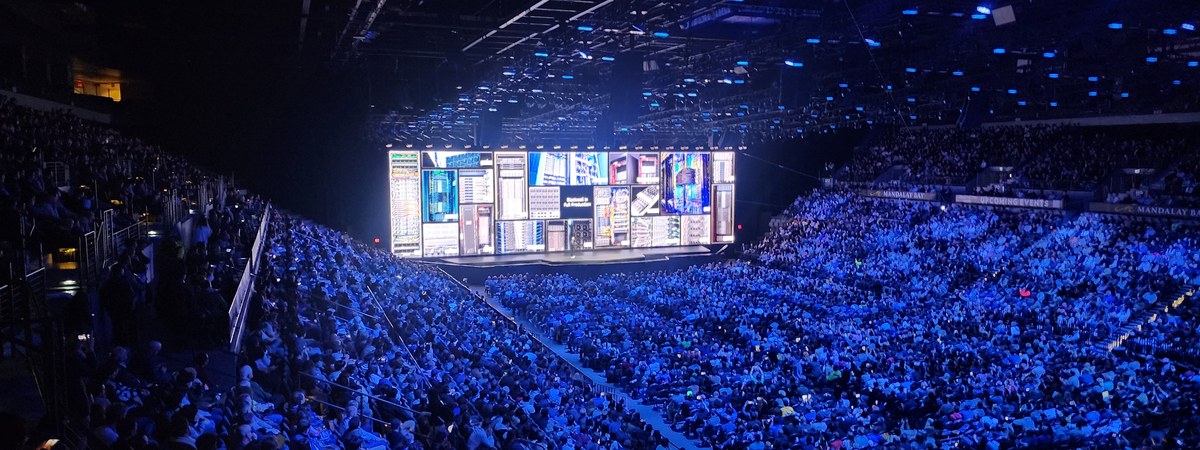
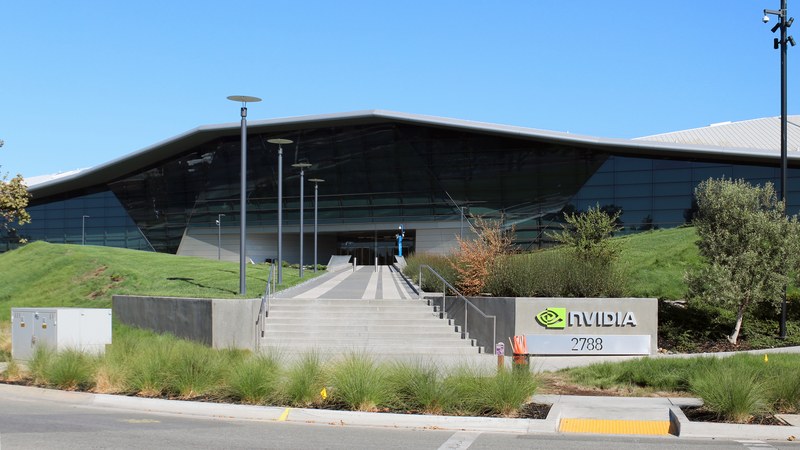
Nvidia (NASDAQ: NVDA) is the company — the first in history to pass a $5 trillion market capitalization, around October 1, 2026. Founded April 5, 1993 over breakfast at a Denny's in San Jose by Huang, Chris Malachowsky and Curtis Priem, it went public in 1999 and spent two decades as a gaming-graphics leader before its CUDA software platform and data-center GPUs made it the default hardware of the AI era.
| Nvidia at a glance | Figure |
|---|---|
| Market capitalization | Above $5 trillion (first ever, Oct 2026) |
| Fiscal 2026 revenue | $215.9 billion (per FY2026 10-K) |
| Q1 fiscal 2026 revenue | $44.1 billion, up 69% year over year |
| AI-chip order book | ~$500 billion through 2026 (disclosed) |
| Data-center AI GPU share | ~92% (reported) |
| Stock performance 2026 | +26%, from ~$188 to above $237 |
| Share buyback authorization | +$150 billion (Sept 2026) |
| Stock split | 10-for-1, effective June 7, 2024 |
The concentration risk investors watch is in the 10-K: two direct customers account for 22% and 14% of total revenue — more than a third of sales flowing through two buyers. The growth engine investors cheer is the order book: roughly half a trillion dollars of AI-chip demand, sovereign AI programs, and the Blackwell and Hopper architectures selling out. Huang's role is founder-operator, not chairman-for-hire: he has run the company every day since 1993. (How that stake became a fortune is the story of how he made his money.)
The 3.58% stake: how it's held
Huang's 870.6 million shares are not sitting in a single brokerage account. Nvidia's 2026 proxy (as of March 23, 2026) breaks the beneficial ownership into blocks: the largest is 528.5 million shares held by Huang and his wife Lori as co-trustees of the Jen-Hsun and Lori Huang Living Trust, followed by 109 million shares in the Huang Irrevocable Remainder Trust, 31.4 million in the 2012 Irrevocable Trust, two 30-million-share TARG entity holdings, and 58.7 million shares in the family foundation.
The structure is classic estate planning for a founder who intends to keep the economic exposure: trusts and entities hold the shares, the family controls the entities, and nothing is sold except small pre-planned blocks. At $231.49 a share in early October 2026, the whole position was worth about $201 billion — and even the foundation's 58.7 million shares alone were worth roughly $12.9 billion.
The co-founders who sold
The stake's size is also a story about the two men who didn't keep theirs. Chris Malachowsky and Curtis Priem each put $200 into Nvidia in 1993 alongside Huang. Over the decades both sold down the vast majority of their holdings — the normal, rational founder behavior. Malachowsky remains an Nvidia Fellow; Priem left long ago. Had either held what Huang held, they would be hundred-billionaires too. The difference between a comfortable fortune and $206.7 billion was simply never selling.
Hugging Face and the empire's expansion
Nvidia under Huang is still acquiring. The September 2026 agreement to buy Hugging Face for $12.9 billion — the leading hub where AI developers share models — pushes Nvidia up the stack from chips into the software layer where developers actually work. It follows a pattern: Mellanox ($6.9 billion, 2020) for networking, Arm's attempted acquisition (abandoned 2022) for CPU IP, and a string of AI-infrastructure bets.
These are Nvidia's assets, not Huang's personal holdings — an important distinction. He owns the company that owns the acquisitions. His personal balance sheet remains Nvidia shares, full stop.
The Jen-Hsun & Lori Huang Foundation
The one other entity with Huang's name on it is the family foundation, founded in 2007 and run with his wife Lori. Fortune has estimated its assets above $10 billion, making it one of the largest family foundations in tech — though Forbes gives Huang a low philanthropy score because most of the wealth is still in the stock, not yet given away.
| Major gift | Amount | Year |
|---|---|---|
| Vanderbilt San Francisco campus | $75M | 2026 |
| Oregon State research complex | $50M | 2022 |
| Stanford engineering center | $30M | Earlier |
| California College of the Arts | $22.5M | 2025 |
| Oneida Baptist Institute | $2M | 2019 |
The pattern is personal: Oregon State and Stanford are his alma maters; Oneida is the Kentucky boarding school his parents mistakenly sent him to at age nine, which he credits with his work ethic. The July 2026 Vanderbilt gift — his largest higher-education donation — funds the Jen-Hsun and Lori Huang College of Art, Architecture and Design at the university's new San Francisco campus.
Sovereign AI: the newest asset class
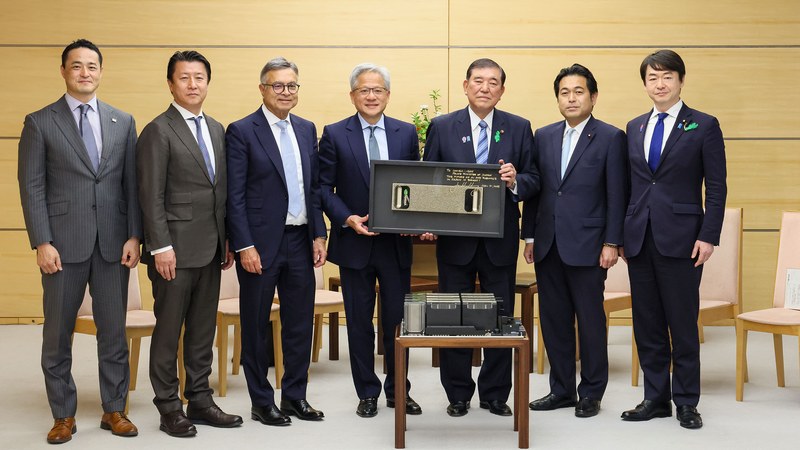
The most recent addition to the Nvidia empire is not a company but a customer category: governments. Huang has spent 2025 and 2026 signing sovereign-AI partnerships — national compute programs in Japan, the Middle East, and Europe — alongside agreements to help build AI supercomputers with US national laboratories. These deals convert geopolitics into backlog: when a country decides it needs its own AI infrastructure, there is effectively one vendor to call.
This matters for the fortune because sovereign demand is stickier than hyperscaler demand. Cloud providers can pause orders; nations building strategic compute capacity sign multi-year programs. The roughly $500 billion in disclosed AI-chip orders through 2026 includes a growing sovereign slice, and Huang's personal diplomacy — meeting prime ministers and presidents, as the White House AI Summit appearance showed — is itself a corporate asset. Few CEOs can walk into a head-of-state meeting and walk out with a data-center order; Huang does it routinely.
What he does not own
The negative space is striking. No disclosed venture portfolio. No SPAC sponsorships, no crypto treasury company, no sports team, no media property. No second operating company. Where peers of his wealth built diversified empires — Bezos with Blue Origin and the Washington Post, Musk with five companies — Huang built one company and stayed in the chair for 33 years. His $36.3 million in fiscal 2026 pay is the only other material income stream, and it is a rounding error next to the stake.
That is the complete corporate map: Nvidia, the trusts that hold his Nvidia shares, and the foundation funded by Nvidia shares. One company, held three ways — and valued, as of October 2026, at $206.7 billion. See the full fortune breakdown for how the number is calculated.
Frequently asked questions
What companies does Jensen Huang own?
Effectively one: Nvidia, the AI chipmaker he co-founded in 1993, where he is president and CEO and owns 870.6 million shares — 3.58% of the company, worth about $201 billion at early-October 2026 prices. He holds no other major public-company stakes; his other vehicle is the Jen-Hsun and Lori Huang Foundation, which holds roughly 58.7 million Nvidia shares.
How much of Nvidia does Jensen Huang own?
3.58% — 870.6 million shares per Nvidia's 2026 proxy (as of March 23, 2026) — making him the company's largest individual shareholder. The position is spread across the Jen-Hsun and Lori Huang Living Trust, irrevocable family trusts, TARG entities, and the family foundation.
What is Nvidia worth in 2026?
Nvidia became the first publicly traded company in history to surpass a $5 trillion market capitalization, crossing the line around October 1, 2026. Fiscal 2026 revenue was $215.9 billion per the 10-K, and the company disclosed roughly $500 billion in AI-chip orders on its books through 2026.
Did Nvidia buy Hugging Face?
Yes. In September 2026 Nvidia announced it would acquire Hugging Face, the AI model hub, for $12.9 billion — one of the largest AI-infrastructure deals ever and a signal that Huang intends to own more of the software layer, not just the chips.
What is the Jen-Hsun and Lori Huang Foundation?
The family foundation Huang runs with his wife Lori, founded in 2007. Fortune has estimated its assets at more than $10 billion, largely in Nvidia stock. Its giving focuses on higher education and AI research: $50 million to Oregon State (2022), $30 million to Stanford, $22.5 million to the California College of the Arts, and $75 million to Vanderbilt's new San Francisco campus in July 2026.
Is Jensen Huang married?
Yes. Huang is married to Lori Huang (née Mills), his former lab partner at Oregon State University, where they both studied electrical engineering in the early 1980s. They have two children, a son and a daughter, and run the family foundation together.
How old is Jensen Huang in 2026?
Jensen Huang was born on February 17, 1963, in Tainan, Taiwan, and is 63 years old in 2026. He founded Nvidia on his 30th birthday in 1993 and has led it as CEO for 33 years — the longest-serving CEO among current S&P 500 tech giants.
Is Lisa Su related to Jensen Huang?
Yes, distantly. AMD CEO Lisa Su was also born in Tainan, and per her Wikipedia biography, Su's mother is a first cousin of Huang's mother. The family tie adds a personal layer to the Nvidia vs. AMD rivalry their two companies define.
Sources
- Forbes Real-Time BillionairesForbes
- Bloomberg Billionaires IndexBloomberg
- NVIDIA — Official SiteNVIDIA