Quick answer
Liang Wenfeng's business empire is two companies: DeepSeek, the AI lab he founded in July 2023 (he owns an estimated ~84%), and High-Flyer, the quantitative hedge fund he co-founded in 2015 (estimated ≥76% owned). The relationship is the story: High-Flyer's trading profits funded DeepSeek without a dollar of venture capital, and High-Flyer's GPU clusters became DeepSeek's training backbone. Together they underpin his $36 billion Bloomberg-estimated fortune — see the net worth breakdown for the numbers.
DeepSeek: the AI lab worth ~$50 billion
DeepSeek (Hangzhou DeepSeek Artificial Intelligence) was founded in July 2023 with a mission most startups wouldn't dare print: artificial general intelligence. Liang told Chinese tech publication 36Kr that year that "basic science research has a very low return on investment. But we're doing this because we believe in the mission." The lab's method — open-source releases, engineering efficiency over brute-force scale — produced DeepSeek-V3 (December 2024), the DeepSeek-R1 reasoning model (January 20, 2025) that rattled global markets, and DeepSeek-V4 (April 2026).
The business model is almost anti-business: give the models away, charge little, reinvest everything. It works because the owner doesn't need dividends — he owns ~84%. The June 2026 financing round at roughly $50 billion post-money was the first external validation of that value, and the first outside capital DeepSeek ever took. For how the lab was built, read how he made his money.
Strategically, DeepSeek functions as both a company and a public good. Its open weights are used by researchers and startups worldwide, which builds enormous soft power — and a talent pipeline that flows back to Hangzhou. Critics note the model has a cost: training at reported sub-$6 million budgets is only possible because the GPUs were already paid for, and US export controls mean the next 10,000-chip cluster can't simply be reordered. The company's answer, so far, has been to make each chip count for more — the efficiency research is the business strategy.
| Model | Released | Why it mattered |
|---|---|---|
| DeepSeek-V2 / Coder | 2024 | Established the efficiency-first reputation |
| DeepSeek-V3 | Dec 2024 | Claimed <$6M training cost; GPT-4-class performance |
| DeepSeek-R1 | Jan 20, 2025 | Topped app stores; ~$600B wiped off Nvidia in a day |
| DeepSeek-V4 | Apr 2026 | 1.6T-parameter Pro variant; 1M-token context |
| DeepSeek-R2 | Delayed (as of mid-2026) | Held back by Liang over quality concerns (Reuters) |
High-Flyer: the quant fund that paid for everything
High-Flyer (Hangzhou Huanfang Technology Co., Ltd.) is the older, quieter half of the empire. Liang co-founded it in June 2015 at age 30 to apply machine learning to Chinese equity trading. It worked spectacularly: by 2021, assets exceeded 100 billion yuan (~$14 billion), ranking it among China's top quant funds and making Liang a billionaire on fund economics alone — management and performance fees plus partners' own capital.
Regulatory tightening from 2019–2023 squeezed the industry, and High-Flyer wound down its flagship product in February 2024. Assets today sit around $10 billion. But by then the fund had already served its historic purpose: financing an AI lab that venture capital never touched. Forbes estimates Liang owns at least 76% of it — a second concentrated bet, same as the first.
Fire-Flyer: the supercomputers in between
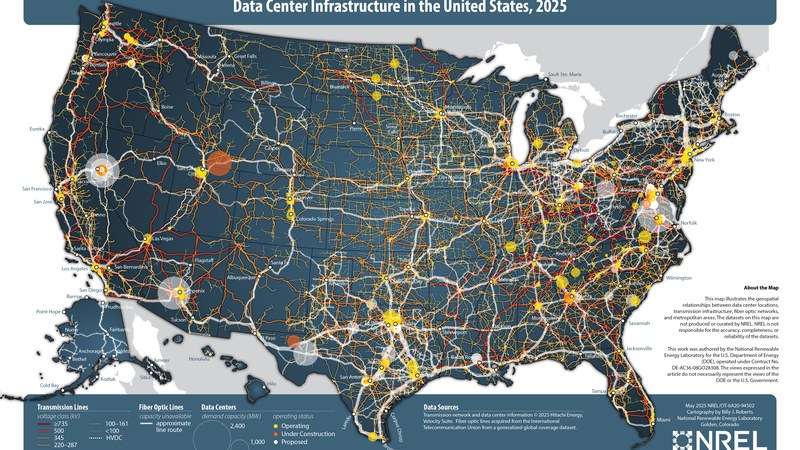
Neither company fully explains the fortune without Fire-Flyer, the compute infrastructure High-Flyer built and DeepSeek inherited. Fire-Flyer I came online in 2020 with 1,100 Nvidia A100 GPUs; Fire-Flyer II followed in 2021 with roughly 10,000 A100s — assembled before US export controls cut off China's access to cutting-edge chips. A partner later told the Financial Times that Liang's plan for a 10,000-chip cluster sounded delusional at the time: "We thought this was only possible from giants like ByteDance and Alibaba."
That stockpile — reportedly worth hundreds of millions of dollars — is the hidden asset behind DeepSeek's famous efficiency claims. When the company says V3 cost under $6 million to train, the figure excludes the GPUs it already owned. Competitors must buy compute at market prices; DeepSeek trains on sunk cost. Whether Fire-Flyer sits legally inside High-Flyer or straddles both entities is not publicly disclosed — but economically, it belongs to Liang either way.
Ownership structure: how concentrated it is
Liang's empire is remarkable for what it lacks: co-founders with big slices, venture investors, public shareholders. The table below summarizes what is verifiable versus estimated — and the estimates (Forbes) are the best available because Chinese private-company filings are opaque.
| Entity | Founded | Liang's stake | Status / value |
|---|---|---|---|
| DeepSeek | July 2023 | ~84% (Forbes est.) | ~$50B valuation (June 2026 round) |
| High-Flyer | June 2015 | ≥76% (Forbes est.) | ~$10B AUM (down from ~$14B peak) |
| Fire-Flyer clusters | 2020–2021 | Via High-Flyer | ~10,000 Nvidia A100 GPUs |
Compare the concentration with Dario Amodei's Anthropic, where seven co-founders split ~1.6% each after venture rounds. Liang's structure is closer to a 19th-century industrialist than a 21st-century startup founder — one man, two companies, no dilution. It is the single biggest reason he, not a better-funded rival, became the richest AI founder on Bloomberg's index. Our head-to-head comparison breaks down the math.
R2, V4, and what's next for the portfolio
The company roster is small, but the product pipeline is not. DeepSeek-V4 shipped in April 2026 as a model family — a 1.6-trillion-parameter V4-Pro and a lighter V4-Flash, both with 1-million-token context windows and switchable thinking modes — keeping Liang's open-weights promise even as the models scale. The product everyone is actually waiting for, though, is DeepSeek-R2, the next dedicated reasoning model. As of mid-2026 it has not launched: Reuters reported Liang personally held it back because he wasn't satisfied with its performance.
That delay is revealing about how he runs his companies. A venture-backed CEO facing a $50 billion valuation would feel pressure to ship on schedule; Liang, owning ~84% and answering to no board of outside investors, can afford to wait until the model meets his bar. It is the same quality-over-hype instinct that defined the Fire-Flyer build years. Whether R2 lands in late 2026 or slips further, the decision rights sit with one man — which is precisely why the ownership table above matters more than any product roadmap.
Beyond models, the open question is whether DeepSeek stays a two-company empire or grows a third leg: cloud services, hardware, or an enterprise arm to monetize the open-source base. Nothing has been announced. Given Liang's history — a quant fund, then a compute cluster, then an AI lab, each funding the next — the pattern suggests whatever comes third will be paid for by the first two, not by outsiders.
Hangzhou: the base of operations
Both companies sit in Hangzhou, the Zhejiang-province tech hub also home to Alibaba — and to Zhejiang University, Liang's alma mater. The geography is not accidental: his entire adult life, from enrolling at 17 to building two companies, has played out within the same city. Hangzhou's government has actively courted AI investment, and DeepSeek's presence has turned the city into a magnet for young researchers who once defaulted to Beijing or Shenzhen. He operates from the Hangzhou headquarters, rarely travels for publicity, and gives almost no interviews. For a man whose companies are worth tens of billions, the physical footprint is a few office buildings and some server halls — the lightest empire in the billionaire class. How he draws income from it all is covered in his salary breakdown.
Frequently asked questions
What companies does Liang Wenfeng own?
Two core entities: DeepSeek, the AI lab he founded in July 2023 (Forbes estimates he owns ~84%), and High-Flyer (Hangzhou Huanfang Technology), the quant hedge fund he co-founded in 2015 (Forbes estimates at least 76%). DeepSeek was funded entirely by High-Flyer profits and took no outside capital until a 2026 financing round.
Is DeepSeek part of High-Flyer?
DeepSeek began as an outgrowth of High-Flyer's AI research arm but was established as a separate company in July 2023, with its own mission (artificial general intelligence). High-Flyer funded it and they share Hangzhou roots and history, but DeepSeek operates as its own entity — which is why its ~$50 billion 2026 valuation accrues to Liang's personal stake.
Who funds DeepSeek?
Until 2026, exactly one source: High-Flyer's trading profits, controlled by Liang. That self-funding is why he kept ~84% ownership instead of diluting to venture capital. A June 2026 financing round — valuing the AI assets at ~$50 billion post-money — was the first outside capital event, and it more than doubled his Bloomberg-tracked net worth to $36 billion.
What is Fire-Flyer?
Fire-Flyer is the supercomputing infrastructure High-Flyer built: Fire-Flyer I (1,100 Nvidia A100 GPUs, 2020) and Fire-Flyer II (~10,000 A100s, 2021). Originally built for quantitative trading research, the clusters became DeepSeek's training backbone — the sunk-cost compute advantage that let DeepSeek train frontier models at a fraction of rivals' reported costs.
Does Liang Wenfeng own any public stocks?
Nothing public suggests a portfolio of listed equities. His known wealth is concentrated in two private entities — DeepSeek and High-Flyer. Unlike founders who diversify after IPOs, Liang has had no liquidity event to diversify from, and shows no sign of wanting one.
Is Liang Wenfeng married?
No credible source has confirmed his marital status. He is famously private; major profiles in the Wall Street Journal, Financial Times, and New York Times cover his companies, not his family. Gossip-site claims about a wife or children are unverified.
How old is Liang Wenfeng in 2026?
Born in 1985 in Wuchuan, Guangdong, he is 41 in 2026. He co-founded High-Flyer at 30 and DeepSeek at 38.
Where does Liang Wenfeng live?
Hangzhou, China, where both High-Flyer and DeepSeek are headquartered. He maintains an exceptionally low public profile for a $36 billion founder.
Sources
- Reuters — DeepSeek CoverageReuters
- Bloomberg Billionaires IndexBloomberg
- Forbes Real-Time BillionairesForbes